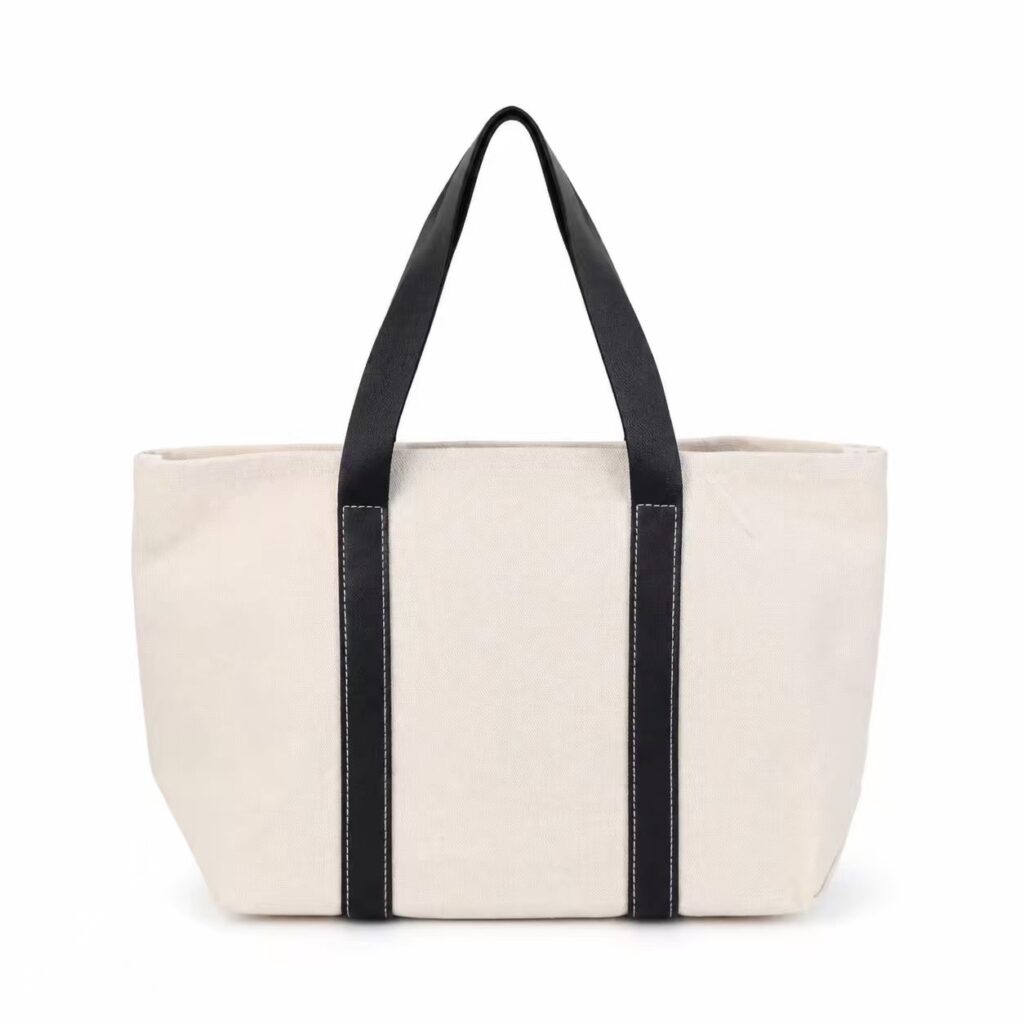
Two samples have the same visible band around the mouth. Turn them over: one folds the body fabric inward, while the other uses an additional fabric piece. The similar outside appearance conceals a different construction.
Cotton tote top edge finishes need a section drawing when the buyer wants a repeatable result. A width written beside the outside photograph does not identify the layers or the way the inside edge ends.
Name the arrangement before choosing the band
SINGER’s hem guide distinguishes a folded edge from a faced hem using another piece. Match that terminology to a drawing of the arrangement proposed for your particular cotton canvas.
When comparing a folded top hem with a facing, request a small cross-section sketch with the outside and inside labelled. Identify the body fabric, any additional strip, each finished edge and the proposed stitching. Do not assume everyone uses the word facing in precisely the same way.
Is a facing the same as a full lining? Not necessarily. Establish how far the proposed piece extends and how it connects to the rest of the inside. The lining comparison concerns an inner fabric assembly, while this decision concerns the mouth.
Follow the edge past the easy straight section
Ask for the finished facing depth or folded-band depth in millimetres, with the measurement endpoints identified. Then mark every interruption: side join, handle attachment, closure, label or change of fabric.
At each interruption, ask what will be visible and what the contents can touch. An inside photograph of a straight section cannot approve the meeting of several layers. The interior seam guide can support that neighbouring detail without deciding the top-edge construction for you.
Can the top hem change without reviewing nearby parts? Check the affected details first. A revised band may alter the position available for a closure or the visible stitching beside a logo. Show the accepted version and the requested change together.
Compare the mouth while it is being used
Open the sample, insert the representative contents and take them out. Record any rolling, catching, uneven bulk or exposed cut edge that requires discussion. Keep the observation separate from a claim about its cause.
The tote mouth section drawing should remain beside the sample during this review. Check whether the visible inner depth and the junctions match the proposal, then mark any detail that needs another view or a revised sample.
For a reusable cotton bag, identify the additional strip, any support layer and thread separately. Reusing body fabric for a fold and adding a different facing are not the same material record. Confirm which parts must be 100% cotton and assess care for the accepted combination.
Send a detail the quotation can recognise
A useful cotton bag mouth finish enquiry includes the section sketch, finished depth, junction notes and appearance reference. Ask Gahumi which construction can be assessed for the proposed bag, with any extra material, sampling and assembly work identified in the response.
Email your drawing to gzgahumibag@gmail.com.