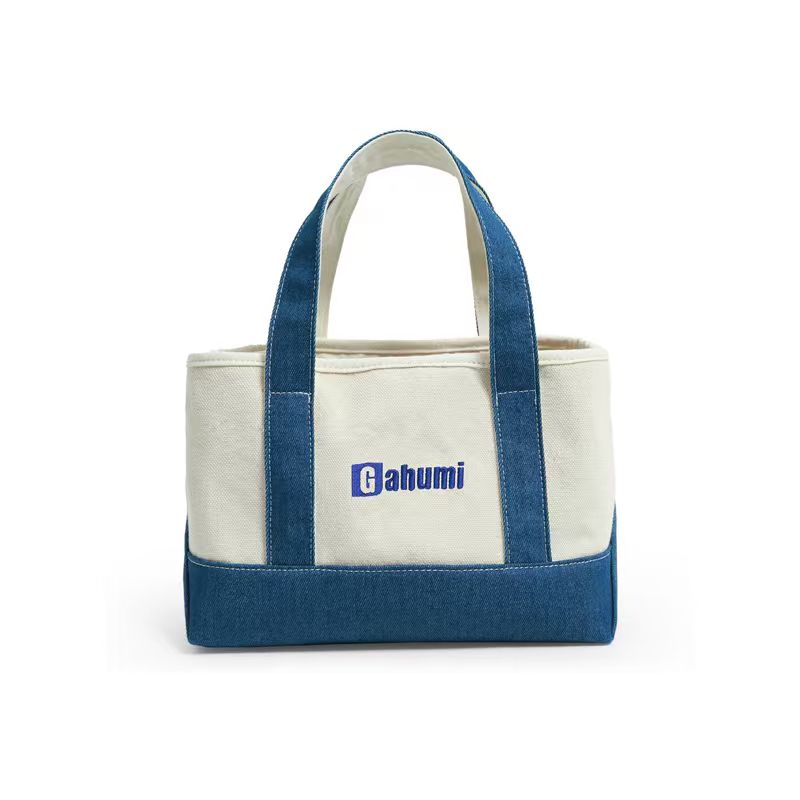
A black hook appears to be plastic. That answers a question about its outside appearance, not necessarily about every part inside it. A request for a bag without metal needs more than a photograph of the trims.
Specify metal-free cotton tote bags component by component, with the customer’s intended restriction clearly stated. Do not describe a proposed bag as meeting that restriction until the actual materials and assembly have been reviewed.
Explain what the restriction covers
Ask the buyer to define the scope: the finished bag, supplied accessories, retail tags, packaging or some combination. Identify who will review the evidence and which requirement they are checking. Avoid substituting non-magnetic for metal-free; the brief needs the requested material exclusion in its own words.
Does a metal-free specification prove security approval? Acceptance by a venue, customer or particular process needs confirmation from the responsible party. A materials list answers the stated composition question; it cannot settle those separate acceptance conditions.
Ask about the parts that the camera cannot see
The Duraflex catalogue distinguishes a hook incorporating a spring-steel latch from a nonmetallic version using a moulded latch. The narrow lesson is to identify the whole proposed component, not select a colour or product-family name.
Does a plastic-looking hook prove the tote contains no metal? The actual component reference and constituent-part information are needed. Use the catalogue distinction to frame that question, then review the parts proposed for your order.
Check closures, rings, adjusters, cord ends, label fixings and optional accessories where present. A sewn fabric label and a hangtag held by a separate fastener introduce different questions. Include hidden parts or ask the supplier to mark their composition as unresolved.
Build a small materials decision record
Use a metal-free trim declaration request with columns for location, component reference, proposed material, supporting information, reviewer decision and permitted replacement. Call it a request until the responsible party has accepted the actual evidence.
The component documentation guide helps organise references, but a chemical report should not be presumed to answer a different materials-exclusion question. Have the reviewer check whether each document covers what the buyer needs.
Keep a component substitution record. A replacement with the same dimensions and colour may use a different internal part. Require the proposed change to return to the defined review before it enters the accepted specification.
Keep the cotton requirement separate
A cotton tote without metal hardware is not automatically an entirely cotton product. The reusable body may be cotton canvas while the agreed hook, support layer, thread or labels use other materials. Confirm any 100% cotton requirement at the correct component level.
Keep recycling, emissions and organic-origin wording under their own review rather than deriving them from the absence of metal. The cotton evidence guide keeps fibre composition and growing-origin claims distinct.
Send Gahumi the bag drawing, scope of the exclusion, component list, quantity and destination. Ask whether a suitable proposal can be reviewed and which evidence is available. Leave unsupported points open instead of converting the requested restriction into a sales promise.
Email the requirement to gzgahumibag@gmail.com.