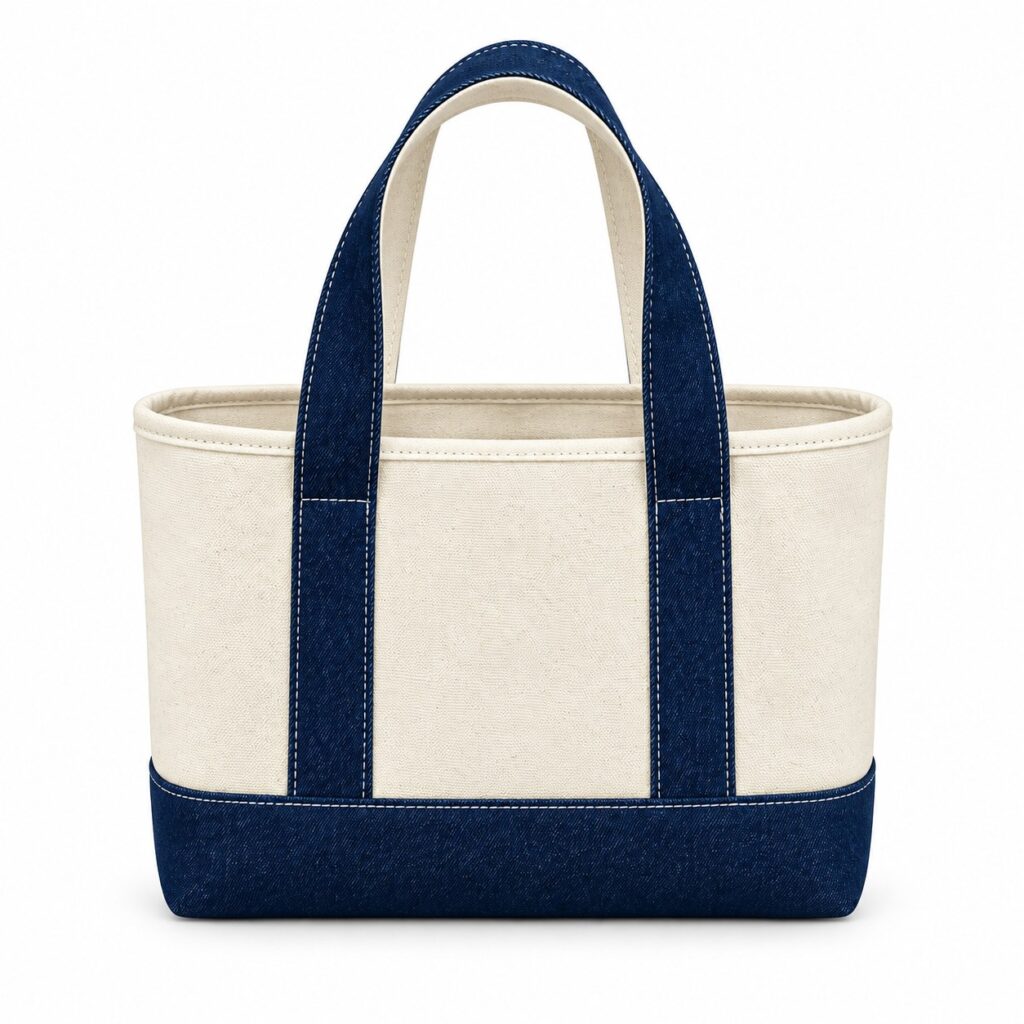
The outside canvas is approved, but one sample has a firmer body than the next. Before changing the cotton weight, check whether the two proposals contain the same hidden support layer.
A cotton tote interfacing specification identifies that layer and the area it supports. It keeps the buyer from accepting an unexplained change in feel while the visible fabric reference stays the same.
Separate three different parts
Is interfacing the same as lining or a removable base insert? Treat them as different proposals. Ask where the support sits, what it is attached to and whether it can be removed. A fabric inside the tote may be the lining, while another layer remains behind it.
The lining guide concerns the inner fabric assembly. The base insert guide concerns a separate support item. Neither identifies an unseen layer used elsewhere in the bag.
Give the support an identity before comparing feel
Vlieseline’s Decovil I information shows that a fusible interlining has its own composition and application guidance, with suitability to be evaluated. Your maker needs to identify and assess the support proposed for your particular fabric.
Ask for the proposed material reference, composition and attachment route. If bonding is proposed, have the technical supplier assess compatibility with the actual outer fabric, finish and decoration. Do not turn a domestic application example into a universal factory setting.
Does a cotton outer fabric make the interfacing cotton? No. Record the support material separately, along with thread, lining and other additions. A reusable cotton-canvas body and a requirement for 100% cotton fabric do not describe the composition of the whole assembly.
Map the area instead of writing fully reinforced
An interfacing placement map should show the panels, the supported region and the proposed edges of the layer. Ask how it ends near seams, folds and attachment points, rather than instructing the supplier to apply an unspecified sheet everywhere.
Identify whether the requirement is a full panel, a local area or another proposed arrangement. If a support layer is omitted from the next quotation, that should appear as a change, not be hidden behind the same canvas name.
Keep appearance and handling comparisons useful. Review an identified untreated panel and the proposed supported panel where feasible, then examine the assembled bag. Note changes in drape, surface appearance, bulk and the intended fold without assigning a performance rating.
Let the finished sample settle the open questions
A bonded panel appearance sample is useful only when the cloth and support references are known. Ask what further finished-bag review is needed after the proposed process. Any agreed care assessment must cover the combination, not just the outer swatch.
Use the canvas tote interlining brief to request a specific proposal: intended shape, placement map, materials, artwork and sample questions. Include these in your enquiry to Gahumi so that feasibility, proposed materials, costs and development timing can be considered together.
Email the placement sketch to gzgahumibag@gmail.com.