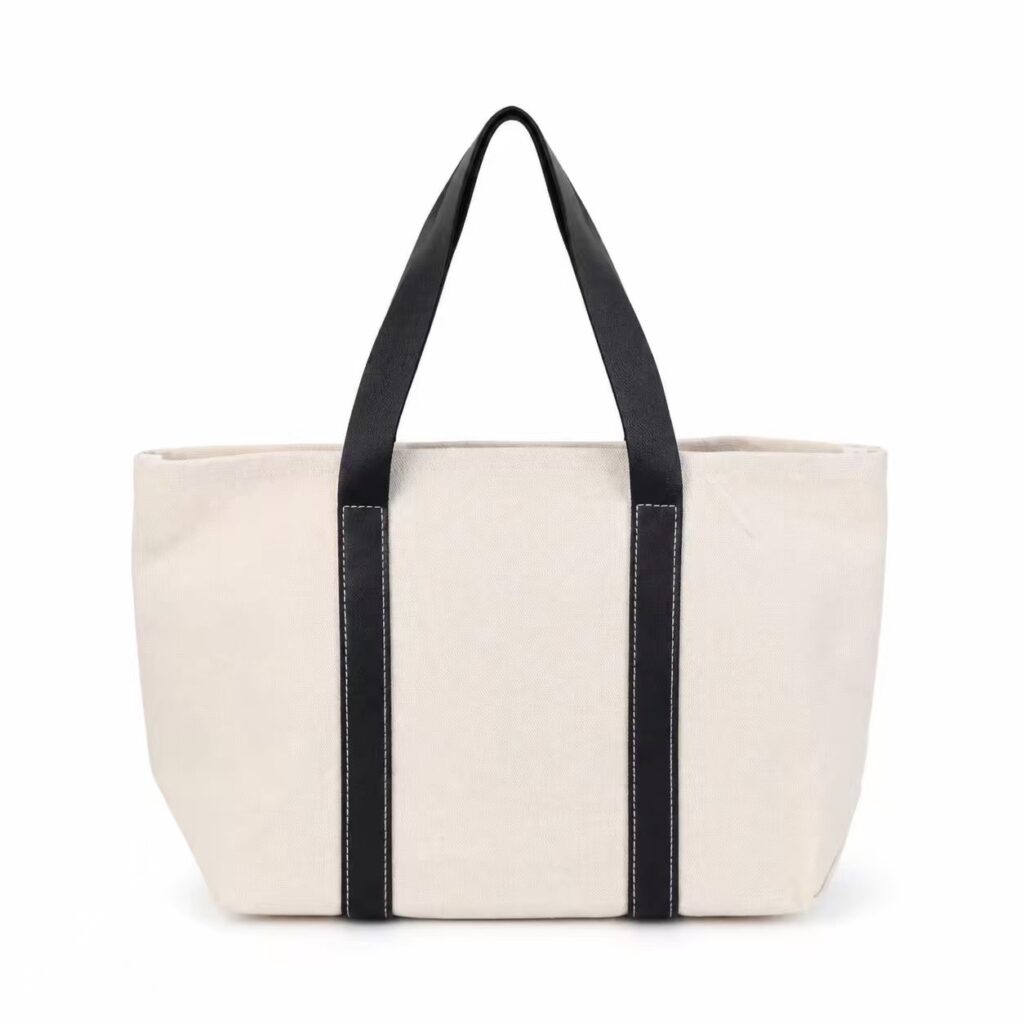
Four small feet appear on the underside sketch. Nothing on the inside view shows how they are attached. For a soft fabric base, that missing view is part of the product decision, not a detail to leave until packing.
Cotton tote bag feet need to be considered with the actual base construction and proposed fixing. Start by defining the intended purpose, then decide what the complete sample must demonstrate.
First identify the base they would join
Mark whether the fabric bottom is shaped from the body or made from a separate panel. Show lining and any proposed additional layer. A removable base insert is not automatically an attachment backing or a substitute for a fixing detail.
Can feet be added to a soft base without construction review? Ask the technical supplier to assess the complete proposal. Do not place hardware on a photograph and assume the existing cloth arrangement can accept it unchanged.
Use a base foot position map with measurements from agreed finished edges. Include nearby seams and folds, the proposed number of feet and their orientation. Keep the positions attached to the actual bag version.
Request the fixing that accompanies the visible part
Clover’s original tote project treats bag feet as an added component alongside the base arrangement. For your cotton tote, request the actual foot material and dimensions, then review the proposed fixing rather than approve the visible part alone.
Ask for the proposed foot reference and a drawing of its actual attachment. Identify every required part and fabric layer. Have the maker explain how the inside will be finished; do not guess that a cap, washer or hidden reinforcement is included.
Which attachment parts remain visible inside the bag? Require an inside view answering that question, including any cover or lining. Review access to the detail on a sample rather than assuming that an outside photograph shows the whole assembly.
Use both views during the sample review
Observe the underside placement, the surrounding cloth and the interior foot backing coverage, if backing is proposed. An exposed fixing, local distortion or unexpected bulk needs a technical response. If pull-out resistance matters, agree a suitable assessment in addition to the photographs.
Place the representative contents in the sample and try the intended empty fold. Note how the hardware and base behave in those specific conditions. Agree any required performance assessment separately instead of assigning a carrying limit or lifespan.
The sample approval guide helps record what was reviewed, what was not assessed and which revised detail still needs acceptance.
Decide whether the addition belongs in this bag
For canvas tote base feet, keep the reusable body fabric and added component materials separate. Confirm cotton composition where required, and review care for the finished construction. Any stability, wear or moisture-protection requirement needs its own agreed evaluation; feet do not make cotton waterproof.
Send Gahumi the base views, requested purpose, component reference and quantity. Ask whether a workable arrangement can be developed and quoted. If the response proposes a different base, treat that as a visible design change requiring review.
Email the detail to gzgahumibag@gmail.com.