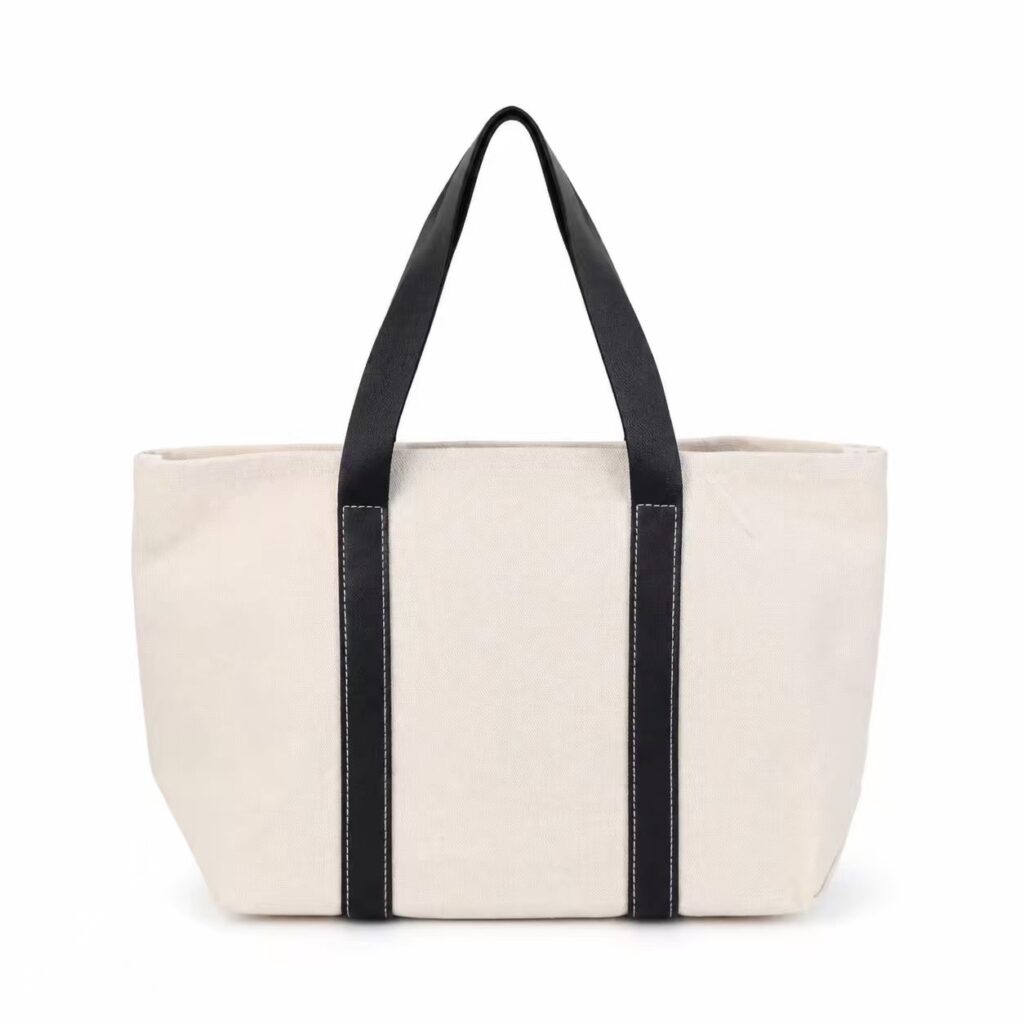
A farm shop may pack a jar of chutney, a closed cake box and a bag of potatoes in the same afternoon. The challenge is not merely finding a larger tote. It is deciding what belongs together, where unused bags are stored and what staff do when a customer’s carrier is soiled.
For cotton tote bags for farm shops, write the packing routine before choosing the print. This keeps the project separate from a general bag-size exercise: the aim is a workable handover across different product groups, with the appropriate packaging around each item.
Map purchases into packing groups
List the items your counter actually handles. Mark which are already sealed or boxed, which can bring soil or moisture into the packing area and which need their own temperature-control arrangement. Do not treat a tote as insulated or leakproof unless a separately specified construction has the relevant evidence.
Use this list to decide which products must stay apart. Food Standards Scotland advises separating raw foods from other foods and checking reusable bags for spills or soil after use.
Build the carrier routine into your own food-safety procedures. Bag colour or an attractive print does not replace appropriate product containment, staff practice or a separate assessment of direct food-contact requirements.
Give the packing bench a clear sequence
Try a simple order of work at the counter: gather the independently packaged products, separate the groups that should not travel together, select the carrier and then pack. Keep the clean stock within reach without placing it on a soil-marked surface.
Rehearse a real mixed order with staff. Where does a damp package wait? Can the closed cake box remain separate from a bag containing unwashed produce? If the answer depends on balancing items temporarily on top of clean carriers, change the layout before increasing the bag order.
Write a short counter note using your product names, not vague instructions such as “pack carefully”. A colleague covering the till should be able to follow the same sequence without interpreting a new system.
Distinguish unused stock from returned or reused bags
Decide how staff will handle a customer-owned carrier that has been used before. Make space for inspection without mixing it into unused sale stock. If it is visibly soiled, follow the shop’s agreed procedure instead of assuming it can be used for any purchase.
If you plan a bag-return scheme, treat that as a separate operational project. Receiving, cleaning, drying, inspection and storage all need defined ownership. Ordering a printed tote does not establish a safe return-and-reissue system.
Any customer care wording should reflect the finished bag’s actual fabric, trims and print. Our cotton tote care guide explains how to plan checks without promising a universal wash temperature or an untested cleaning result.
Use staff feedback to refine the bag brief
Once the separation routine works, put representative packaged orders into samples. Ask the counter team to record insertion difficulties, awkward handle positions and unused space. Separate those observations from formal strength testing or performance claims.
Use measurements in centimetres and request the proposed fabric weight in g/m². If a particular fibre composition is important, including 100% cotton, obtain confirmation for the specified construction. A natural-looking cloth or familiar colour is not proof of composition.
Check how folded bags are counted and replenished at the till. A bundle label that matches the stock sheet may be more useful to staff than another decorative detail on the inside of the bag.
Print a design that does not need a new production run each week
A seasonal produce list may be out of date before the next reorder. Consider whether the shop name and an original illustration would remain relevant across your intended selling period. Keep temporary information on a separate card when that is more practical.
For a later repeat order, retain the artwork version, approved sample reference and bag specification together. The reorder planning guide covers the information to preserve rather than relying on an old photograph.
Request a packing-workflow sample
Send Gahumi a product-group list, photos of the independently packaged sample orders, relevant dimensions, artwork and quantity range. Describe how the bags will be stored and handed over. Add the destination and required availability date for project-specific discussion.
Ask for a sample plan that lets your counter team rehearse the routine before approving the bulk specification. Sample terms, composition, quantity options and timing need confirmation. For a written brief, email gzgahumibag@gmail.com.