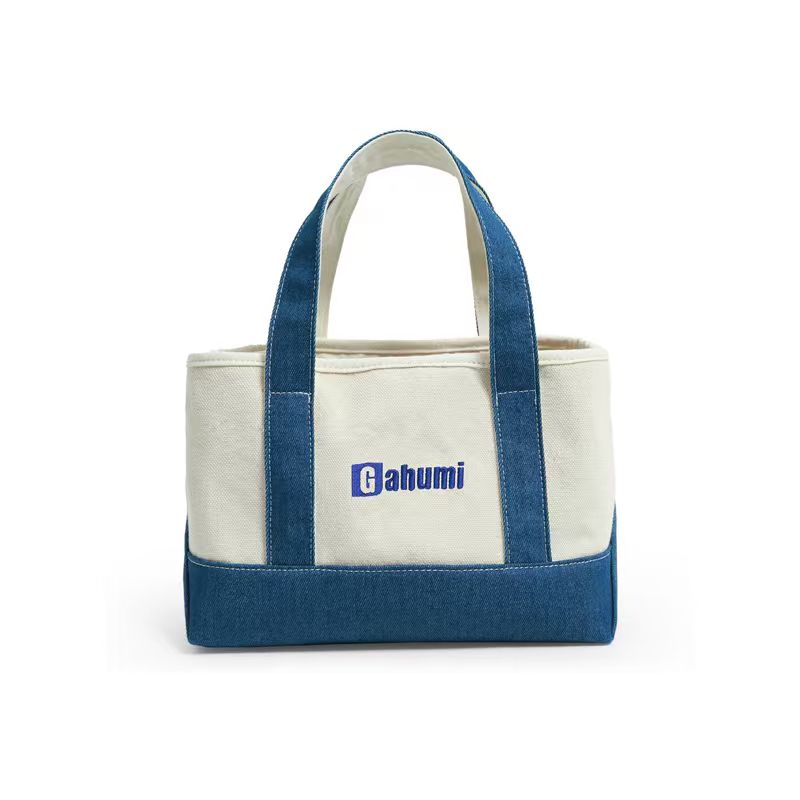
The stitched logo looks tidy while the panel is held flat. Once the finished tote is set down, ripples gather around one corner of the design. The stitches themselves may still look neat; the cloth surrounding them is the part that needs a decision.
Review cotton tote embroidery puckering on the released, completed sample rather than accepting a tightly held close-up. Agree what the buyer should examine, preserve the original condition and ask the embroidery provider to assess any unwanted distortion. A photograph does not establish which technical adjustment is needed.
Start with the cloth at rest
Place the empty bag in a consistent, ordinary viewing position without pulling its corners taut. Look at the whole decorated panel, then the area around the stitching. Identify folds caused by the bag’s construction separately from a local gathered appearance around the design.
For embroidery distortion on cotton canvas, keep an unembroidered reference from the same proposed cloth where practical. Record the fabric identity, face and sample history. A smooth fabric from another project cannot show what changed in this panel.
Take a whole-bag photograph and a closer view of each area of concern. Mark the location against the artwork and note whether the condition was present on receipt or observed later. Do not iron, steam, stretch or unpick the original sample before the provider has had the opportunity to review it.
Give the technical team a useful question
Wilcom’s pull-compensation guidance explains that stitch-induced fabric pull can affect surrounding cloth, gaps and outlines. Its underlay guidance also describes the supporting role of stitching beneath the cover stitches. These are reasons to request a technical assessment, not instructions for a buyer to select machine settings.
Can extra stitch density solve cotton tote puckering? It should not be accepted as an automatic remedy. Ask the provider to assess the cloth, digitised design and support arrangement together. More stitching is not a universal answer to an unwanted gathered surface.
Keep the named design output, finished embroidery dimensions and sample reference with that request. The embroidery file handoff identifies those files separately from a graphic preview. If the provider proposes a revised design, ask what will change visibly and what remains the same.
Compare a revision without hiding another change
A cotton tote embroidery sew-out review should show the original sample, proposed revision and unembroidered cloth reference together. Use the same final design size and bag construction unless the comparison explicitly identifies a change. A smaller logo on heavier cloth may look different, but it is no longer a single-change trial.
Compare the surrounding fabric at rest, the design outline, filled areas and any gaps. Open the bag and inspect how the proposed support is finished inside. The embroidery reverse guide addresses that separate inner finish; an acceptable front should not conceal an unresolved backing edge or attachment detail.
Does a flat embroidery preview prove the bag will lie flat? No. It identifies the intended graphic, not the interaction between stitching and the actual cotton. Keep a completed physical reference for the appearance decision.
If the intended care routine forms part of approval, agree its scope and compare identified samples before and after it. Do not describe an undocumented home-washed sample as evidence of a particular cause. Any performance assessment needs its own agreed method and acceptance basis.
Write down the accepted appearance
In the approval record, identify the sample, viewing position, areas inspected, any accepted fabric movement and unresolved concerns. Do not promise that the fabric will remain perfectly flat under every condition. Record what the reviewed sample actually shows.
Specify the body fabric separately from the embroidery thread, stabiliser, lining and other components. If the brief calls for a reusable bag with a 100% cotton body, verify the body composition and agree care for the completed bag. An embroidery revision is not evidence of certification or lower environmental impact.
Send Gahumi the design, proposed cotton reference, bag dimensions, quantities and any unaltered sample observations. Ask whether the embroidery can be assessed and which sampling arrangements are available. If you are still choosing between decoration routes, begin with the print and embroidery comparison rather than treating a puckering review as a reason to change methods without another sample.
Email the sample record to gzgahumibag@gmail.com.