A self-stowing cotton tote is meant to stay with its own storage feature. After the contents are removed, the customer folds or gathers the bag into an attached pocket or integral flap arrangement, then brings it back into use later. There is no separate pouch to keep paired with the bag.
That idea is worth developing only if the complete bag can make the journey in both directions. Approve the open carrying form and the packed form together, using the actual cloth, seams, handles and decoration.
Choose which part stores the bag
An attached pocket can turn outwards around the empty tote. An integral flap can wrap around a fold and fasten. These are different routes; the drawing should name the one the maker is proposing.
PCNA’s official hospitality guide shows a cotton tote with a compact integral flap and a snap for its folded state. This is a useful example of storage built into a cotton bag, not confirmation that the same feature or certified material is available from Gahumi.
Decide where that feature sits when the tote is open. If it also serves as an everyday pocket, specify its usable space and access separately. The inside-pocket guide addresses that job; a storage envelope sized for the whole bag is not automatically a convenient phone pocket.
Walk through one complete cycle
Use a finished sample, not a paper outline, for the cotton tote folding sequence. Clear a space and ask the maker to demonstrate its proposed method. Keep a simple photo record of the stages the recipient will need.
- Empty the tote and locate the storage feature without turning every pocket inside out in search of it.
- Arrange the handles and fold or gather the body by the proposed route. Check where thick seams and decorated areas accumulate.
- Place the complete bag inside its pocket or wrap it with the integral flap. Operate the proposed closure without pulling against trapped cloth.
- Reopen it, release every handle and restore the carrying shape. Check that no loose storage part obstructs the main opening.
What should fit inside a tote’s self-storage pocket? Everything the customer is expected to pack away, including both handles and any attached parts. If a component must remain outside, show that deliberately and check its resting position. The packed sample should not conceal a loose strap that catches during storage.
Invite someone who has not seen the demonstration to repeat the cycle. Note unclear steps, hard-to-find corners and any need to force the closure. Simplify the construction or instructions where necessary rather than promising effortless folding from one practised attempt.
Measure the packed object you actually have
A packed cotton tote size record needs width, height and thickness at agreed points, with the sample identified. State whether it was folded or gathered and whether the fastening was closed. “Pocket-sized” is not a substitute for those measurements.
Changes to cloth weight, handles, lining or decoration can alter the stored shape. Keep the packed envelope tied to the accepted construction, not just the open dimensions. A bulkier proposal may need another storage feature or a different folding route.
Does folding a tote into itself prove repeated-use durability? No. The operating trial shows whether that sample can be packed and reopened as intended. Agree any required endurance or care evaluation separately, particularly where a fastening, tight fold or decorated surface needs assessment.
The detachable-pouch guide covers a different product arrangement. A removable pouch adds separate pairing and supply decisions; it should not quietly replace an agreed integral feature.
Confirm cotton composition for the body and storage fabric, along with separate trim and thread descriptions. A compact fold is a practical intended feature, not a measured environmental saving. Put any customer folding directions through the same sample review as the product.
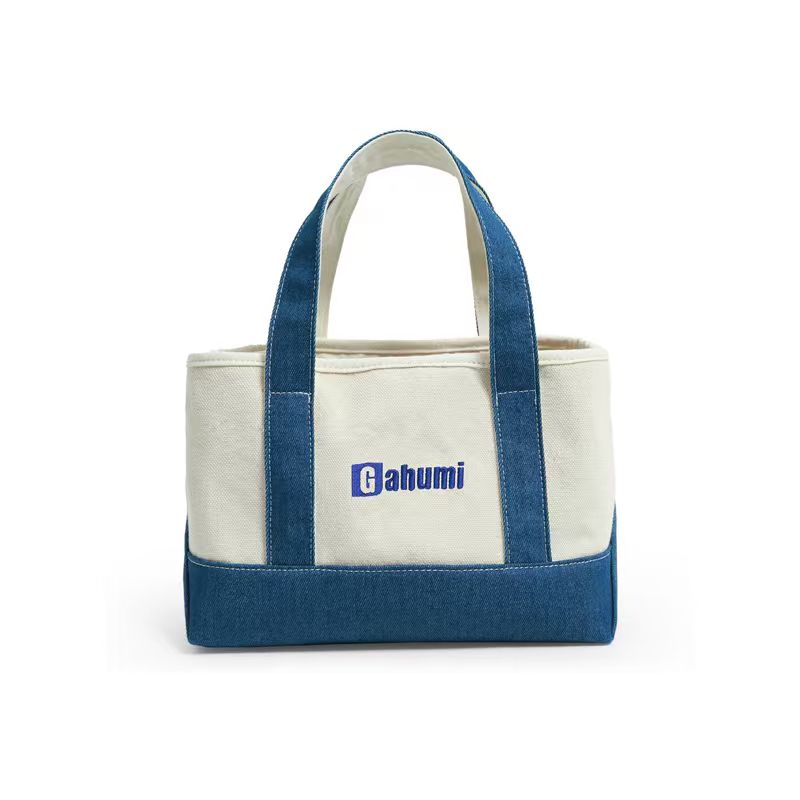
Send Gahumi the desired open size, storage route, packed-space requirement, original artwork and quantities. Ask whether a cotton self-storage construction can be developed and request a complete operating sample before adding packed dimensions to the product description. The accompanying exterior image does not demonstrate this storage feature.
Email the open and packed requirements to gzgahumibag@gmail.com.