A buyer requests a soft, raised wordmark on a cotton tote. One reference has a velvet-like cut surface; another shows visible yarn loops with an outlined edge. Those are not necessarily the same decoration, even when both are described as a chenille look.
Chenille embroidery on cotton tote bags needs a clear description of the yarn-built surface and its border. Before discussing a quotation, establish whether the proposal is genuine chenille stitching, a separate badge or another material chosen to imitate the appearance. Gahumi would need to confirm what can be developed for the actual project.
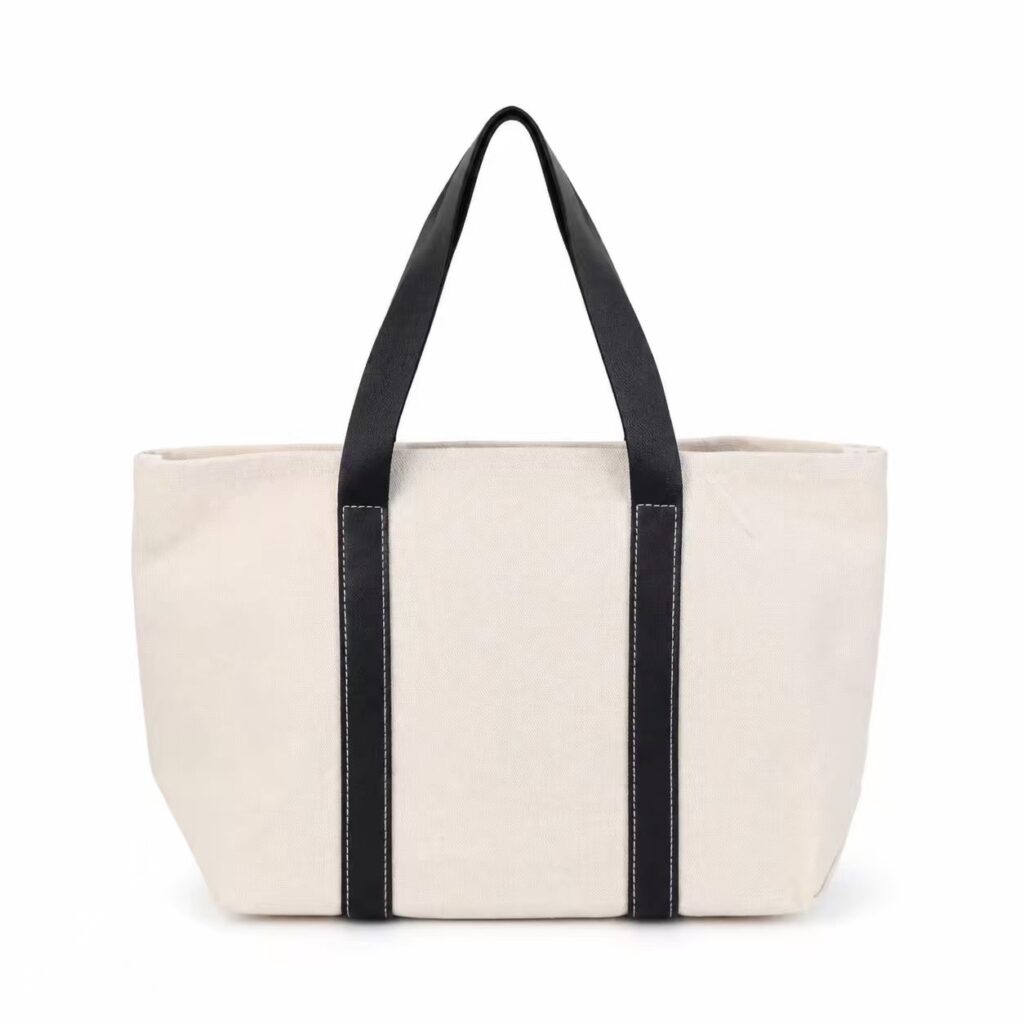
The tote image shows a Gahumi bag exterior, not a chenille process or a confirmed chenille product.
Name the looped area and the surrounding line
Wilcom’s chenille documentation distinguishes moss stitching, which creates a raised looped surface, from chain stitching used for outlines and other details. It also identifies the need for dedicated chenille or combination machine functions. A general embroidery label does not identify that route.
For a moss stitch tote motif, show the filled regions on the authorised artwork. Separately mark any chenille chain border and the parts intended to remain plain cloth. A bold initial with one outlined edge asks a different question from a detailed illustration filled with narrow channels.
Use final dimensions in millimetres and identify the features that must remain recognisable. The provider can assess whether the proposed structure suits those shapes. If simplification is needed, have the design owner accept the revised artwork before a sample is made.
Is chenille embroidery the same as flock? No. A flock surface and yarn formed into loops are different constructions. Our flock finish guide concerns that alternative. Choose the actual surface your brief needs rather than treating the effect names as interchangeable.
Decide whether the motif is made on the panel or separately
Ask whether the decoration would be worked through the cotton tote panel or supplied as a separate component for attachment. That choice affects the reverse, positioning and the components to identify. A loose badge cannot approve its eventual attachment to the bag.
If a separate component is proposed, draw its whole boundary, the visible surrounding fabric and how it joins the tote. Agree who supplies and approves it. The separate logo patch guide explains the attachment questions, although a chenille component must not be misdescribed as a woven patch.
A chenille yarn material brief should name the proposed yarn, its composition and colour references. Record the body fabric and any badge base, backing, adhesive or attachment thread separately. A woolly appearance does not establish wool, and a cotton bag does not establish cotton in every decorated layer.
Can an ordinary embroidery file produce chenille?
Do not assume that the existing flat embroidery output can be used unchanged. The proposed provider needs to assess the design for its actual chenille route, including the relationship between filled regions and their borders. Ask which new preparation and stitched development are included in the sample proposal.
The buyer’s job is to accept the intended result, not to specify needle heights or stitch settings from a software manual. Keep the approved graphic distinct from the production interpretation. This also makes a later request to resize the wordmark visible as a design change rather than an automatic repeat.
Review the yarn structure in use
On the complete sample, inspect the looped areas, the definition around their boundaries and the joins between different regions. Look for any appearance your team cannot accept and mark it on a photograph. Do not invent a universal loop-height target or assign a durability grade by touch.
Put the intended contents inside and review the reverse and opening. If the motif sits near a pocket or handle, check that the assembled position still makes sense. Agree any required care or performance evaluation for the exact combination; the existence of a chain outline alone is not a finished-bag washing guarantee.
Send Gahumi the desired yarn-built surface reference, authorised artwork, dimensions, cotton fabric preference and quantities. Ask whether a suitable construction can be considered and what development sample would resolve the remaining choices.
Email the artwork and construction questions to gzgahumibag@gmail.com.