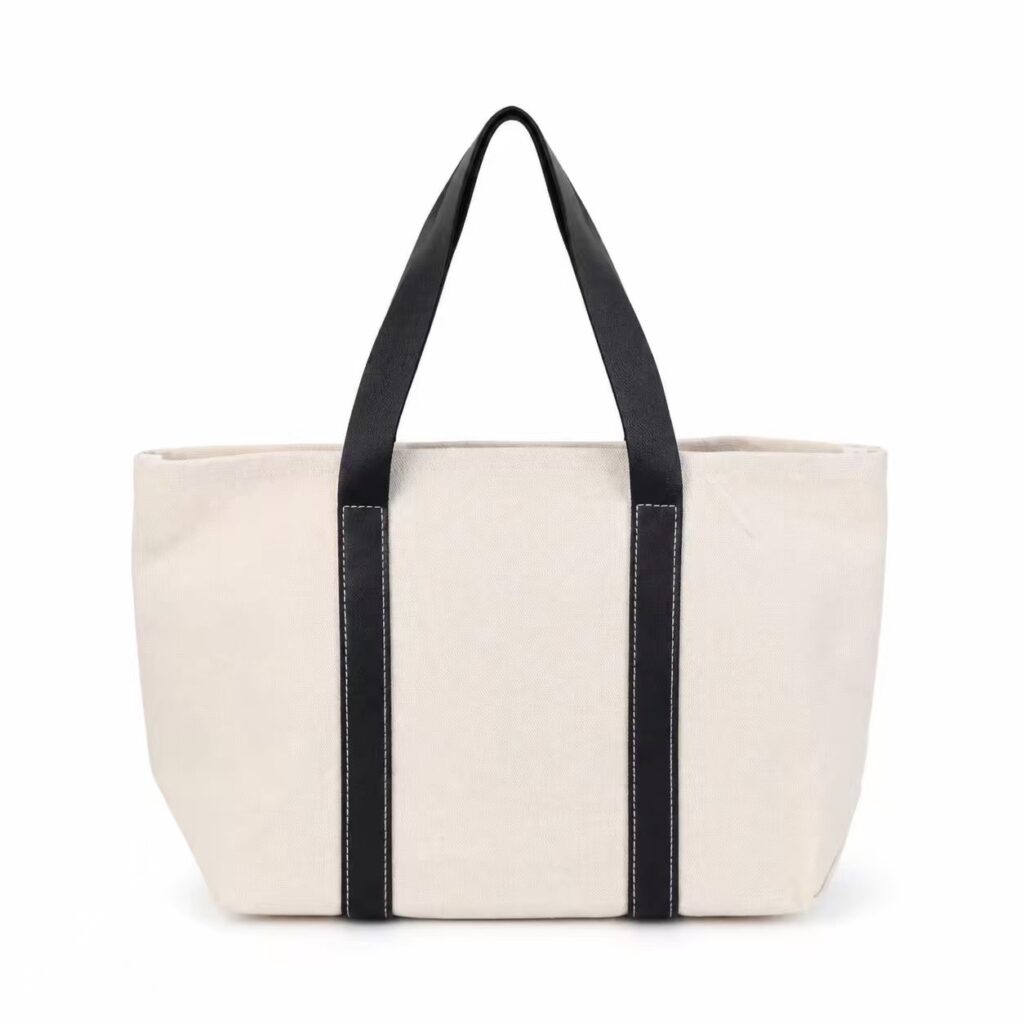
The illustration is printed and a stitched detail is intended to sit within it. Separate proofs look convincing, yet neither shows whether the two operations meet correctly on the same finished panel.
For a tote that combines print and embroidery, review both on the same finished sample. The approval should identify what is printed, what is stitched and how the result relates to the agreed drawing.
Draw the relationship between the two decorations
Use a composite layout at the intended size. Mark the printed area, embroidered area and any deliberate overlap or gap. Dimension both from common references in millimetres rather than asking two providers to centre their parts independently.
An illustrative project might use a printed landscape with a stitched emblem beside it. State whether the emblem should remain clear of the printed edge or touch it. Do not leave that design decision to an interpretation made during sampling.
The multicolour print guide concerns ink-to-ink relationships. This brief instead connects a printed component with a stitched one and must account for both proposed operations.
Keep the production outputs distinct
Wilcom’s combined-decoration guidance distinguishes the embroidery production output from the graphics print output and describes an alignment reference. This is an example of a coordinated workflow, not a requirement to use Wilcom or evidence that a bag supplier supports the technique.
Ask the proposed providers to identify the print file, embroidery output and composite preview as related but different items. Keep version references together. The embroidery file handoff explains why a preview is not the machine file.
Who approves a combined print and embroidery layout? Name one buyer-side reviewer for the composite appearance, while the relevant providers confirm their technical responsibilities. A print approval email should not silently authorise a revised stitched element.
Request the complete operation sequence on one sample
Ask how the proposed sequence will be assessed and which sample will show all decoration completed. A printed tote and a separate embroidered tote cannot demonstrate their relationship. Do not prescribe which operation must always come first.
Inspect the finished panel without pulling it unnaturally flat. Compare the overlap or gap, overall position, lettering and surrounding cloth with the composite drawing. Open the tote and review the reverse, including any retained backing and effect on pockets or lining.
Can two accepted decoration samples replace a combined sample? No. They may settle individual colours or details, but they do not show the result after both operations have been applied to the same construction.
Record any unwanted stitch crossing, shifted relationship, visible mark or changed panel appearance by location. Ask the providers to investigate before assuming a cause. A revised file or sequence needs another review of the affected combination, not merely a close-up of the corrected element.
Confirm the cotton body, embroidery thread, backing, print materials and other components separately. Review the care proposal for the complete decorated bag. Neither a composite sample nor an embroidery effect establishes certification or a measured environmental advantage; planned reuse needs a useful, supportable finished product.
Send Gahumi the composite layout, separate artwork references, intended cotton construction, quantities and destination. Ask first whether coordinated print and embroidery can be considered and what sampling and pricing would be involved.
Enquire about a composite sample Discuss the print and stitch relationship
Email the composite drawing and file references to gzgahumibag@gmail.com.