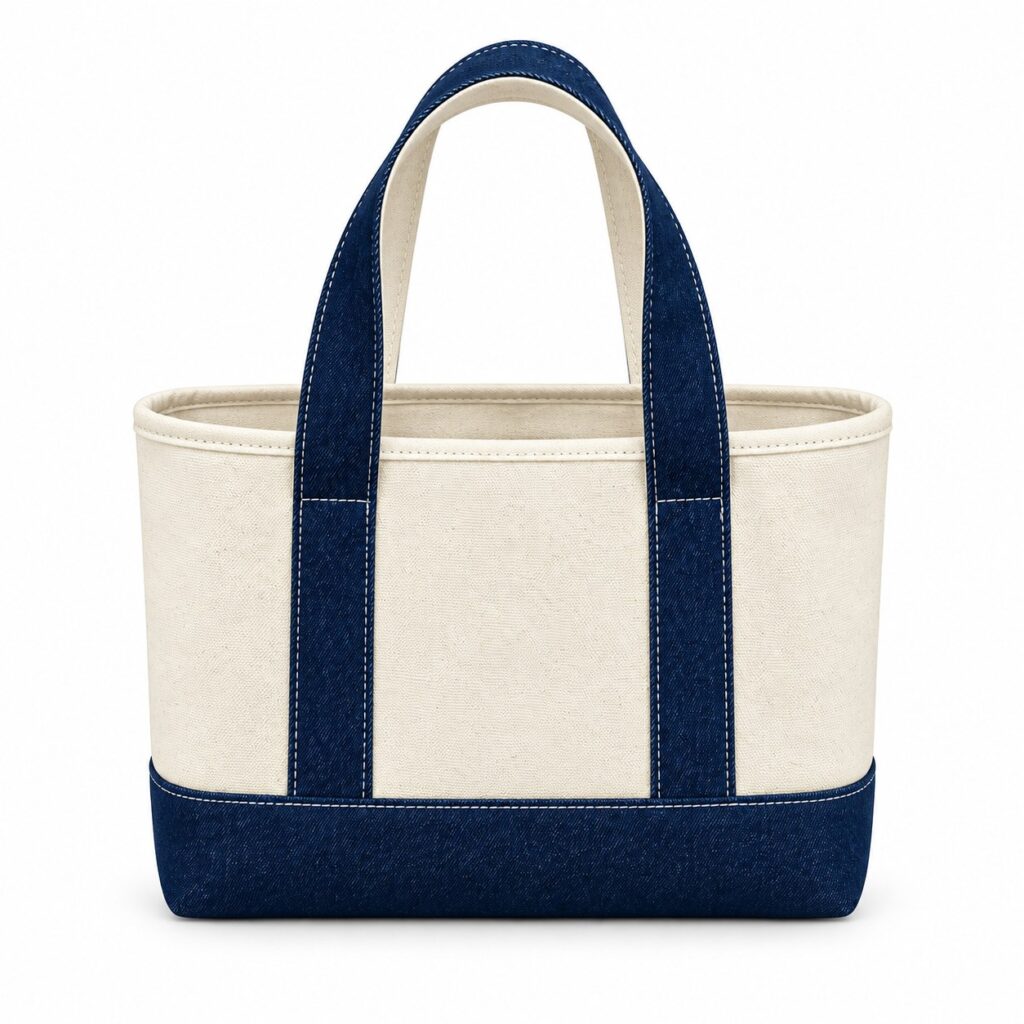
An unreleased museum collection, a staff campaign or a retail collaboration may need a bag quotation before its artwork can be shown widely. Sending the complete launch folder with the first enquiry is not always necessary.
When discussing a confidential bag project, separate the information needed for the enquiry from the files that should wait. The useful output is a short disclosure record, not a long email heading marked confidential with no agreed handling behind it.
Start with a bag specification that can travel
Prepare an initial brief using a project code. Include the proposed body dimensions in centimetres, handle arrangement, fabric weight in g/m², approximate design count and intended use. State whether you require a 100% cotton body and ask for component confirmation; handles, thread and trims should not be assumed to share that composition.
Describe the print area with a neutral box or redacted layout if that is enough for an initial feasibility conversation. Explain what remains concealed, such as the final illustration or a campaign name. Do not present a placeholder as production-ready artwork.
That first enquiry can establish which details are needed for a meaningful quotation. It should not require you to disclose an entire confidential collection merely to describe one tote.
Agree the purpose before releasing the next file
The UK Intellectual Property Office guidance on confidentiality warns against assuming a discussion is confidential. It also describes defining the permitted purpose of a disclosure and seeking appropriate advice.
For the bag project, identify whether a file is being shared for quotation, decoration assessment, sample making or an accepted production instruction. A limited-purpose design review should name the version, intended recipients and decision being requested.
A confidentiality mark on an attachment is not proof that the recipient has accepted your requested arrangements. If an agreement is needed, have the responsible adviser review its scope and the relevant jurisdictions. This article is a practical file-handling brief, not a contract or legal advice.
Keep a small design disclosure register
Use a design disclosure register with six entries for each release: file reference, version, recipient or team, permitted purpose, authorising person and release date. Add the relevant agreement reference where one exists.
For example, a redacted front-panel drawing might be released for an initial quote while a complete illustration remains withheld pending a separate decision. When the full file is released for sample assessment, give that release its own entry rather than overwriting the first one.
Ask whether another production participant needs access to the artwork and how that proposed disclosure would be handled. Do not assume that a contact who can quote the tote has already agreed every request about onward sharing.
Include the physical sample and its photographs
An embargoed design can appear on a sample, a packing label or a progress photograph as well as a digital file. Ask how sample identification, access, photography and any proposed portfolio use should be agreed.
Record any requested return or retention arrangement for samples and files, then seek confirmation. A request to delete a folder does not establish that deletion has happened or determine anyone’s legal obligations.
Keep the environmental copy within the same review. A cotton fabric requirement does not establish organic certification, and an illustration of repeated use does not prove durability or a lower environmental impact. Request support for any proposed claim before it enters the released artwork.
Keep permissions and file details separate
Keep reproduction permissions distinct from confidentiality. Our artist collaboration rights guide covers the permission brief, while the artwork preparation guide addresses the file details needed for a bag.
Approach Gahumi with the non-confidential specification and explain which information needs a separate handling discussion. Ask what is required at each stage before sending sensitive files. Sample options, terms and any confidentiality arrangements need project-specific confirmation.
For an initial specification, contact gzgahumibag@gmail.com without attaching restricted material unnecessarily.