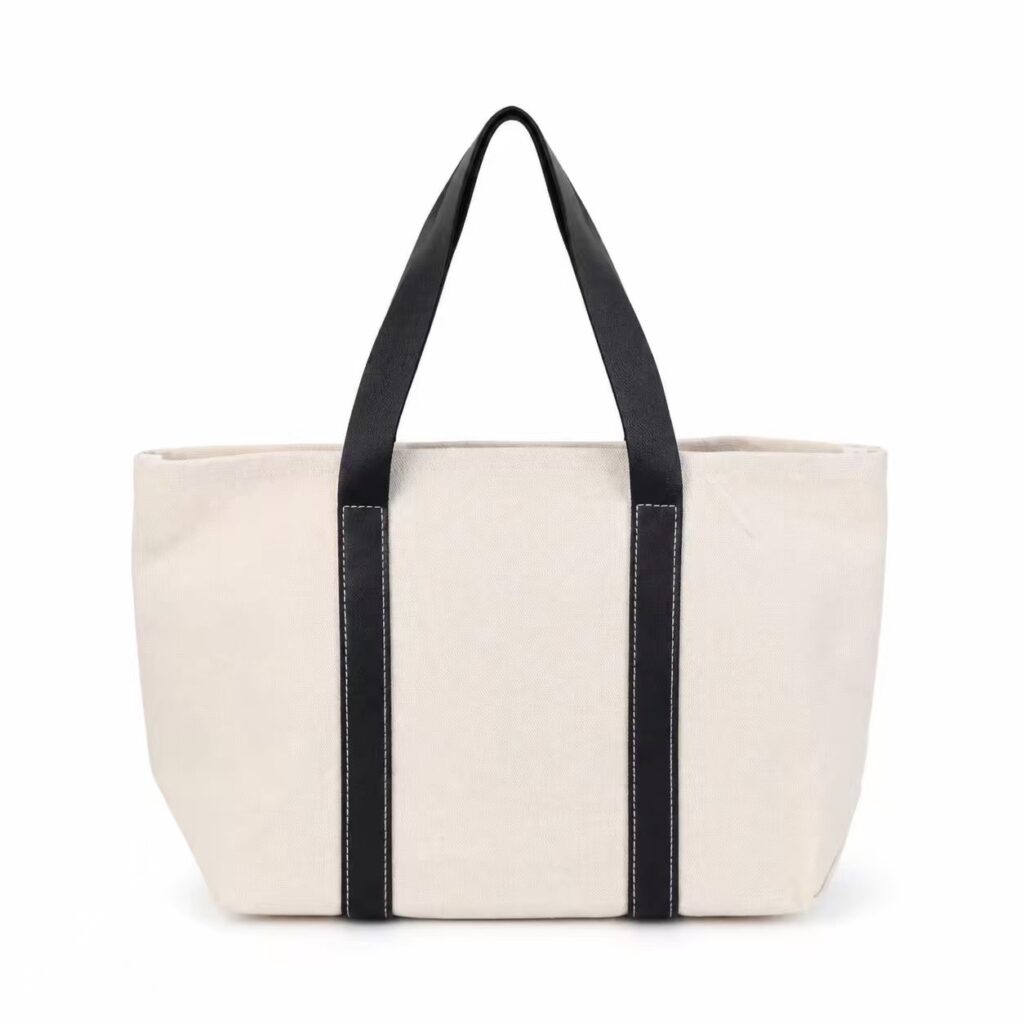
A tote that looks generous in a photograph can still be awkward to put over a coat. The missing measurement is often handle drop: the space between the bag opening and the top of the handle loop. For a buyer, that space deserves a separate line in the specification.
This cotton tote bag handle drop guide is for teams comparing samples for shops, visitor attractions and branded merchandise. It does not prescribe one length for every customer. It sets out a repeatable way to measure, try and approve the handles before a bulk order.
Agree what the supplier is measuring
Handle length and handle drop are not interchangeable. A supplier may quote the full cut length of a strap, a finished loop measurement or the distance above the opening. Those figures describe different things. Ask for an annotated drawing rather than trying to convert one into another.
For your own comparison, place the empty bag flat, straighten the handle without stretching it and measure vertically from the finished top edge to the inside top of the loop. Mark those points on a photograph. Use the same method for every sample and ask the supplier to confirm it.
Measure both handles separately. Record the strap width, distance between attachment points and bag opening width too. A single drop figure cannot describe the whole carrying arrangement.
Try the intended way of carrying
Decide whether the bag is mainly for hand carrying, shoulder carrying or a compromise between the two. This is a project decision, not a reliable assumption about all shoppers in a country. A small shop bag and a large exhibition bag may need different trials even when the artwork is identical.
Use the kinds of clothing relevant to the intended season. Try placing the sample on and removing it from the shoulder while wearing a jacket. Then carry it by hand and check the distance from the bottom of the bag to the ground. Include more than one person in this review.
Keep the findings practical: “difficult to remove over this coat” or “base catches the steps when hand carried” is more useful than “handles feel wrong”. Do not turn a brief comfort trial into a universal ergonomic claim.
Load the sample with the real contents
An empty bag is only the first check. Put the intended catalogue, packaged merchandise or other representative contents inside. Photograph the bag from the side while it is carried. Note whether the opening is accessible and whether the handles bunch together.
Use your own written trial conditions and ask the supplier about any formal testing required for the project. Handle drop does not establish a safe carrying weight. Fabric, seams, attachments and the finished design need separate consideration.
If a wider body is proposed, repeat the trial rather than copying the approved handle measurement automatically. Our tote selection guide helps connect the bag format to its intended use.
Check where the handles meet the design
A handle change can alter more than comfort. Mark the strap position on the front panel and check how much space remains for the logo. If straps continue down the body, show whether the artwork sits between them or elsewhere. Do not approve print placement from a blank rectangle alone.
Review the attachment area inside the sample as well as outside. Ask what construction is proposed and whether changing the handle position affects the opening or any requested pocket. These details belong on the same drawing.
For printed orders, keep this measurement record with the artwork and placement approval. That makes it easier to identify which version was actually sampled.
Approve a measurement method, not just a number
List the agreed handle drop in centimetres and keep full handle length in a separate field if it is needed. Add the measuring method and an agreed tolerance after the supplier has reviewed the design. Do not borrow an exact tolerance from an unrelated product.
Retain the approved sample. On a reorder, compare both the written measurements and how the bag carries with the same contents. If the body size, fabric or handle material changes, ask which checks need to be repeated. Our reorder checklist covers the wider approval record.
Ask for a sample with your carrying brief
Send Gahumi the proposed body dimensions, handle drop drawing, intended contents and preferred way of carrying. If you require a 100% cotton body or a particular handle composition, state each requirement separately and ask for confirmation. Include quantities, artwork and the delivery postcode.
A photograph showing what did not work on an existing sample is welcome too. Ask us to review the requested changes, confirm what can be made and quote the sampling and bulk order separately.
Email your brief to gzgahumibag@gmail.com.