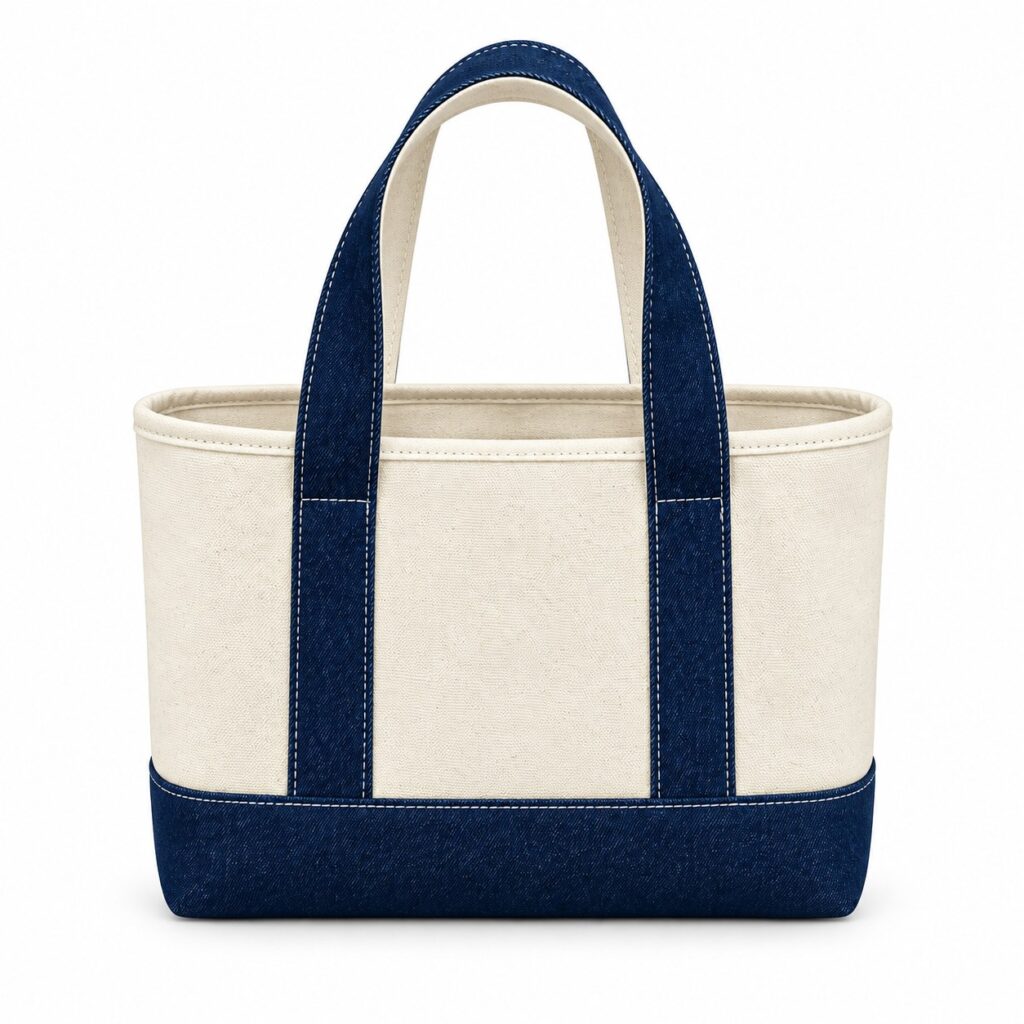
Start a carrying claim with the complete bag, not a fabric number. The canvas fabric-weight guide supports material selection; the load brief below brings the chosen cloth together with handles, seams and the proposed carrying task.
“How much can this tote carry?” sounds like a request for one number. A useful answer needs more than the fabric weight and a photograph of reinforced stitching. A bookshop tote, a wide grocery bag and a bag with two handle lengths may place different demands on the finished construction.
Cotton tote bag load testing should begin with the use and claim the buyer needs to assess. The test brief must identify the actual bag, the proposed assessment and the evidence required before a carrying statement is accepted.
Describe the carrying task before choosing a test
List the intended contents and how they sit in the bag. Books concentrate weight differently from a loose collection of light items. Include relevant dimensions, firm edges and any internal divider. Representative contents help explain the enquiry; they do not establish a safe carrying limit by themselves.
A tote carrying-use brief should also identify how the bag is lifted. If customers may use either of two handle sets, tell the technical service about both. Mention adjustable straps, detachable fittings or a removable base rather than sending an incomplete shell as though it represented every configuration.
Can fabric GSM tell me a tote’s carrying capacity? No. GSM describes fabric mass per unit area, not the performance of the assembled handles, seams and panels. Our fabric tear assessment guide explains another material question that must not be converted into a whole-bag rating.
Ask the service which assessment fits the construction
A loaded bag remaining suspended and a bag repeatedly lifted are not the same assessment. SATRA’s public description of TM247 concerns repeated lifting of loaded luggage, including bags, with damage observed during and after the assessment. Ask a competent service whether this or another method suits the proposed tote.
Intertek’s bags testing overview also distinguishes the strength of fastenings from the points where a strap joins the bag body. That distinction matters when choosing what to assess. Naming a published method does not confirm that a particular laboratory offers it or that it is appropriate for this order.
A finished tote handle strength enquiry should therefore ask the service to specify the method and edition, complete sample configuration, loading arrangement, conditioning, duration or repetitions, observations and reporting basis. Have the responsible technical reviewer agree the acceptance criteria before testing. Do not borrow a kilogram limit or cycle count from another bag’s listing.
Make the sample request match the claim
Use a sample reference linked to the drawing, fabric, handle materials, attachments and construction revision. Identify whether decoration, washing or another agreed treatment is present. If the proposed claim covers several constructions, ask which versions need separate evidence rather than assuming that the largest sample represents them all.
Tell the service which carrying configurations need review, and ask how many units it needs and how they should be selected. Keep an unaltered comparison reference where practical. Do not sell or reuse a specimen that has been damaged or consumed during an assessment.
Keep this work separate from the visible seam and handle inspection. An attachment can look tidy before loading. Equally, a photograph of a damaged attachment needs examination before anyone decides whether the cause lies in the cloth, sewing, fitting or assessment conditions.
Read the result before writing the product claim
Does one successful lift prove repeated-use durability? No. It records that particular observation, not a repeated-lifting result, a lifespan or every possible customer’s use. Keep the completed assessment and its limitations attached to the claim review.
A load-test report review should check sample identity, method, conditions and reported damage before considering a summary result. Ask about unclear observations or deviations. If a revision is needed, record the changed construction and discuss whether fresh assessment is required. Retain the decision with the finished sample approval.
For a reusable bag, assess suitability for its intended use without claiming an unmeasured environmental saving. Confirm a requested 100% cotton body separately from the composition of handles, reinforcement and thread. Neither composition nor a load result proves the other.
Send Gahumi the intended contents, complete bag specification and any proposed carrying claim. Ask what samples can be discussed and whether an appropriate external assessment needs arranging. A product photograph is not evidence of a tested carrying capacity.
Email the sample requirements to gzgahumibag@gmail.com.