The stitched logo is the right blue, but it catches the light more strongly than the brand team expected. Replacing the colour name will not necessarily resolve that difference. The thread’s material, product range and surface effect all belong in the decision.
A cotton tote embroidery thread specification should identify what will be stitched, not simply request thread to match the bag. Choose the visible finish on the proposed cloth, then keep that choice attached to the approved design and stitched sample.
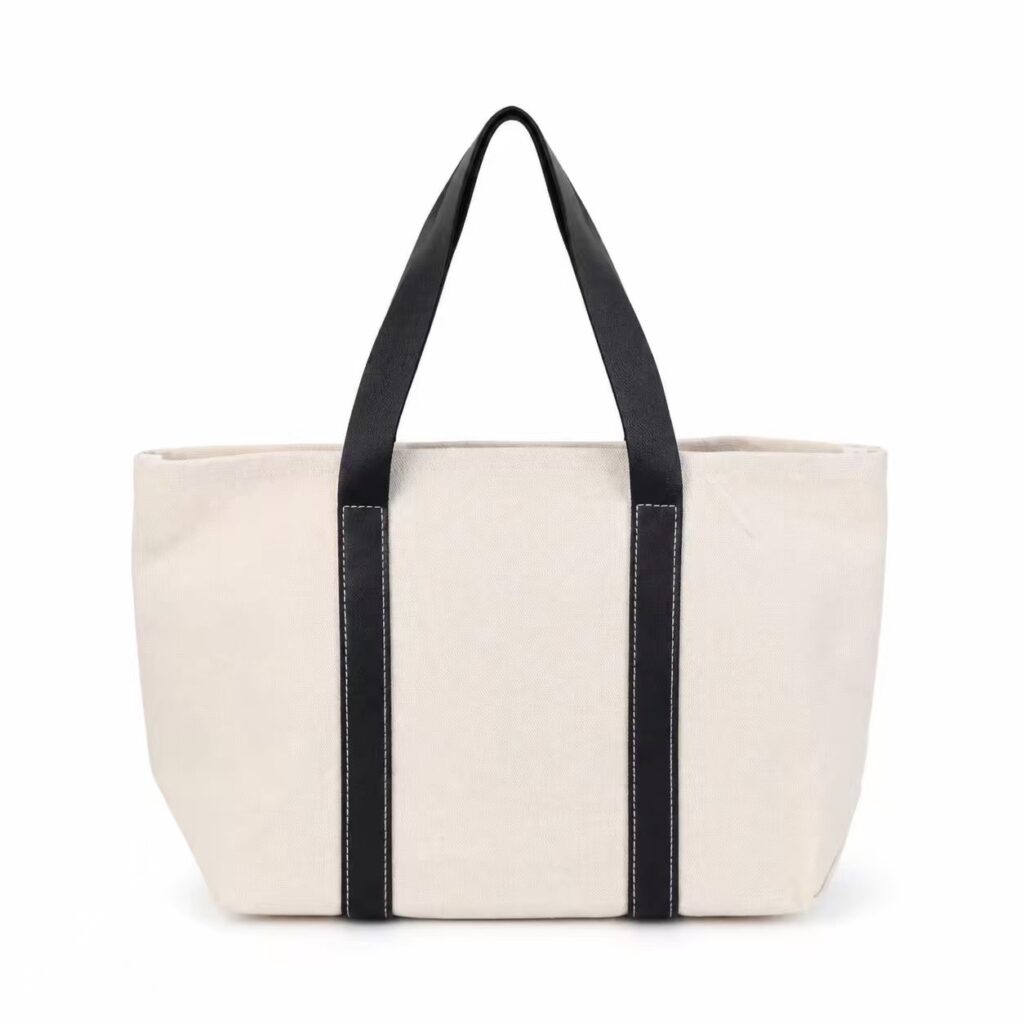
The bag photograph is an exterior reference. It does not identify an embroidery thread or demonstrate a stitched finish.
Separate cotton fabric from embroidery thread
Embroidery thread fibre composition belongs on its own component line. A cotton canvas body may carry a different fibre in the decoration. Madeira’s thread catalogue, for example, lists viscose, polyester and cotton product families separately. These are material examples, not a list of Gahumi’s available threads.
Does a cotton tote need cotton embroidery thread? That depends on the agreed scope. A requirement for a cotton body does not automatically require cotton in every component. If the project requires particular textile components to be cotton, name them explicitly and ask what can be supplied and documented.
Identify top thread and bobbin thread separately where both are used. Include backing and any reverse covering in the component record too. The front colour is not evidence for the materials hidden behind the stitching.
Choose the finish at the final design size
Compare matt and shiny embroidery thread on the actual cotton, using the intended design dimensions. A large filled emblem and a few thin letters can show quite different effects. View the stitched sample straight on and as the bag moves, alongside an authorised physical reference where one exists.
A matt appearance is not a fibre description. Madeira identifies Frosted Matt as a polyester thread with a matt finish. Its product information also distinguishes weights within the range. Neither the finish name nor a familiar nominal weight should approve an unidentified substitute.
Record what your team wants to retain: a quiet flat-looking mark, clear contrast between lettering and background, or a deliberate mix of matt and lustrous regions. Avoid using premium as the whole instruction. Let the proposed provider assess how to produce the chosen appearance.
Can I replace an embroidery thread with the same colour name?
Not without checking the replacement. Two product ranges can use similar names while differing in fibre, sheen or thickness. Ask for the manufacturer or provider reference, range, weight description and colour code of each proposed thread. Any substitute should be assessed against the accepted result.
A physical thread shade card helps the team select candidates, while the sewn sample shows how the chosen thread appears in the design. A digital colour chart is useful for communication, but it cannot replace either physical reference. Keep the selected code with the relevant card or swatch rather than relying on a screenshot called navy.
If a brand colour cannot be matched acceptably within the proposed range, make that an open decision. The buyer may prefer another authorised shade or a different decoration route. Do not silently change the brand colour to fit a convenient cone.
Keep thread identity connected to the sew-out
Record the thread references on the sample sheet beside the artwork version, final dimensions and cotton fabric reference. If several threads are used, show which region each one fills. The embroidery file handoff keeps those choices connected to the output that created the sample.
Then check the inside of the assembled tote. Any exposed backing, bobbin work or covering needs an agreed finish, particularly where contents could catch. Use the embroidery reverse review for that construction decision rather than accepting the front alone.
Agree care requirements for the complete material combination. A thread manufacturer’s washing or certification statement does not automatically cover the finished bag, and choosing a particular fibre does not establish a product-wide environmental advantage.
Bring the design, preferred thread appearance, material requirements and quantities to Gahumi. Ask whether a suitable thread proposal and stitched sample can be developed before treating the selected effect as an order specification.
Send the proposed thread and artwork brief to gzgahumibag@gmail.com.