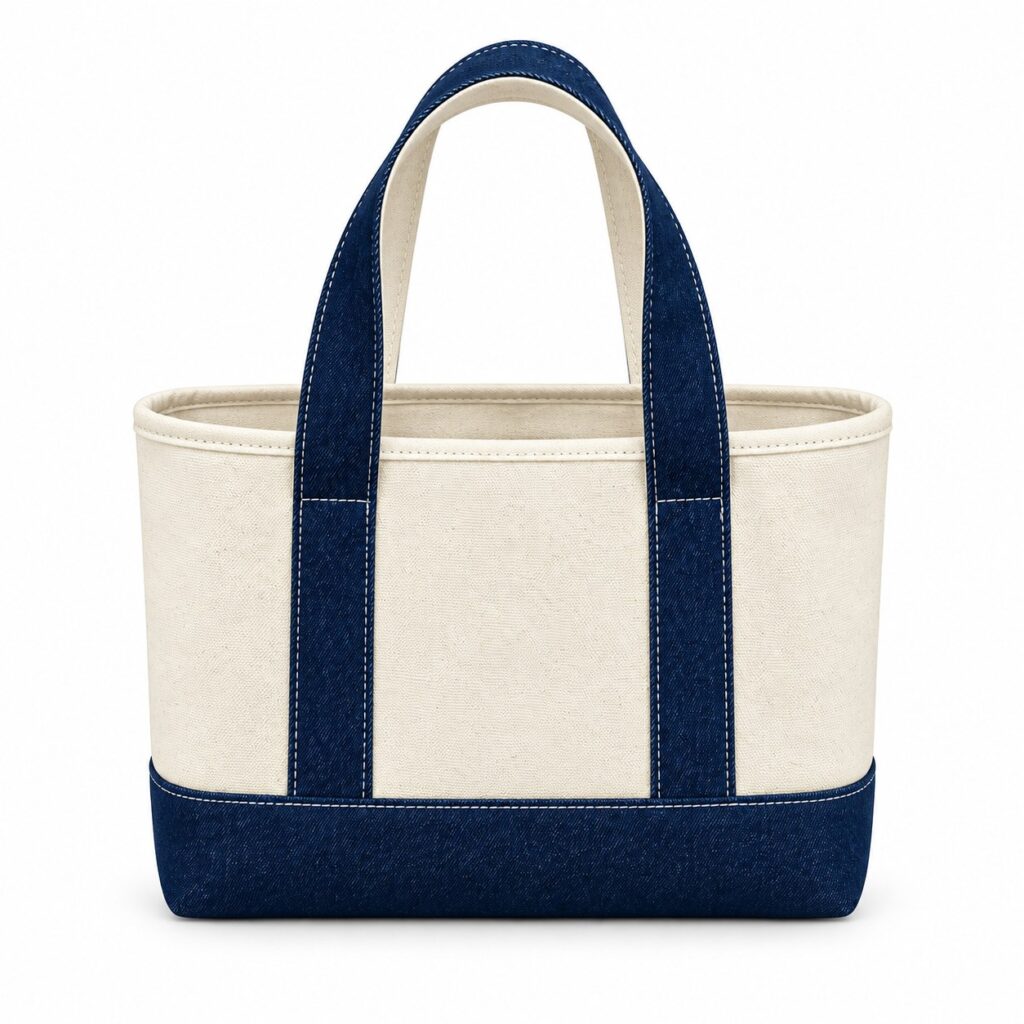
The closure works while the tote is shut. During access, its hook face brushes a knitted sleeve. A closed photograph could not have answered that part of the review.
A cotton tote hook and loop closure needs an open-state view as well as a closed sample. The buyer is choosing where two surfaces meet, where they remain exposed and how they will be attached to the particular bag.
Identify the hook face and the loop face
Mark both components on the drawing with their references, dimensions and intended overlap. Show which face points towards the bag contents when open. Do not approve a generic strip called fastening tape without identifying the pair.
What touches exposed hooks when the tote is open? Use the intended contents and ordinary access action to answer. The VELCRO Brand FAQ discusses unwanted contact with exposed hooks. Check that contact on the actual product proposed for your bag.
Make an open hook contact map showing the flap or top edge, the two faces and the places a hand, sleeve or contents pass. Ask for a revised layout if the proposed location causes an unwanted contact in the sample review.
Do not let the backing disappear from the specification
Can adhesive-backed tape be specified as sew-on tape? Do not treat the two as interchangeable. The manufacturer’s fabric range distinguishes sewable and non-sewing products. Identify the actual proposed version and obtain the appropriate application guidance.
Ask the technical supplier to confirm attachment compatibility with the selected cotton canvas and any decoration nearby. Do not prescribe a universal needle, stitch pattern or adhesive from an online example. Record whether stitching will be visible on the opposite face.
The artwork placement guide helps keep the fastening away from an unintended part of the design. If a lining is involved, show which layers receive the attachment rather than assuming the inner assembly hides every fixing.
Review a normal access sequence
Open the closure, insert or remove the representative item, then close it again. Check where the loose section rests and whether the intended faces can be brought together without twisting the mouth. Note the contents and sample version used.
Include any empty fold or unit packing that will be used for the order. Decide how the fastening surfaces should be presented during the agreed packing and care arrangements. Where cycle life or closure strength matters, define the separate assessment the project requires.
A hook-and-loop cotton bag fastening introduces materials beyond the reusable cotton body. Confirm the actual tape, backing, thread and other parts individually. A request for 100% cotton body fabric should not become an all-components cotton claim.
Accept a layout and a component pair together
Keep the open contact map, paired references, attachment proposal and accepted sample in the order file. A substitution must be reviewed for more than matching colour and width.
Include the proposed fastening in your enquiry to Gahumi, with the bag specification, access purpose, artwork, quantities and destination. List the questions the sample must answer, and have any feasible alternative identified before it enters the quotation.
Email the proposal to gzgahumibag@gmail.com.