Ask what a rivet is joining before choosing its colour. A decorative cap, a fastener through a handle and body, and a part added beside existing stitching do not describe the same construction.
Cotton tote riveted handles need a component proposal for the actual layers at the attachment. The buyer’s task is to define the required appearance and use, then obtain a suitable assembly from the maker. A familiar metal head is not enough to specify it.
Put the joined layers on one section
Draw the handle and body at the proposed fixing point. Include folded hems, reinforcement, lining and any other layers that the proposed fastener would pass through. Mark which layers are joined and which remain separate. Ask the maker to confirm this section before treating a front-view mock-up as a complete design.
A rivet and fabric stack should be reviewed together. Prym’s tubular-rivet information distinguishes head sizes and internal tube lengths for materials of different thicknesses. That supports checking the actual part against the assembly, rather than selecting by visible cap diameter alone.
The component supplier or maker should identify a suitable model and installation requirements. Do not invent a post-length formula from the compressed fabric measurement. A reference intended for another material may need a different technical review.
Can the same rivet be used through any handle thickness? It should not be assumed. A changed handle, extra fold or backing layer changes the proposed stack. Return the revised section and component references for confirmation before accepting a substitute.
Know what is being ordered
A riveted handle component brief can stay short if it identifies the assembly clearly:
- The handle and body references, with each relevant material described separately.
- The fastening’s named parts, material and surface finish, using the supplier’s own identification.
- The location and joined-layer section, including any proposed additional support.
- The maker responsible for confirming compatibility and installation.
- The appearance sample and any assessment required for the intended carrying use.
Merchant & Mills’ Jack Tar project lists canvas-compatible fabrics, a strap and rivets among its materials. It illustrates why a handle and its fastening need separate records. The paid pattern and its dimensions are not a production template for a Gahumi enquiry.
Clarify whether the fastener is part of the carrying connection, decorative, or used alongside a separately specified sewn attachment. The seam and handle inspection guide covers visible sewing. A new cap should not quietly replace a construction that was approved on a stitched sample.
Look inside before accepting the finish
The inside face of a riveted handle attachment may be close to the customer’s belongings. Review the actual sample from that side as well as outside. Identify what is exposed, whether a covering is proposed and whether that covering interferes with a pocket or lining.
Record any visible irregular edge, loose movement, cloth distortion or unwanted contact for the maker to assess. An appearance observation is useful without diagnosing an installation fault from a photograph.
Compare the assembled bag with the original handle brief. Does it open in the intended way? Is the print still clear of the hardware and attachment area? If a future repair is important, ask the responsible repairer how the connection could be reached; the repair-aware design guide treats that separate question.
Release the carrying proposal with evidence
Do rivets make a cotton tote stronger? Their presence alone does not establish that. Agree the required carrying assessment for the complete construction, if any, before making a load or durability claim. Keep the component and sample references attached to the result and decision.
Confirm the requested cotton body independently from straps, hardware, support and thread. A metal colour cannot establish nickel content, corrosion performance or a finished-bag environmental benefit. Any required material or finish documents belong in the enquiry.
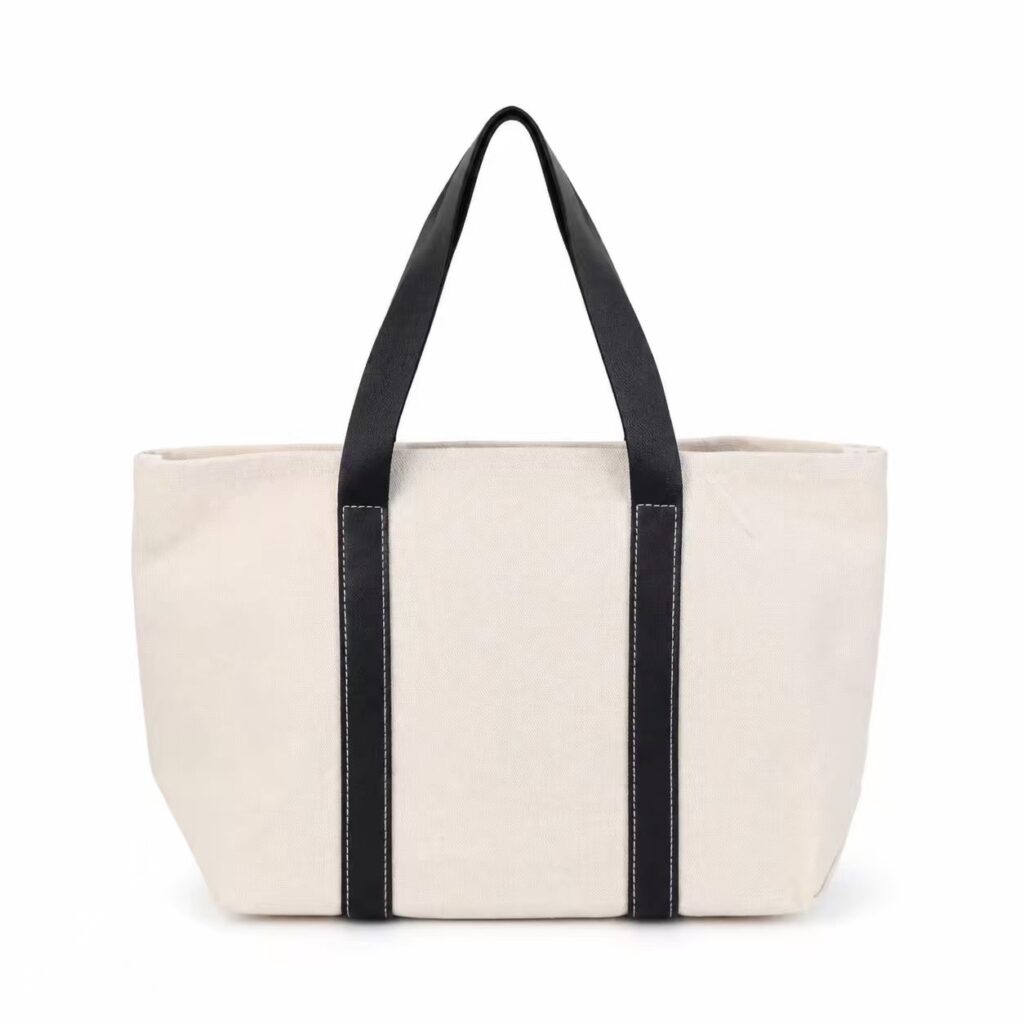
Send Gahumi the original attachment drawing, intended contents, material requirements and quantities. Ask whether a riveted construction can be considered and what component sourcing and prototype work it would require. The product photograph is an exterior tote reference, not evidence of a riveted handle or tested performance.
Email drawings and component questions to gzgahumibag@gmail.com.