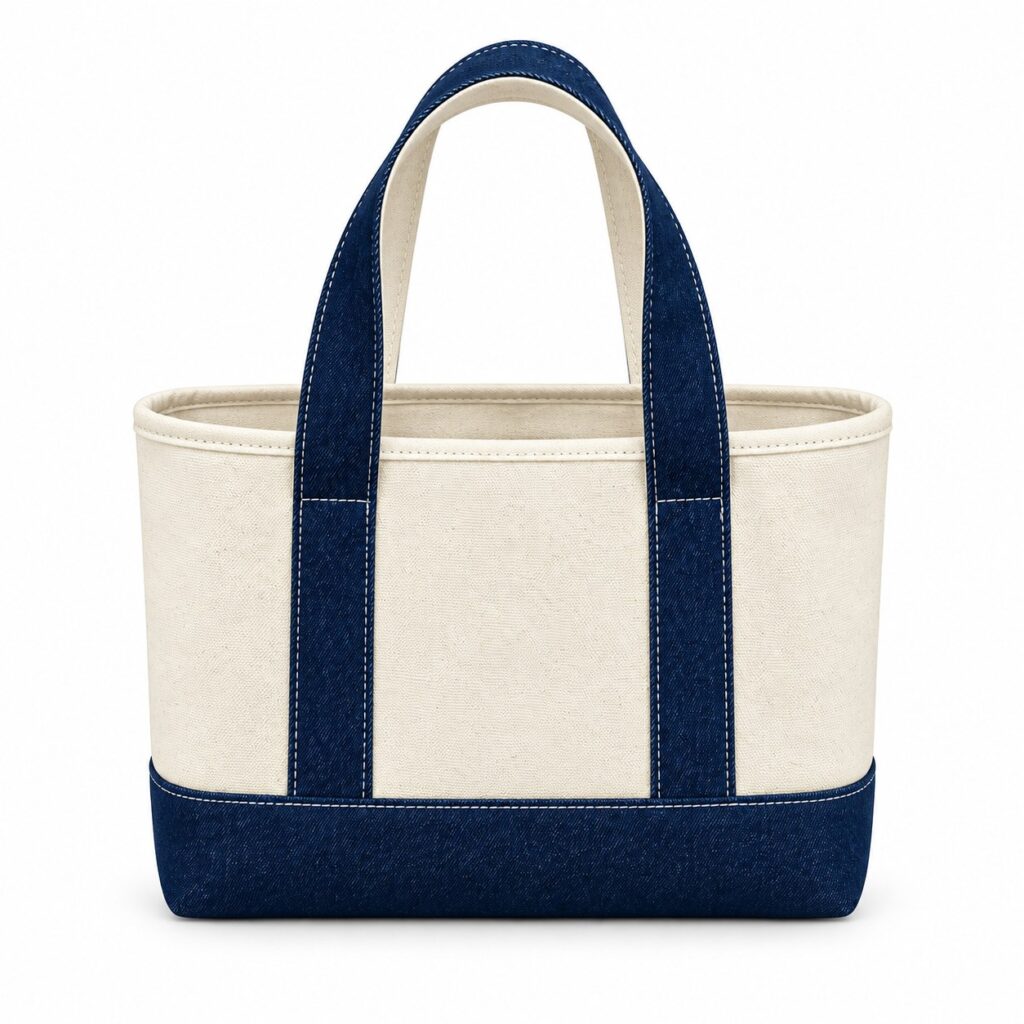
A pale design on a dyed tote does not always have to be described as another layer covering the cloth. A discharge proposal introduces a different question: is the selected dyed fabric suitable for that process, and what result will the buyer actually accept?
Before commissioning a discharge print for cotton tote bags, qualify the proposed cloth and the desired effect together. A cotton composition statement alone does not establish that a particular dyed batch is dischargeable.
Ask about the dyed fabric before choosing an effect
Give the printing team the exact body fabric, colour and available dye-lot reference. Ask it to identify the proposed discharge system and assess whether the cloth is a suitable candidate. Do not assume a result on a different dark cotton sample will transfer to this material.
MagnaColours describes its Discharge LO system for dischargeable fabrics and lists cotton among the fabric types. The qualifying word matters. Its product description is not evidence that all cotton totes can reproduce the same shade or that Gahumi offers that system.
The dark-fabric opacity guide addresses covering a background with an identified ink proposal. Do not use an accepted opaque print as the reference for a different discharge effect without another review.
Build a fabric-and-result card
Request a labelled unprinted reference and a processed example from the same proposed cloth, where a trial is feasible. If the proposal includes a coloured effect, identify that example separately from any uncoloured discharge result. Keep the final artwork size beside the card.
For each candidate, record the cloth reference, batch if known, proposed process, sample date and observed background and design colours. Add the buyer’s acceptance decision. A card with two shades and two results is clearer than a photograph captioned only “navy discharge”.
Does 100% cotton guarantee a successful discharge print? No. Ask the technical provider to assess the particular dye and fabric arrangement. If the relevant dye information is unavailable, record that gap rather than filling it with a performance assumption.
Approve the appearance that was actually obtained
View the physical examples together under agreed lighting. Check the intended contrast, important lettering and larger printed areas. Record whether the resulting shade is accepted as a deliberate design effect or whether another route needs investigation.
Can a discharge result be matched to any brand colour? Do not promise that. Show the colour requirement before the trial and ask what can be assessed. A useful decision may be to accept a qualified effect, revise the artwork with authorisation or return to another proposed printing route.
Review the completed bag and its supported care arrangements before release. Neither the visual effect nor the word discharge establishes chemical compliance, organic status or a smaller environmental footprint. Use the chemical-documentation checklist for separately agreed evidence needs.
Retain the result card and accepted sample with the fabric identity. A new dyed batch or substituted process needs a review of whether the earlier qualification remains applicable. Do not carry a convenient photograph forward as approval of an untested replacement.
Specify the cotton body separately from handles, thread and decoration. If the bag is intended for repeated use, confirm useful dimensions and appropriate care rather than describing the print process itself as an environmental improvement.
Send Gahumi the dyed cloth reference, desired effect, artwork, quantities and destination. Request confirmation of whether a discharge proposal can be considered, with any trial arrangements, price and timing established for this enquiry.
Enquire about discharge feasibility Discuss the dyed-fabric reference
Email the cloth identity and authorised effect reference to gzgahumibag@gmail.com.