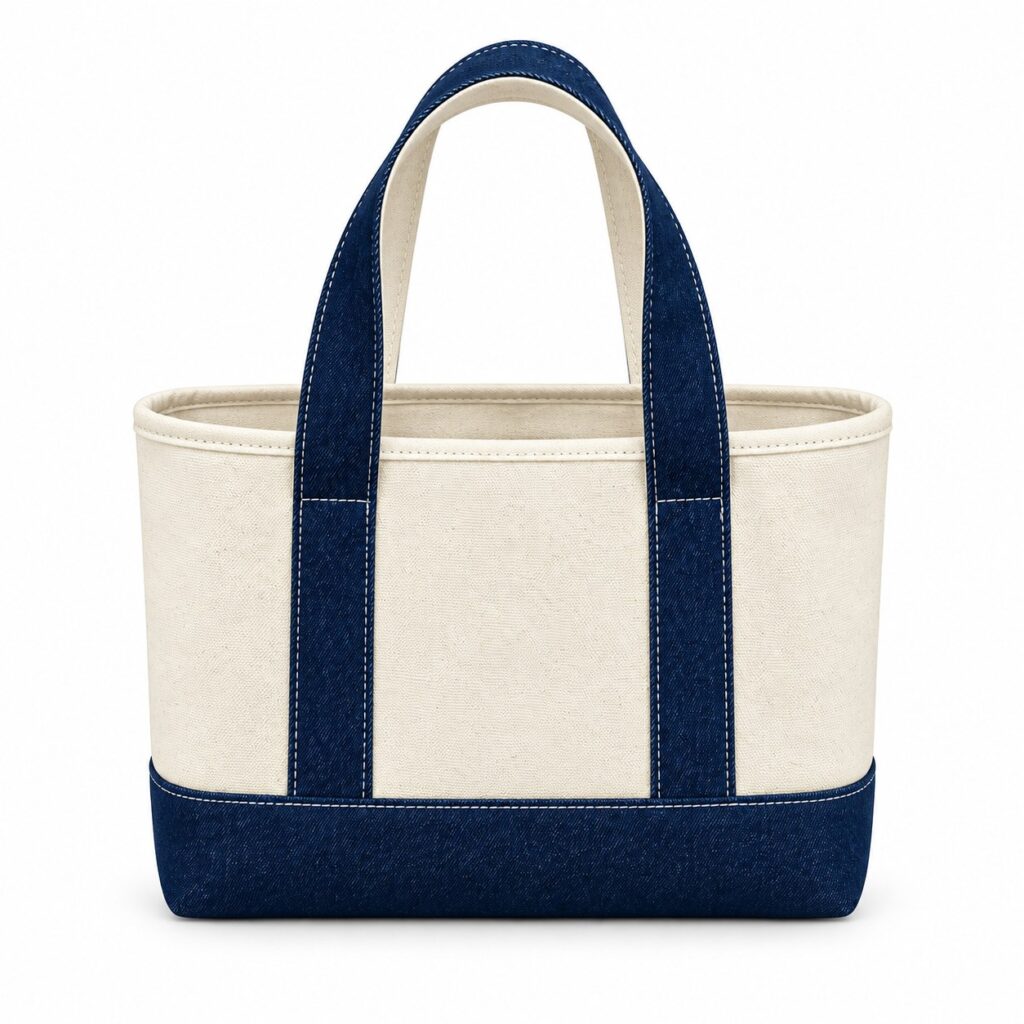
A wide logo is not a sufficient reason to order a wide bag. First check the thing the bag needs to carry. A catalogue, a folded textile and a gift box can each point to a different opening, body proportion and way of packing.
When comparing landscape vs portrait cotton tote bags, lay the real contents on the proposed outlines. This simple exercise is more informative than choosing from photographs taken at different angles. The aim is to select a usable proportion before the artwork and sampling budget are fixed.
Define orientation on the specification
In this comparison, landscape means the body is wider than it is high; portrait means it is higher than it is wide. These labels do not replace dimensions. State the finished width and height in centimetres, label them clearly and specify any depth separately.
Ask where the supplier measures the width: the opening, the main body or a laid-flat outline. If the bag narrows or has shaped panels, include a drawing. A description such as “large landscape” does not give the production team enough information to work from.
Keep handles outside the body-height measurement unless your agreed drawing explicitly says otherwise. Record handle drop separately so that the two sample outlines remain comparable.
Match the opening to the way items enter
Measure the intended contents with their final packaging. Then show which edge goes through the opening first. A product may fit inside the body once positioned but still be awkward to insert through the top.
For a catalogue, try inserting and removing it without bending the cover. For a box, include the lid and any sleeve. For a folded garment, use the folding method your team will actually use rather than an unusually tight sample fold.
Make a full-size paper outline for an initial review, but do not treat that as a substitute for a sewn sample. The opening, seams and any gusset all need to be assessed together.
Check visibility and access once filled
Decide whether contents should be visible above the opening or sit below it. A tall item projecting from the bag may be acceptable for one project and unsuitable for another. Put that decision in writing instead of allowing it to emerge during final packing.
Try retrieving the smallest item after the main contents are loaded. Check whether the chosen proportion makes staff or customers rummage unnecessarily. If a pocket is considered, treat it as a separate custom request requiring confirmation, not an automatic fix for the wrong body shape.
For retail books and cultural merchandise, the bookshop and museum shop guide offers a related use-case checklist. It does not establish one universal bag size for those buyers.
Reposition the artwork for each proportion
A design approved on a portrait mock-up should be reviewed again on a landscape version. Check its distance from the opening, base, straps and side edges. Simply stretching the graphic to fill the new panel can change its intended proportions.
Print the design on paper at the proposed size and place it on both outlines. Review text at a normal viewing distance. For a wide illustration, ask whether reducing the print or changing the layout is preferable to enlarging the entire bag.
The cotton tote artwork guide explains which placement measurements to record. Each bag format needs its own approved drawing even when the artwork file is shared.
Review carrying and presentation together
Load both samples with the same contents and try the intended carrying method. Check body position, handle access and hand-carry clearance. Do not assume a wider bag is less comfortable or a taller bag is more comfortable; record what happens with the actual design.
Try the planned display too. Hang the sample from the proposed hook, place it on the counter or fold it for the shelf. Ask how the bulk bags would be packed. Those observations help the retail team avoid choosing a format that only works in a studio photograph.
Keep any comparison of fabric weight separate from orientation. Our canvas weight guide can support that second decision, subject to the actual fabric specification.
Ask Gahumi to review both outlines
Send the dimensions and photographs of your contents, the two proposed bag outlines and the required quantities. Include any 100% cotton body requirement, artwork, delivery country and postcode. Tell us which practical question the comparison needs to settle.
Ask which proportions and construction can be sampled for the project. A measured brief makes it easier to compare options without turning every artwork adjustment into another change of bag size.
Send outlines by email to gzgahumibag@gmail.com.