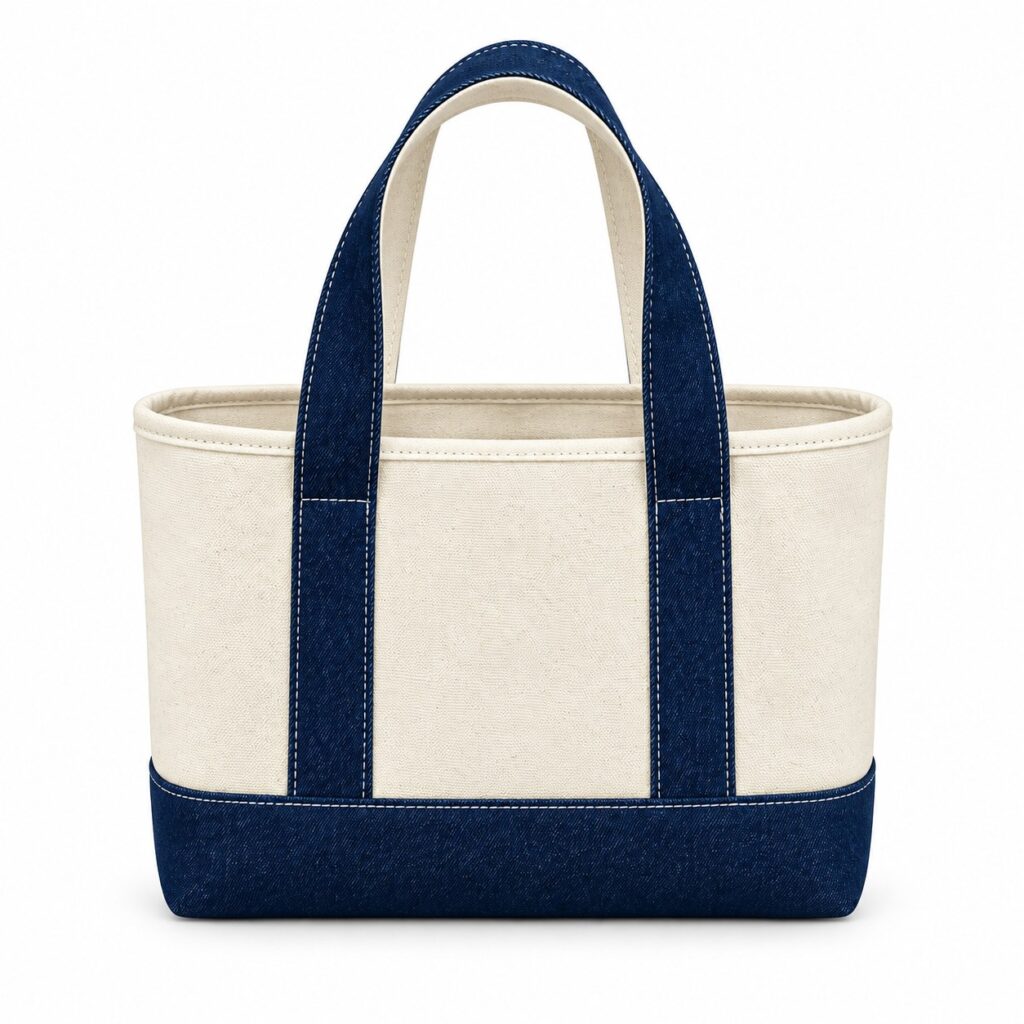
The front fabric is cotton. That does not settle what is behind the stitching. A quilted tote can include a face cloth, filling and inner fabric with different compositions and different jobs.
When developing quilted cotton tote bags, ask for a layer-by-layer proposal before approving the soft, padded appearance. This helps a buyer compare like with like and write accurate product information for a European retail range.
The pictured Gahumi tote is a style reference, not a quilted sample. Quilting and the proposed layers need a separate feasibility review.
Three layers, three questions
Is every layer in a quilted cotton tote made of cotton? Not necessarily. Avoca’s quilted tote description separates cotton fabric from polyester wadding. It is a useful illustration of why the word cotton should not be extended to an unidentified filling.
Identify the proposed wadding in the material record, including its composition, reference and any backing. Record the outer and inner fabrics alongside it. If your brief requires cotton in a particular layer, state that layer explicitly and ask what evidence is available.
Also distinguish wadding from a support interlining. A proposal for a firmer shape is not automatically the same as a quilted assembly. The interfacing guide deals with that different construction decision.
Decide what the stitched pattern should do visually
A cotton tote quilting layout should show the stitch pattern across the complete panels, including where it meets the top edge, base and handles. Ask which layout can be developed with the identified fabrics rather than borrowing a spacing measurement from an unrelated bag.
If the outer fabric is printed, place the quilting over the artwork view. Decide whether a line running through a face, word or small illustration is acceptable. Check the intended appearance on a stitched sample instead of approving the print and quilting independently.
Surface texture can change how a flat graphic reads. Use full-size artwork and identify a viewing distance relevant to a person carrying the bag. The print placement brief helps preserve the correct artwork version during that discussion.
Softness uses space as well as fabric
How do you compare usable space in quilted tote samples? Put the same agreed contents into each complete sample, including their normal protective packaging. Check the opening and the internal space after all layers are joined; outside dimensions alone do not establish the fit.
A quilted tote finished thickness check should record where the measurement was taken and whether the sample was flat, folded or lightly held in its normal shape. Ask the maker for an appropriate comparison method. Avoid squeezing one sample firmly and comparing it with another measured without pressure.
Fold the bag as it will be packed for retail. Note its actual folded size and how easily it returns to the intended shape. Any support or protection requirement needs its own evaluation; a padded appearance does not prove that the bag protects a device or fragile purchase.
Care belongs to the finished assembly
The face, filling, inner fabric and decoration must be considered together when agreeing care wording. Ask what assessment covers changes in shape, colour and layer movement after the proposed procedure. A washing instruction for a cotton swatch does not automatically apply to the quilted tote.
Retain the complete sample and material references. A change in filling can affect the product even if the front cloth and print look unchanged. Request an updated proposal rather than accepting a substitute under the same general description.
For a reusable bag range, explain the intended use and keep environmental statements tied to evidence. Cotton content, extra softness and the presence of quilting do not establish a lower impact or a certified claim.
Send Gahumi the layer requirements, quilting sketch, artwork, expected contents, quantity and destination. Ask whether the proposed assembly can be developed and quoted, with sampling and any evaluation identified separately.
Prefer email? Contact gzgahumibag@gmail.com with the material requirements.