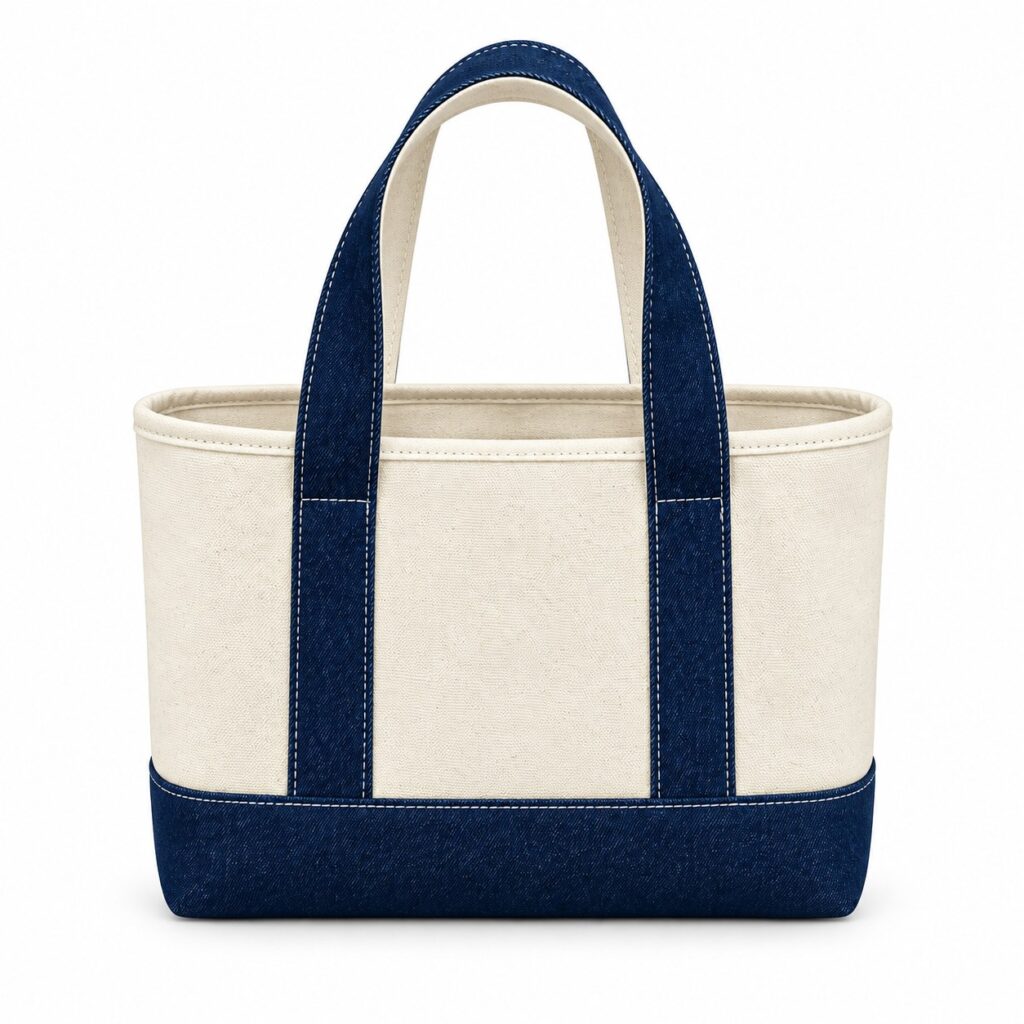
Raised print cotton tote bags need approval from the side as well as the front. A flat logo proof can show where the design sits, but not how its surface will stand above the cloth. For a retail range, decide which parts should have relief and what the finished effect should feel like before accepting a decoration proposal.
A rounded, expanding letter and a sharply defined, built-up shape are different design outcomes. Neither should be ordered simply as a “3D logo”. Ask Gahumi whether the proposed effect can be developed for your fabric, artwork and quantity. Availability and the finished result need project-specific confirmation.
Describe the relief rather than relying on an effect name
For puff printing on cotton totes, show which areas are intended to rise and which should remain flat. Mark separate colours and neighbouring ordinary print on the artwork. A small raised emblem beside flat wording may need a different proposal from a large, continuous raised panel.
Manufacturer descriptions explain why these choices matter. PERMASET describes a puff medium that expands during heating, including some sideways expansion. MagnaColours describes High Density XL as an ink for raised, high-build effects on cotton and cotton blends. These are examples of named systems, not evidence that either product is available for a Gahumi order.
Include a physical reference if possible, while separating what you like about it: the height, rounded outline, surface texture or contrast with the fabric. Do not ask a provider to reproduce an unidentified reference exactly without a feasibility review.
Give the designer room to adjust the shape
Raised print artwork gaps deserve a separate look at the proposed final size. Check spaces inside letters, the channels between neighbouring shapes and narrow lines beside filled areas. If a sample closes an important gap, ask for an authorised artwork revision rather than accepting a smaller wordmark that no longer reads properly.
Record the design dimensions in millimetres and retain a marked copy showing the intended raised regions. Our cotton tote artwork guide covers the underlying size and placement handoff. Here, the extra decision is which surface profile the artwork must produce.
Can a flat artwork proof approve a puff print? It can approve the design version and intended position, but not the final relief. A digitally shaded mock-up is still a proposal. Keep it separate from the accepted physical reference.
Read the sample as a finished object
Request a high-build ink sample on the proposed fabric and shade, with the decoration fully processed. Look at it straight on, at an angle and from the side. Record whether raised areas have the agreed outline and whether the background cloth remains visibly distinct from them.
Check raised print placement on an assembled tote, not only a loose panel. Hold the bag as intended, fold it as it will be supplied and inspect the effect near any handle attachment or panel join. Where a raised area meets a fold, decide whether the resulting appearance is acceptable rather than assuming the bag will always stay flat.
Handle the sample and describe the tactile result in ordinary language. If the project has a care or durability requirement, agree an appropriate evaluation with the provider. An ink manufacturer’s technical sheet is not a test report for your finished tote. Use the finished-bag care review to keep the fabric, decoration and other components within the same assessment.
How should a raised print sample be approved?
Keep an identified physical sample together with its artwork version, fabric reference and named decoration proposal. Record the accepted raised areas, edge appearance, position and any necessary revisions. If height is a contractual requirement, agree how it will be measured and assessed rather than inventing a universal millimetre target.
Also identify the cotton fabric separately from the decorative material. A cotton body does not make a raised ink finish cotton, organic or automatically lower impact. For a reusable bag range, describe the verified components and intended use without adding unsupported environmental claims.
Send Gahumi the design, intended relief, fabric preference, quantity and sample requirements to check feasibility before the effect becomes part of your product listing.
Prefer email? Send your brief to gzgahumibag@gmail.com.