Set the recycled-content requirement alongside the bag’s physical specification. The canvas weight comparison helps frame the material shortlist; the blend and input records below establish different information. Neither choice replaces the other.
One quotation says recycled cotton canvas. Another gives a recycled percentage but leaves the rest of the blend unnamed. The descriptions sound similar, yet the buyer cannot tell whether they represent the same material.
A recycled cotton canvas tote specification should connect three things: the full fabric composition, the origin of the recycled input and the evidence for the particular cloth being offered. Start there before choosing the words for a shop label or comparing the unit prices.
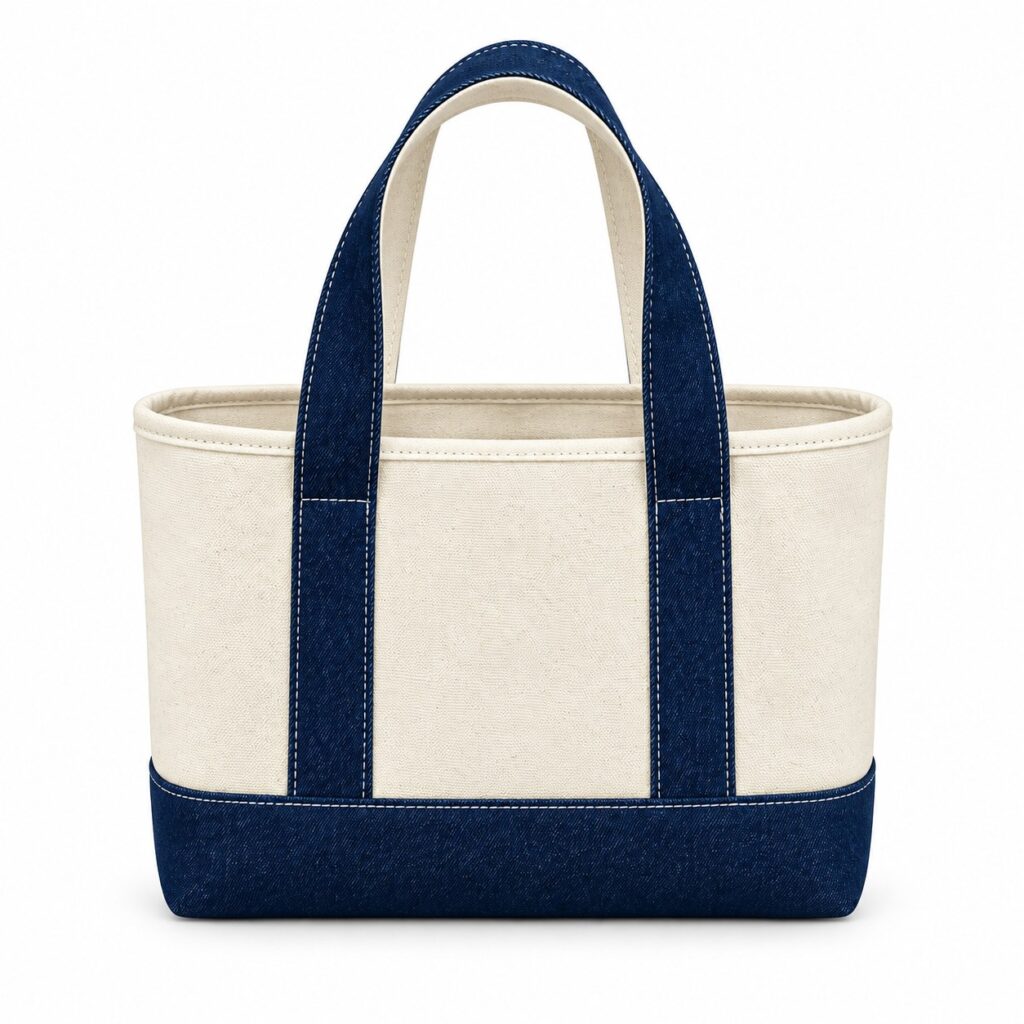
The Gahumi tote photograph is an exterior reference, not proof of recycled content or certification.
Write two descriptions instead of one
Record the fibre composition of the proposed body fabric separately from its recycled-content statement. Ask the provider to identify the percentage of recycled cotton and every remaining fibre, with a clear basis for those figures. An entry that says only “recycled blend” is incomplete.
Does recycled cotton mean the tote fabric is 100% cotton? No. The recycled cotton may be combined with other cotton or with another fibre. Ask for the full proposed blend rather than treating recycled origin as a fibre-composition statement. Handles, lining and thread also need separate records.
For a recycled cotton canvas blend brief, use a component table with a line for the body and each different fabric. Give every line its own supplier reference, composition and recycled-content description. Do not apply the body’s percentage to a contrasting base or handle by default.
Name the recovered input
Pre-consumer and post-consumer recycled cotton describe different input histories. CottonWorks’ recycled-cotton overview distinguishes production scraps from previously used textile products. Ask which category the proposed input belongs to and what records support that description.
If the provider describes a mechanical recycling route, ask what material and process records identify the actual proposal. CottonWorks explains that mechanical processing can affect fibre characteristics. That is not a finished-bag strength rating, and it does not justify saying every recycled cotton tote will perform worse than every other tote.
Likewise, the word recycled does not explain the complete process by itself. Do not fill a missing process description with an assumption about how the input was recovered. Keep any unconfirmed point visible in the sourcing record.
Connect the documents to the cloth on the table
A recycled cotton tote evidence handoff should identify the fabric reference, proposed composition, input origin and the documents relevant to those statements. Ask how the material on the sample and the material intended for the order remain connected to that record.
Textile Exchange’s RCS and GRS resource distinguishes recycled-material verification from chain-of-custody documentation. If certification is required, ask the responsible reviewer or certification body which current requirements apply to the proposed route and goods. A familiar scheme name is not proof that this fabric or finished bag is covered.
Can a fabric swatch prove its recycled cotton percentage? Its appearance cannot establish that percentage or its input history. Use an identified swatch to assess the physical material, and use appropriate supporting records for the content statement. Neither replaces the other.
Keep organic growing origin separate too. The organic and conventional cotton guide addresses that different question; recycled content does not automatically mean organic cotton.
Request a usable material comparison
Hold the intended bag dimensions, handle arrangement, artwork and quantities steady while comparing the identified cloth proposals. Review surface appearance, fabric feel, print reproduction and the completed bag with representative contents. Agree any required performance evaluation without assigning results from the blend name.
Your enquiry can request four deliverables: a complete composition line, the recycled-input description, an evidence list with unresolved items marked, and an identified finished sample proposal. Ask for material substitutions to be reviewed before they replace the quoted reference.
For a reusable retail bag, a documented input choice is useful information, not proof of a product-wide environmental saving or future recyclability. Put proposed public wording through the separate environmental-claims review once the material evidence is available.
Send Gahumi the desired blend and evidence requirements, bag drawing, artwork, quantity and destination. Ask whether suitable sourcing and sampling can be supported for that project. This guide does not state that Gahumi supplies a particular recycled fabric or holds certification.
Email the material requirements to gzgahumibag@gmail.com.