A logo can look restrained in daylight and very different when light is directed towards it. A single bright photograph will not tell a buyer whether that change is the desired decorative effect.
Reflective artwork on cotton tote bags needs an agreed ordinary-light appearance, a named material proposal and a sample viewed under the intended lighting conditions. This guide concerns decoration, not protective equipment or a claim that carrying the bag makes somebody safer.
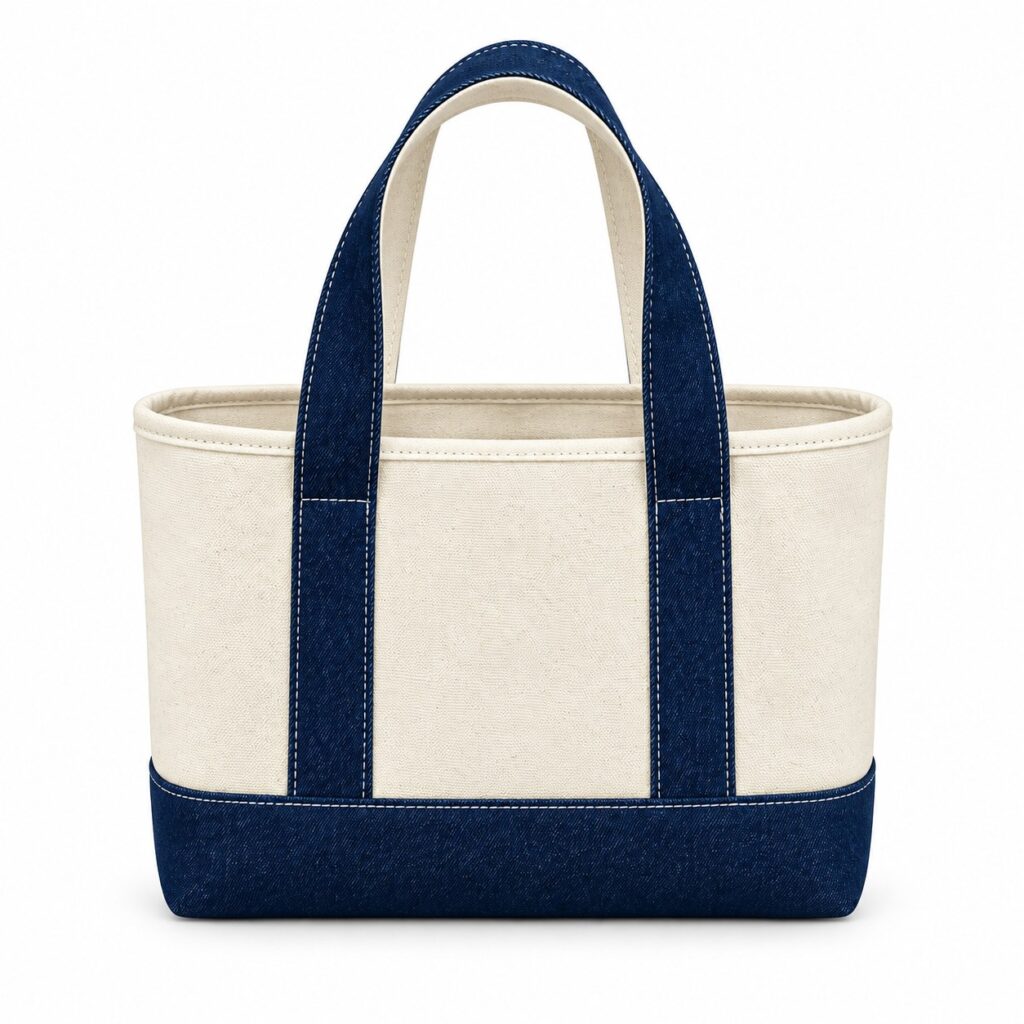
The Gahumi bag photograph is an exterior reference. Its printed mark is not presented as reflective material.
Identify the material before naming the effect
A reflective heat transfer material is one possible route. Siser’s Thermoreflex Color page identifies a coloured reflective transfer material, lists PU composition and includes cotton among its suitable textiles. That is a named product example, not evidence that Gahumi offers it or that every reflective material suits the same cotton bag.
Ask the proposed provider to identify the actual product, colour and application route for the chosen cloth. Include any fabric treatment or finish in that review. Keep the cotton body and added decorative material separately described.
Do not assume a similar-looking metallic material is an equivalent replacement. If the intended brief is simply a gold or silver sheen as the bag moves, the metallic effect guide may address that choice without introducing a reflective component.
Is reflective decoration the same as glow in the dark?
No. The review conditions are different. A reflective appearance is assessed with light directed towards the material. A photoluminescent effect involves prior light exposure and subsequent viewing in darkness. Siser’s separate glow material illustrates that second category. Do not use the names interchangeably in a quotation.
Show which state is important to the design. A brand might want a quiet daytime wordmark with a stronger effect under a specified light. That is an example of a brief, not a statement about European consumers or a promise that a particular material can achieve it.
Use a physical reference where one is available. If the first discussion relies on photographs, ask how they were lit and photographed. A flash image and an ordinary-light image should be labelled as different views, not presented as different production colours.
Approve two views of one actual sample
A cotton tote reflective sample brief should identify the cloth, material product and colour, artwork version, final dimensions and intended position. Request a complete application that shows the important lettering, edges and unprinted gaps.
Agree the ordinary-light and directed-light views with the provider and reviewer. Record enough about the light, position and sample orientation to repeat the comparison sensibly. This is an appearance review, not a photometric test or a pass against a safety standard.
Check the placement on the assembled tote with representative contents. A handle, fold or the way the bag is held may hide part of the graphic. Decide what the actual design should show rather than accepting an effect demonstrated only on a loose square of material.
Handle and fold the decorated panel, then note any surface or edge concern for review. Agree any important care or performance evaluation separately. The finished-bag care guide keeps that assessment tied to the complete construction instead of a borrowed material guarantee.
Is decorative reflective artwork a safety certification?
No. A reflective material name, a bright appearance or a component manufacturer’s statement does not certify the complete tote as protective equipment. Do not add visibility-distance, accident-prevention or high-visibility clothing claims to a decorative bag listing.
If a buyer needs a safety-related function, identify that requirement separately and obtain an appropriate specialist assessment before selecting the product or wording. An informal torch or camera demonstration cannot approve it.
For the decorative project, send Gahumi the desired two-state appearance, artwork, proposed cotton, bag drawing and quantities. Ask whether a suitable material and sample route can be assessed. Any additional component claims, including environmental wording, need their own supporting evidence.
Email the artwork and appearance requirements to gzgahumibag@gmail.com.