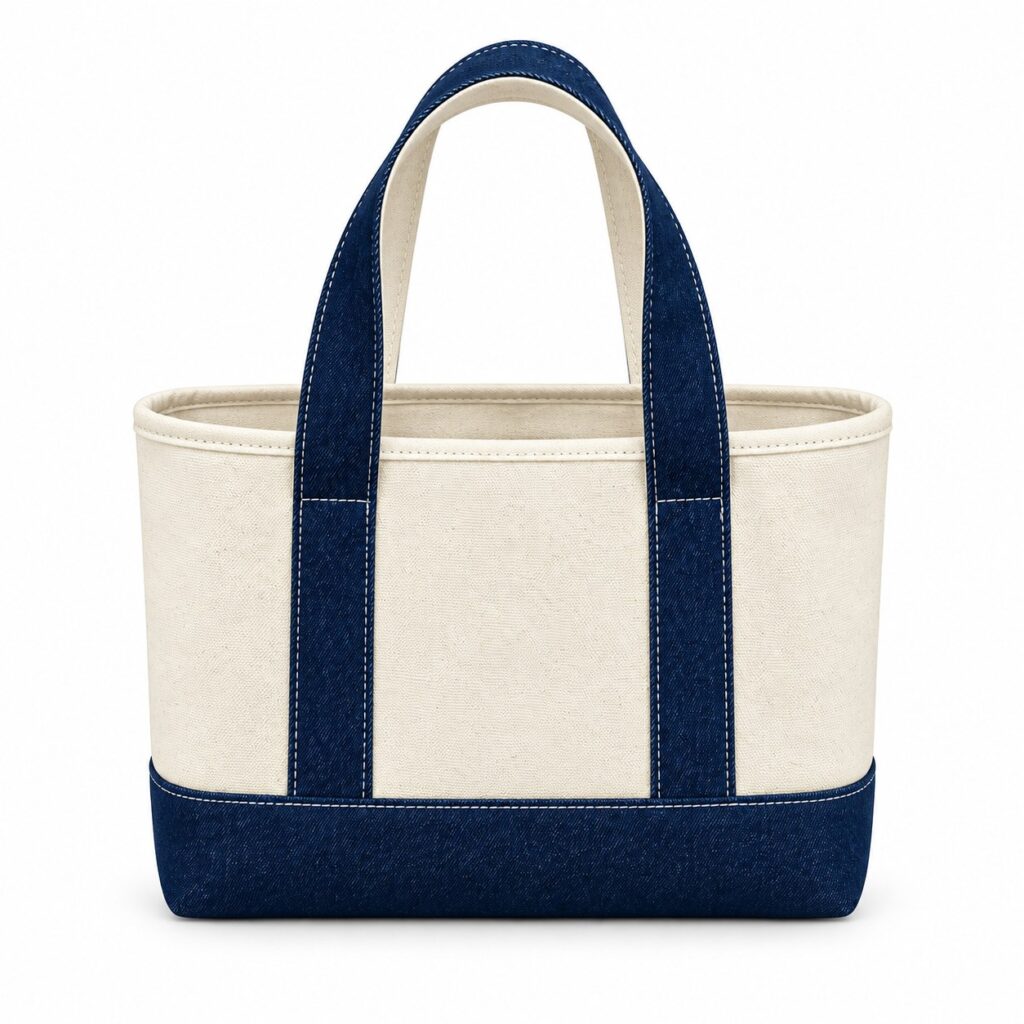
The first face of a tote has been accepted. The reverse is then printed, and the buyer receives photographs of that second design alone. There is still an unanswered question: what does the complete bag look like after both faces have been processed?
Two-sided cotton tote printing should be accepted as a finished pair of faces, not as two unrelated print approvals. The sample needs to show whether the first face, second face and inside remain acceptable together after the full proposed production sequence.
Request a sample with both sides complete
Tell the supplier that the review requires a bag with all agreed print work complete. Two separate one-sided bags can help assess colours, but they cannot show what happens when the same bag passes through both operations.
Ryonet’s tote-printing example specifically addresses processing the first print before printing the other side. That illustrates why the sequence matters. The supplier must determine the correct processing for its own ink, equipment and bag; the buyer should not copy machine settings from the example.
Ask how the first face is supported or handled while the reverse is worked on, and which sample represents that arrangement. Where a proposed method changes, identify which finished-bag checks need repeating.
Inspect each face again after the second is complete
Compare the first face with its accepted appearance reference. Look for a changed surface, unintended marks, distortion or a different feel. Record an observation and its location rather than guessing which production step caused it.
Then inspect the second face in the same way. A photograph of a new reverse graphic should not distract from a mark on the original front. Check the edges of the print as well as its centre, with the bag resting naturally.
The pre-production approval record can hold the decisions for both faces. Make the record explicit: first face after all processing, second face after all processing, and inside reviewed.
Distinguish show-through from ink transfer
Seeing the reverse design through the cloth does not necessarily mean ink has transferred. Inspect the inside under suitable, repeatable lighting and describe what is actually present rather than treating every visible shadow as the same defect.
If ink, another mark or an unexpected printed shape appears inside, photograph the area and ask the supplier to investigate. Keep the unaltered sample available. Do not scrub it clean before deciding whether the observation is acceptable.
Where clean internal presentation is important, state that requirement before sampling. For a cotton or cotton canvas tote intended for repeated use, choose the construction for its carrying purpose as well as its appearance. A lining adds another component; it should not be an automatic way to conceal an unresolved print issue. Confirm the proposed fabric and both prints together rather than relying on the word “cotton”.
Check the two designs as a pair
Open the bag and move between the two faces without changing samples. Confirm that the intended front and reverse designs form the correct pair. Check readable orientation with the bag held normally, including any different wording or edition information.
For an assortment, identify the approved pairing on the design matrix. A correct front with the reverse from another edition can create an incorrect item even when each print is good in isolation. Inspect the actual paired sample rather than relying only on two loose proofs.
Keep positions and basic artwork dimensions in the artwork specification. The extra decision here is acceptance after both operations and verification of the pair, not a new naming system for the same files.
Inspect the proposed fold and packing
Ask to see the proposed fold or unit packing after the required processing has been completed. Unfold the sample and inspect any areas that contacted another printed surface. If a new mark is observed, record it and ask how the packing or process will be reviewed.
This is an appearance check under the agreed sample conditions, not proof of a fixed wash life, rubbing grade or freedom from transfer in every climate. Formal performance requirements need their own methods and evidence.
Record any change to a printed face or the packing, and what still needs approval. If the supplier submits only a new reverse photograph, ask whether the complete bag has been rechecked before treating the issue as closed.
Send Gahumi the paired artwork, bag specification, print area for each face, inside-presentation requirements, quantities by pair and destination. Ask whether the proposal is feasible and request a quote for a sample with both prints complete. Two-sided availability and the appropriate production sequence must be confirmed for the project.
Email the requirements to gzgahumibag@gmail.com.