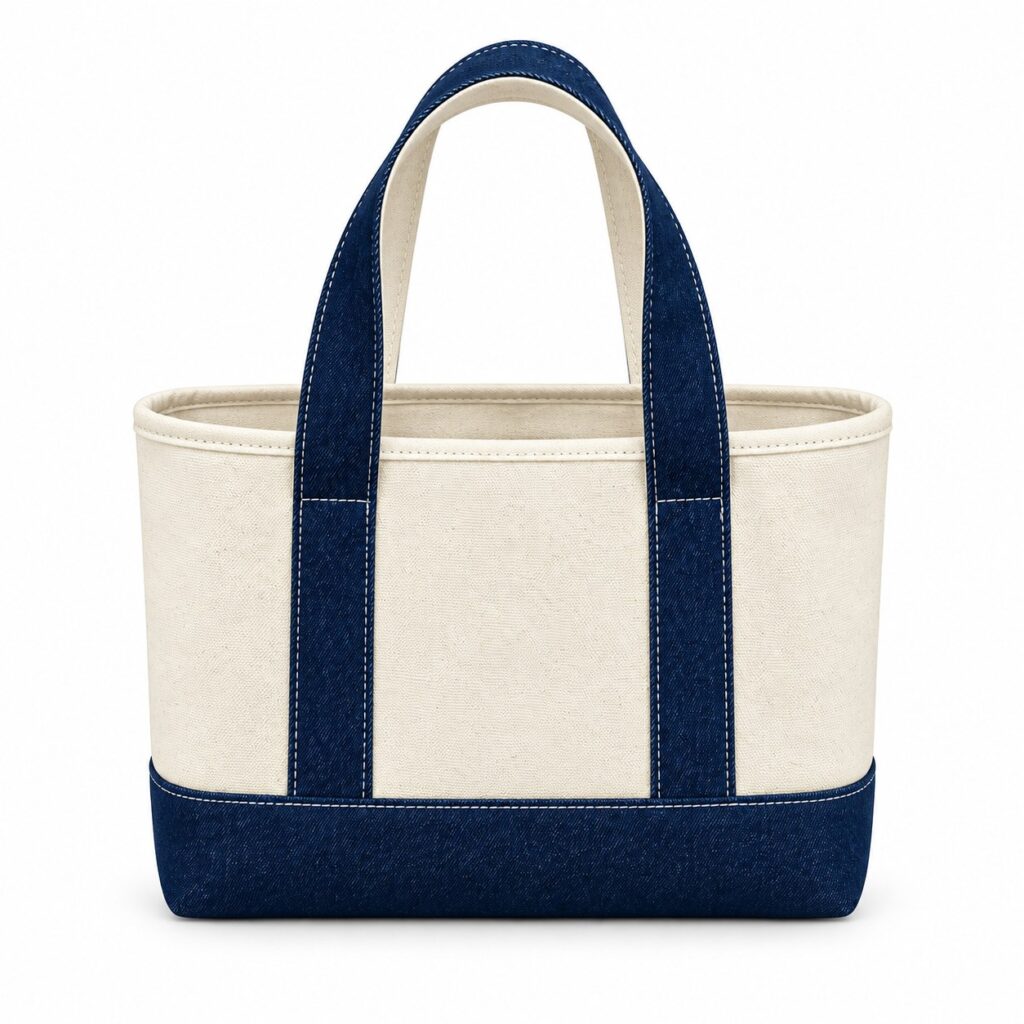
Water beads on a fabric swatch, so somebody suggests describing the bag as waterproof. That jumps over several unanswered questions. Surface wetting, water passing through cloth and leakage at a seam are not the same observation.
A water repellent cotton tote fabric specification should begin by naming the desired result and what it does not cover. Ask Gahumi to assess whether a suitable finish or treatment is feasible for the proposed fabric and order.
Write the intended water-related task precisely
Explain what the bag is expected to encounter and which contents need their own protection. Do you want to discuss the cloth’s surface wetting behaviour, resistance to water passing through it, or a complete assembly that must contain liquid? Those are different development questions.
Keep the relevant internal packaging in place during the discussion. A proposed outer fabric is not a substitute for suitable protection around a plant pot, food product or electronic item. The florist carrier guide illustrates why moisture containment must be considered separately.
Ask the supplier to say which requirement, if any, can be considered for the proposed cotton construction. If the actual need falls outside a textile outer carrier, clarify that early rather than adding a reassuring adjective to the quotation.
Keep a spray result within its scope
The public scope of ISO 4920 concerns resistance to surface wetting in a spray test. It explicitly does not predict rain penetration because it does not measure water passing through the fabric.
Does a surface-wetting result prove a waterproof tote? No. It does not establish water penetration resistance, seam protection or complete-bag leak containment. Keep the test description beside any result so that the wording is not broadened later.
Ask a competent testing service to confirm the relevant assessment, edition, specimen and reporting requirements. Do not set a universal grade or repeat the paid procedure in a purchase order. The intended performance and acceptance basis need agreement for the actual project.
Identify what was treated and when
If a finish is proposed, record the fabric reference, stated treatment, material stage and sample identity. Ask how the proposed printing and assembly relate to that treatment. An approved undecorated swatch does not automatically establish the result on a finished printed bag.
Specify which components the requirement covers. The body, handles, lining and seams may be different materials or constructions. A 100% cotton body requirement does not mean a finished bag contains only cotton, particularly where additional treatments or trims are being considered.
Ask for any material and chemical documentation your responsible market reviewer needs. The chemical documentation guide helps connect evidence to the actual components without claiming compliance from a finish name.
Include the relevant sample condition
Record whether a result concerns a new specimen or one subjected to an agreed treatment. If retention after care matters, explain that requirement before testing and ask how it can be evaluated. Do not infer lasting performance from a single new swatch.
Does adding a water-related finish make a cotton bag more environmentally friendly? Not automatically. A functional result does not establish a measured environmental benefit, harmless chemistry, biodegradability or recyclability. Use specific, supported wording and keep a separate approval record for claims.
For a reusable bag, also agree how the whole construction will be cared for and used. Do not prescribe a washing temperature or claim a certain number of uses from the finish description.
Make the quotation boundary easy to see
Put three lines in the brief: the requested function, the proposed evidence and the functions excluded from that evidence. For example, a surface-wetting enquiry can explicitly leave waterproofness and liquid containment unclaimed. This is a scope example, not a test result or an offer of a particular finish.
Keep the proposed material, any assessment, finished sample and authorised copy linked together. If the treatment or body cloth changes, ask what needs review again. A product name retained on an invoice does not settle equivalence.
Send Gahumi that functional brief with bag dimensions, artwork, quantities and delivery destination. Ask whether the requested material route is feasible and which samples or external evidence need discussion. A clear boundary gives both parties a more useful starting point than an unqualified request for a waterproof cotton tote.
Send requirements and existing evidence to gzgahumibag@gmail.com.