Two striped cloths can look similar from the front while representing different purchases. One design may be built from coloured yarns; another may be printed onto cloth. Decide whether the manufacturing route is part of the requirement before treating either as an acceptable substitute.
Choosing yarn-dyed or printed stripes for a cotton tote starts with the material proposal, not seam matching. The buyer needs to know what is being offered, which visible qualities matter and whether another route would still meet the brief.
Establish where the stripe enters the cloth
The National Cotton Council’s manufacturing overview explains that yarn dyeing happens before weaving or knitting and can produce woven stripes. It describes printing as a separate way to introduce designs onto cotton cloth. This distinction is useful without ranking either route as inherently better.
For woven stripe cotton tote fabric, ask the provider to identify the pre-coloured yarn construction and the actual cloth reference. For a printed proposal, identify the cloth and proposed printing route separately. Colouration alone does not establish the fibre content, fabric weight or finish.
Robert Kaufman’s own fabric-sourcing description separates prints from yarn-dyed stripes and distinguishes stock cloth from custom development. That illustrates two purchasing questions: are you selecting an existing material, or asking for a new design to be produced? Its services and commercial terms are not Gahumi’s offer.
Put the two proposals on the same table
Write the cotton stripe colour sequence in order, with the intended widths in millimetres and an actual-size reference. Identify which colours are essential and where an available cloth may be considered instead. Use your own design or an authorised reference; a competitor’s product photograph is not a production file.
A printed stripe cloth reference should include the actual face and reverse, finish and source identity. Put the yarn-dyed alternative beside it, with its own record. Look at both flat and folded, then consider which surfaces will show outside and inside the proposed tote.
Does a striped reverse prove how the cloth was made? Not by itself. Record what you see and ask the material provider to confirm the route. Printing processes and cloth constructions vary; a reverse view is not a universal test that replaces a specification.
Review a plain area and any additional logo as part of the finished proposal. If the shop wants a separate graphic over the stripes, give the decorator the actual cloth candidate and authorised artwork. A stripe swatch alone cannot approve that combination.
Make substitution a deliberate decision
Can printed stripes replace an agreed yarn-dyed cloth? Only as an identified alternative for the buyer to review. An accepted front appearance does not automatically authorise a change of route. Ask for the actual proposed material and a representative sample before accepting the replacement.
A stripe route substitution record can be short: original reference, offered alternative, declared route, visible differences and the buyer’s decision. Note any change to development work, quantity options or quoted timing. Ask for project figures rather than assuming one route always costs less or needs a longer lead time.
Use the chosen cloth in a finished tote
Once the cloth is selected, the repeat and panel guide can address direction, crop and any required seam matching. Keep those decisions downstream of material selection. Moving a panel outline will not turn one colouration route into another.
If a shade must match an earlier delivery, connect the chosen stripe cloth to the fabric-batch reference. Approval of a route does not settle the colour of a later supply lot.
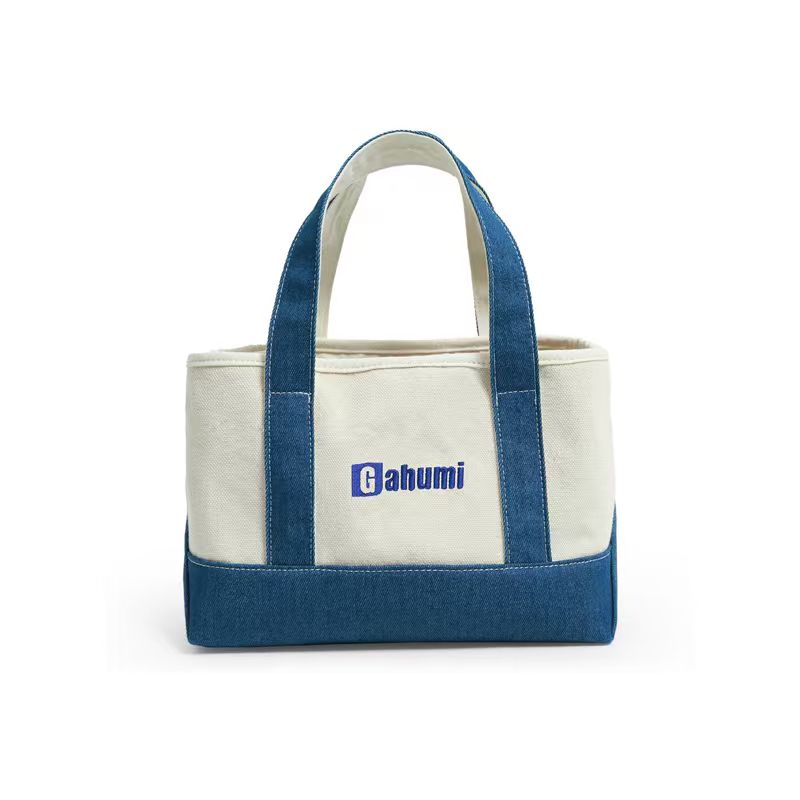
Agree relevant care and performance evidence for the actual reusable cotton bag. Yarn-dyed is not a blanket promise of superior colourfastness, and printed is not an environmental ranking. Confirm the required cotton body composition separately from handles and other components. The exterior bag image is not a striped-cloth sample.
Send Gahumi the stripe reference, route requirement if any, proposed body material, bag dimensions, quantities and destination. Say whether a stock alternative is welcome and request confirmation of sourcing feasibility and the sample needed to make the choice.
Email the authorised reference to gzgahumibag@gmail.com.