Raised lettering can conceal an extra material beneath the stitches. For a buyer specifying 3D foam embroidery for cotton totes, that hidden component matters as much as the visible thread. The brief needs to show where the foam belongs, what covers it and how the ends of the design should look.
This is not an automatic upgrade from flat embroidery. It is a different construction to assess for the particular logo and bag panel. Ask Gahumi whether the proposed development can be supported before adding it to an order or product description.
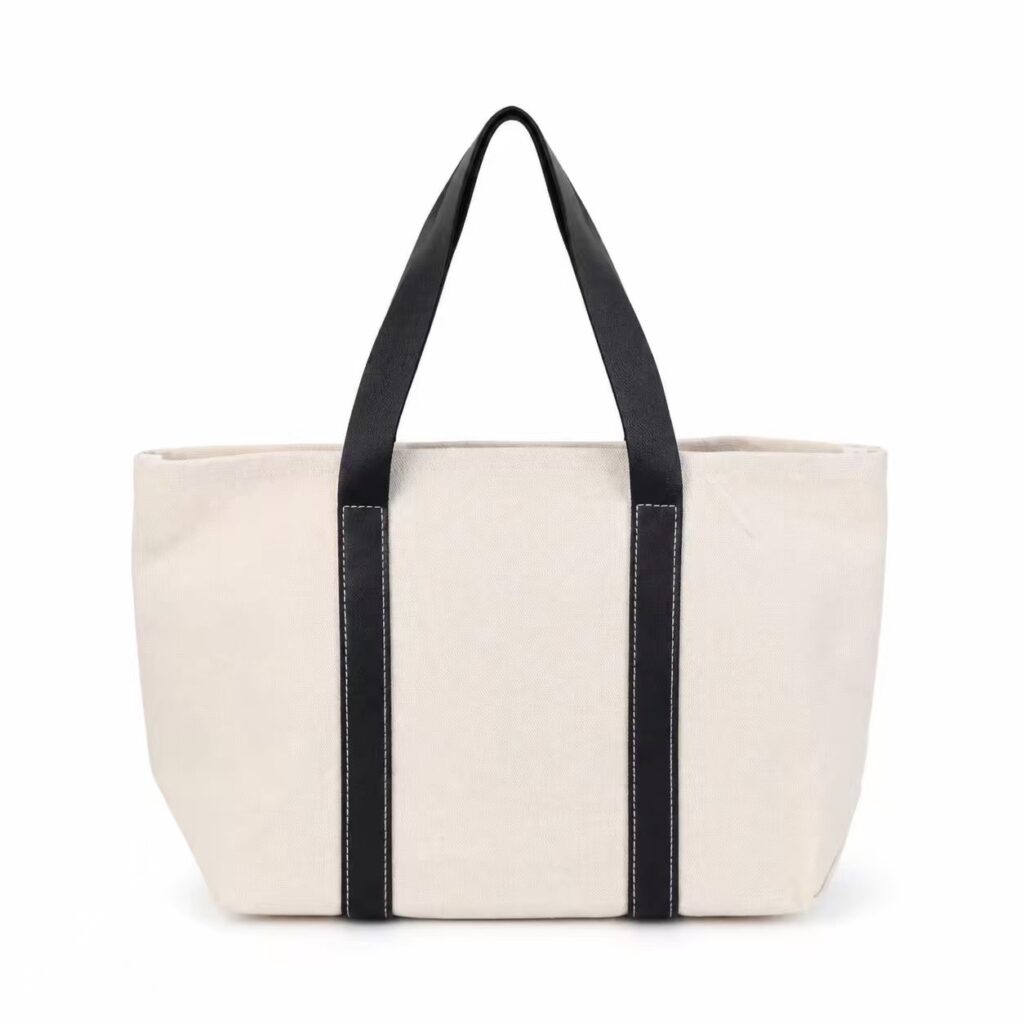
The pictured tote is a bag reference only. It does not show a confirmed foam-embroidered design.
Draw a section through the lettering
Is foam embroidery the same as puff printing? No. A raised ink effect and stitching over a foam component are different routes. The raised print guide deals with ink-based relief. Here the additional material sits within the embroidered construction.
Madeira’s foam embroidery tutorial illustrates foam placed over the fabric and covered with stitching, using a design adapted for that purpose. It also shows removal of excess foam and attention to the finished tips. This explains the structure to discuss, not a production recipe or proof that it is suitable for every cotton tote.
Ask the provider to identify the proposed foam, its material description and the resulting construction. Record the cotton fabric, thread and backing separately. An all-cotton body requirement does not make an added foam component cotton, biodegradable or environmentally preferable.
Mark raised and flat regions separately
A raised and flat embroidery layout should show which letters or shapes receive foam and which are intended to remain flat. Include the boundary between them. A logo with raised initials and a flat supporting line needs a sample of both, not two unrelated stitched references.
Keep the intended height and profile connected to a physical reference where possible. If a numerical relief requirement matters, agree how it will be assessed on the actual construction. Do not borrow a foam-sheet thickness as a guaranteed finished embroidery height.
Look at the spaces enclosed by letters and the ends of open strokes. State which outlines and gaps are essential to the identity. If the proposed effect changes those features, the brand owner needs to decide whether an adapted design is acceptable.
Can a flat embroidery sample approve a foam version?
No. The flat sample may establish the underlying graphic and position, but it does not demonstrate the added material or its coverage. The provider should review the design and prepare the output for the proposed foam construction rather than simply repeating the old machine file.
Keep the accepted graphic, adapted embroidery output and sample reference together. The embroidery file guide helps distinguish the editable design from the machine output and preview. It does not prescribe one software package for every supplier.
Ask the sample quotation to identify the development work and how proposed corrections will be handled. A digital rendering with shadows is not a substitute for the construction the buyer is being asked to approve.
Inspect the ends before approving the silhouette
Foam embroidery end coverage deserves a close view on the fully finished sample. Check the tips, corners and transitions where the chosen thread should cover the underlying material. Mark any exposed foam or unwanted opening for review rather than trimming or heating the approval sample yourself.
Then look at the design at ordinary viewing distance. The extra height should not conceal lettering or turn separate elements into an unintended solid shape. Review the tote naturally supported, without pulling its panel taut to improve the photograph.
Use an assembled sample to check its reverse, position and planned fold. Where the motif sits close to a handle attachment or pocket, confirm that the whole arrangement remains practical. Any care or durability requirement needs evaluation for this specific combination, not a guarantee inferred from the name 3D embroidery.
For an initial Gahumi enquiry, send the logo, marked raised regions, final dimensions, cotton fabric preference and quantities. Include the reference effect and any component restrictions so feasibility and sample scope can be reviewed together.
Email the design and material requirements to gzgahumibag@gmail.com.