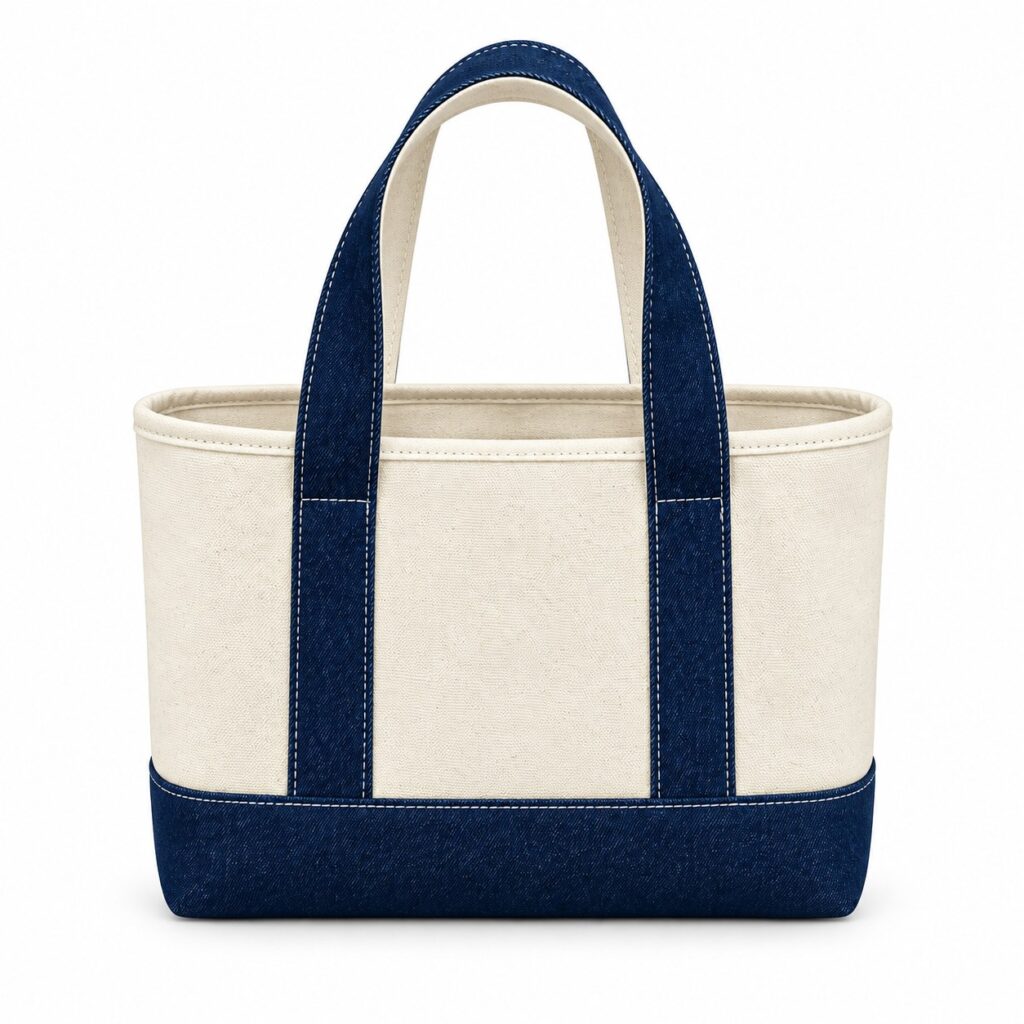
A worn handle does not necessarily mean a tote has reached the end of its useful life. It may, however, be difficult to replace without opening a lining, disturbing a large print or sewing into fabric that has already weakened. Those questions belong in the design discussion, not only at the repair counter.
Repair-friendly cotton tote design starts by identifying which parts could reasonably be replaced and how a repairer would reach them. It is a practical development objective, not a promise that every damaged bag can be restored.
Look at the bag from the repairer’s side
On a marked drawing, show the handle attachments, pocket edges, zip ends, lining joins and any reinforcement. Ask a competent repairer which areas would need opening to reach each component. A concealed attachment may look neat but make a later intervention more involved.
Check whether the parts can be reached on the actual construction. The difference between lined and unlined cotton totes matters here because the inside may conceal the join that needs attention. Do not remove a lining solely to simplify a hypothetical repair if it serves an important purpose in the intended bag.
Can a cotton tote handle be replaced?
Possibly, but the attachment and surrounding fabric need assessment first. A sound bag body with a worn handle presents a different problem from torn fabric at the attachment. Ask the repairer whether a proposed replacement is feasible and what assessment would be needed before the bag returns to use.
A replacement handle specification should identify the material, width, finished length, attachment position and acceptable appearance. Include reinforcement and thread requirements where they have been established. A similar-looking strip is not automatically an equivalent component.
Keep the component description alongside the original handle material specification. Ask whether replacement material could be made available, in what quantity and for how long. Availability and matching colours require confirmation; they should not be advertised as an existing service.
Try the intervention before making a claim
A repair trial sample can reveal practical obstacles that a drawing misses. Agree which component will be removed, who will do the work, what changes are acceptable and how the repaired sample will be assessed for its proposed use. Record the time and materials involved without presenting one trial as a universal repair cost.
Keep before-and-after photographs, the component revision and the repairer’s observations. Check whether the work disturbed the print, changed the opening or left a bulky area. Any relevant functional assessment needs an appropriate method and qualified judgement, not an informal carrying demonstration.
WRAP’s textile reuse guidance discusses repair access and replaceable components as design considerations. It provides a useful starting principle, not evidence that a particular tote design is repairable.
Does 100% cotton mean the whole tote is repairable?
No. Confirm which component the cotton specification covers. A cotton canvas body can sit alongside different thread, lining, print and hardware materials. Repairable cotton tote bags still need a suitable construction, available skills and an assessment of the particular damage. Do not turn a material description into a lifetime or environmental saving guarantee.
Bring the proposed construction, intended contents and parts you would like to replace into the first enquiry. Ask what can be considered during development and what would need separate repair expertise.
Email your proposed bag construction and repair questions to gzgahumibag@gmail.com for project-specific discussion.