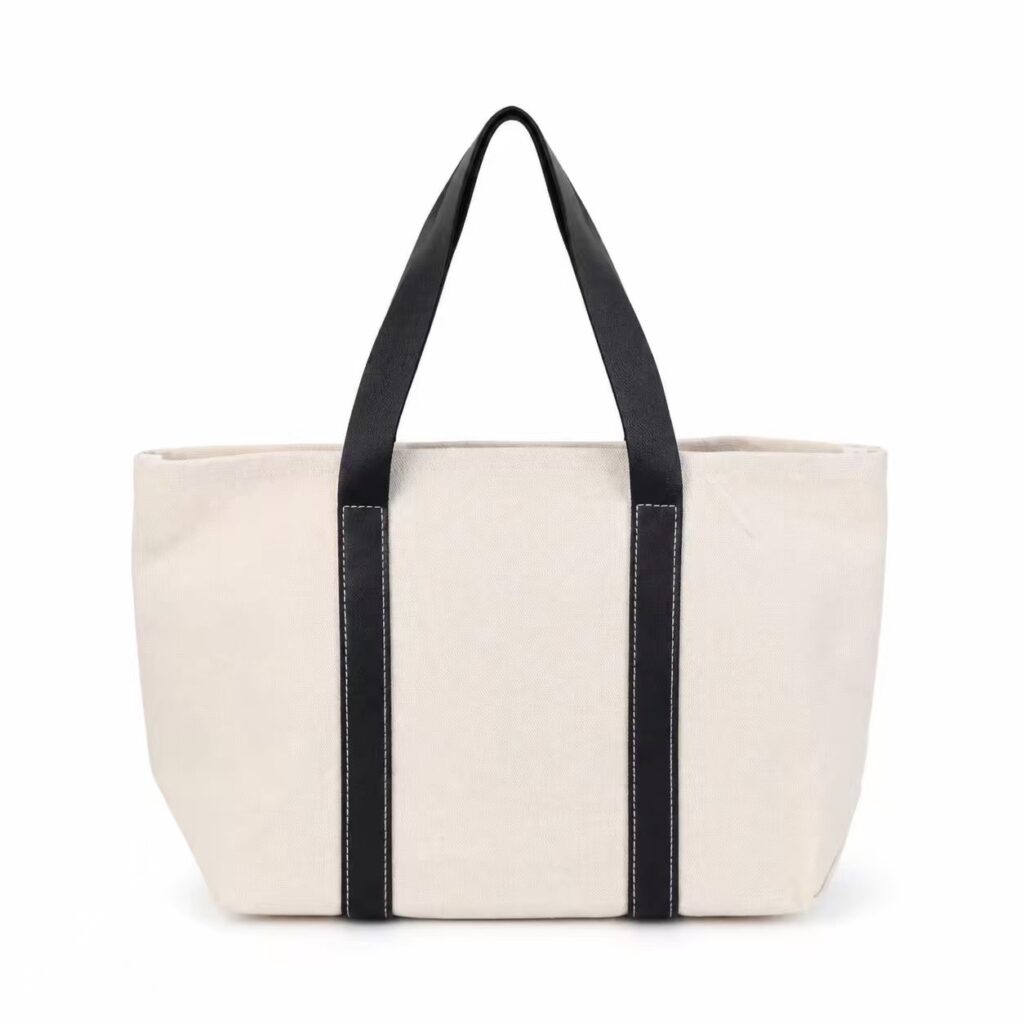
A handle can match the body colour and still feel like a different part of the bag. Before changing its length, find out how it is made. A folded strip cut from the body fabric and a separately woven tape are not the same specification, even when both are described as cotton.
Comparing cotton webbing vs self-fabric tote handles is a material-and-construction decision. For a shop or merchandise buyer, the useful outcome is a named handle reference, an agreed finished width and a sample showing how that handle joins the proposed body. Neither choice establishes a carrying-weight rating.
First, separate three questions
What is the handle made from? How is the strap constructed? How is it attached? Keep separate answers for each. “Cotton handle” addresses only the first question, and only if the composition has been confirmed.
Self-fabric normally means the handle is made from the fabric specified for the bag, folded and sewn into a strap. Ask whether it actually uses the same material reference and which face will show. A contrasting strap may have a different fabric specification despite a similar appearance.
Webbing is a separate woven tape. It needs its own material reference, colour, width and thickness description. Sailrite’s webbing selection guide includes cotton alongside several synthetic alternatives for bag handles. The word “webbing” alone therefore does not confirm cotton content.
Ask Gahumi to confirm which materials and constructions can be considered for your project. A photograph of a finished strap is a starting reference, not evidence of its fibre composition or internal layers.
Compare samples without changing everything at once
If you want to isolate the effect of handle material, request the same body, attachment positions, finished strap width and drop wherever feasible. Mark any difference the supplier cannot keep constant. Comparing a broad webbing handle with a narrow folded handle would answer several questions at once.
Run the sample through the intended handover: unfold it, open the bag, put in representative packaged contents and carry it in the normal way. Feel the strap edges and observe whether the handle twists or folds. Describe the result precisely rather than declaring one material universally more comfortable.
Must folded-fabric handles match the body colour? No: a contrast fabric can be proposed for review. Name the body and handle materials separately, and reserve “self-fabric” for the agreed same-material construction. Keep length and fit decisions in the separate handle-drop guide.
Review colour and the joining area together
Place the handle swatch beside the body and print reference under the same lighting. A matching colour code on two different surfaces is not a physical approval. State whether you want a close match or a deliberate contrast, and retain the accepted combination.
Then inspect where the strap ends are enclosed or exposed. Ask for an inside view and a drawing of the attachment. A neatly finished strap still needs an appropriate connection to the body. Do not select a stitch pattern from appearance and infer that it supports a particular mass.
Record any requested load or colour-transfer evaluation separately. The supplier and, where needed, a testing service should agree the method and acceptance criteria. An informal carrying trial helps assess use; it is not a certified load test.
Put the handle into the quotation as a component
Which information should a handle quotation include? Give the supplier a component line covering these details:
- Material reference and requested composition, separate from the body.
- Webbing or folded-fabric construction, with the proposed layers identified.
- Finished width in millimetres, thickness description and agreed measurement points.
- Colour reference, visible face and edge appearance.
- Attachment drawing and the sample checks the project needs.
Ask which changes affect material sourcing, sampling or unit pricing. There is no dependable rule that one handle type is always cheaper. Compare complete proposals using the factory quotation guide, not an isolated strap price.
For a later reorder, keep the approved handle reference as well as the finished bag. “Same navy handles” is less useful than a material code tied to a retained sample. If a tape or body fabric changes, ask which checks must be repeated.
Send a handle comparison brief
Send Gahumi the proposed body dimensions, intended contents, artwork, quantities and delivery postcode. Include a close photograph of the handle style you mean and state whether its composition must be cotton. Ask which webbing or self-fabric options can be sampled and quoted before selecting a final construction.
Request a handle comparison and quote Discuss handles on WhatsApp
Prefer email? Send your brief to gzgahumibag@gmail.com.