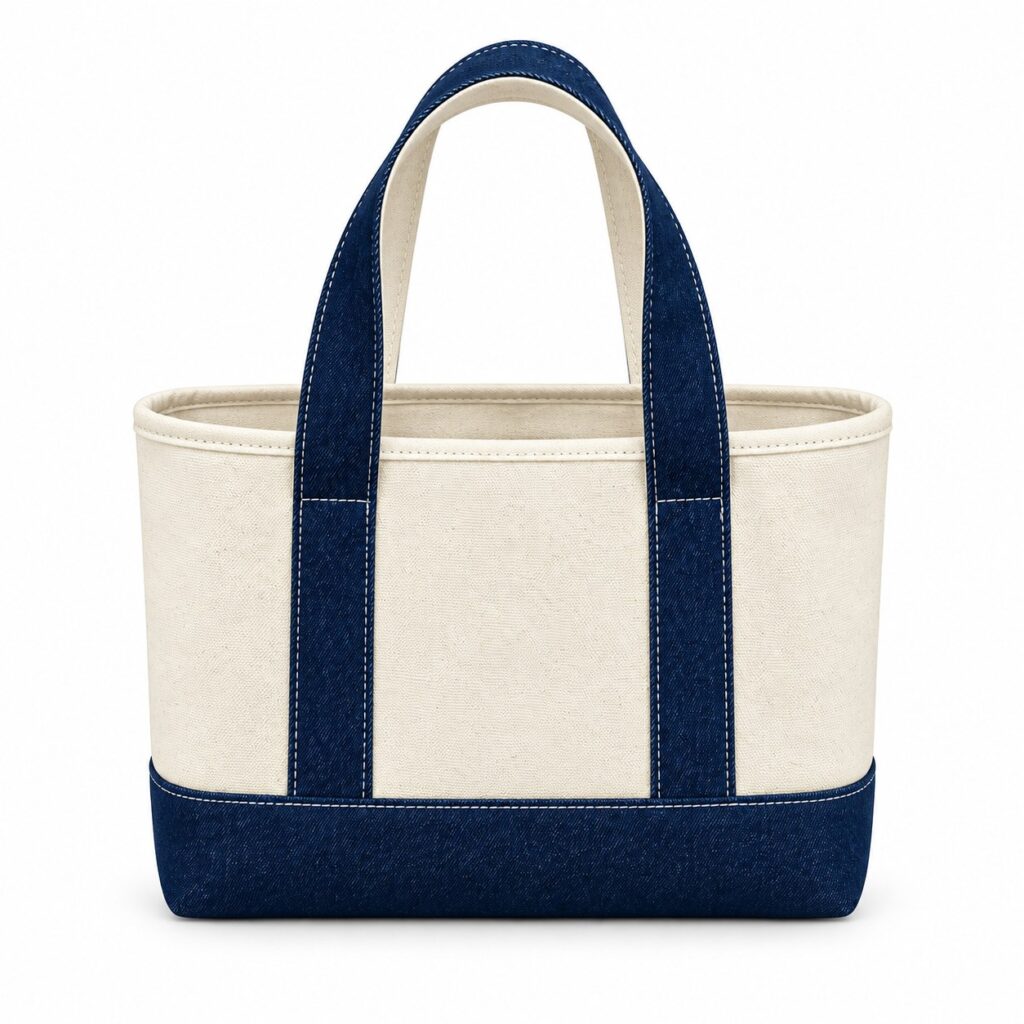
The bakery box has already been chosen. It protects the pastries, carries the product information and fits the display. Now the branded outer bag needs to take that complete box through a narrow counter opening without tipping it.
That is a more useful starting point for cotton tote bags for bakeries than a standard bag size. This article concerns secondary carrying packaging for products already contained in suitable bags or boxes. It is not a specification for placing loose bread, uncovered cakes or other unwrapped food directly against cotton fabric.
Keep the food packaging and outer tote as separate decisions
Confirm the packaging requirements for each product with the people responsible for your bakery’s food safety. The tote should not be used to compensate for an unsuitable or open food package. If you want direct food contact, stop and obtain a separate specification and the relevant evidence for that intended use.
Food Standards Scotland’s food contact materials guidance explains that food contact includes packaging and transport containers. A cotton appearance is not evidence of food-contact suitability.
For the outer carrier discussed here, start with a closed, fully packaged purchase. Keep any necessary product protection, temperature control and handling instructions independent of the tote.
Use the widest box as the first measuring reference
Measure the box with its lid closed, including projecting tabs or handles. Record width, depth and height in centimetres. If your normal purchase combines a pastry box and separately bagged bread, photograph the complete arrangement and describe which item must remain upright.
The bag opening needs to admit the box without forcing it through. The base needs to accommodate the box in its intended orientation. Do not assume that a flat bag’s quoted width describes usable space around a rigid rectangular item.
For the dimensional discussion, use our tote base and gusset guide. A physical packing trial is still needed with the actual box; dimensions alone do not establish stability or carrying performance.
Rehearse a busy counter order
Ask a colleague to complete a typical order using the sample. Open the bag, insert the closed box, add the separately packaged extras and hand it over. Notice whether the opening collapses across the lid or whether staff have to grip the box awkwardly to reach the handles.
Repeat the exercise with the smaller purchase you expect to sell most often. A bag designed only around the largest celebration box may be excessive for that transaction. You may prefer separate specifications instead of a compromise that works poorly for both.
Time the steps if service speed is a concern, but treat that as your own trial result. Do not turn one rehearsal into a general claim that the bag makes every bakery’s checkout faster.
Choose the print as a shop product, not a hygiene claim
A bread illustration, shop lettering or neighbourhood design can give the bag a reason to be kept. Use original artwork or material you are licensed to reproduce. Keep food-safety, freshness and environmental claims out of the design unless you have evidence for the exact wording.
Place a full-size paper print on the sample and pack the box again. Look at where the design folds and whether the bag’s handles cover the main wordmark. An approved flat artwork proof does not show all of those effects.
Ask for the fabric weight in g/m² and confirm composition for the specified construction. If your purchasing brief says 100% cotton, establish what is included rather than extending the claim to unknown trims or thread.
Set a clean-stock and care routine
Keep unused bags enclosed and away from preparation splashes, flour handling and used carriers. Agree where staff will store opened stock at the counter. This is a shop workflow decision, not a claim that the fabric itself controls contamination.
If the bag will be sold for reuse, request care guidance supported by a finished sample. Review the print and handles as well as the body fabric. Our care instruction planning guide explains what to document before printing customer advice.
Send a box-led quotation request
Give Gahumi the closed package dimensions, photographs of the intended arrangement, preferred carrying method, artwork and quantity range. State that the tote is an outer carrier, not approved direct food-contact packaging.
Include the destination and required availability date. Ask which construction can be sampled and request project-specific sample, quantity and timing terms. Enquiries can also be sent to gzgahumibag@gmail.com.