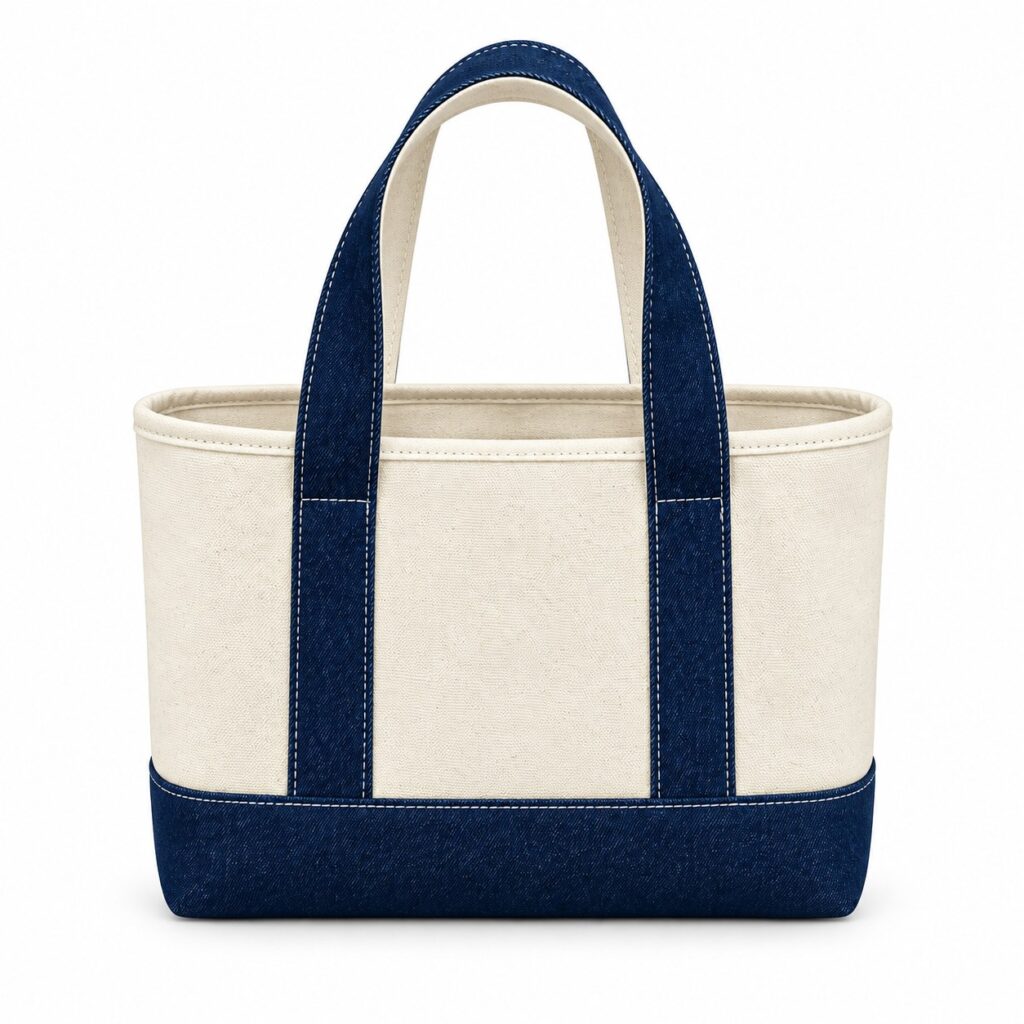
Put a cereal box, a jar and a wrapped loaf on the counter. Now pack them into the bag you are thinking of ordering. Does the box settle into the base? Can you lift the handles without squeezing the bread? That small exercise tells a shop buyer more than an empty tote photographed against a wall.
Cotton grocery tote bags with a gusset are worth sampling when customers regularly leave with several packaged items. The extra depth can give those purchases room, but the result depends on the whole shape. For a grocer, farm shop or neighbourhood market shop buying for a European retail location, start with the shopping basket and work outwards.
Give the base a job to do
A gusset is the section that opens out to add depth. Ask whether the proposed bag has a base gusset only or also has side gussets. A drawing should show the finished width, height and depth in centimetres, with each measurement labelled. Two suppliers may describe a bag as the same size while measuring it differently.
Choose a base around a realistic group of purchases. A shallow depth might suit a few cupboard items; a broader base deserves a trial for boxes and jars. These are starting points for samples, not ready-made size rules. Leave room to place items beside each other rather than relying on a stack that crushes what sits underneath.
Open the sample on your actual packing counter. Check whether one person can hold it open and pack comfortably. A soft cotton bag may need support while it is being filled, even if its base looks rectangular in a photograph. Do not describe it as freestanding without checking the finished construction.
Try a small shop and an awkward shop
Use two sets of goods for the packing trial. The first should represent an ordinary small purchase. The second should include the shapes that cause trouble: a tall carton, a wide box or a fragile packaged item. Keep the packaging in place during the test.
Look at the opening as well as the base. A good fit at the bottom is of little help if staff must force a box through the top. Check that the handles remain easy to find when the bag is full. Lift the bag, put it down and unpack it; watch for corners pushing hard against seams.
Then decide how customers will carry it. Try hand carrying and shoulder carrying with the intended contents. Record handle drop separately from total handle length, and ask to see the proposed reinforcement where the handles meet the body.
Discuss fabric weight without inventing a carrying limit
Ask for fabric weight in g/m² so that competing quotations use the same unit. Our canvas weight guide explains the terminology. Weight describes the fabric; it does not establish a safe load for the finished bag.
A larger bag made from heavier cloth is not automatically a better grocery shopper. Consider empty weight, how easily it folds and whether the loaded handles are comfortable. Ask the supplier to propose a test using the agreed contents and construction before putting a carrying claim on a label.
If the brief specifies 100% cotton, confirm which components that description covers. Organic cotton requires separate evidence; it is not another name for all-cotton fabric. Keep the agreed composition on the specification used for the quote and sample.
Plan for damp purchases and the next shopping trip
Treat this as an outer carrying bag for packaged purchases. Keep damp items in suitable separate packaging or containers, and choose an appropriate cool bag where chilled goods require it. A cotton tote should not be assumed to be waterproof or insulated.
For grocery use, separation and cleaning belong in the brief. Food Standards Scotland advises keeping raw foods in separate bags from other foods and checking reusable bags for spills and soil after each use. A small internal pocket does not replace that separation.
Ask whether the complete printed bag suits the cleaning routine your shop intends to recommend. Agree care instructions after checking the fabric and print together, including shrinkage or colour changes. Customers should be able to clean the bag appropriately and dry it fully before putting it away.
Print a shop bag people can recognise on an ordinary day
Keep the main shop name or illustration clear when the bag is partly full and its sides fold inwards. Position essential lettering on the main panel rather than across a gusset fold. If a second side carries an address or short message, check it on the sewn sample at actual print size.
Choose a design with a use beyond a single promotion. A permanent shop identity leaves you fewer dated bags to deal with after a weekend offer ends. For the printing questions, see our guide to printed cotton tote bags.
Describe the material and intended reuse plainly. Do not assume cotton has a lower environmental impact than every other bag material, or add an organic or certification claim without supporting documents.
Agree how the bags reach the till
Specify whether bags will be sold from a display, stored flat beneath the counter or supplied to several branches. Ask for folded sample dimensions and the proposed quantity per carton. Separate branch quantities on the packing list if staff will need to distribute the order.
Compare quotes against the same base construction, fabric, handles, artwork and packing. The cotton tote bag cost guide can help you organise that comparison without reducing it to a price for an unspecified bag.
Send a grocery bag brief to Gahumi
Send photographs or dimensions of the packaged goods you want the bag to carry, your proposed bag size, artwork, quantity and delivery country and postcode. Include the intended cleaning routine and required arrival date. Ask Gahumi to confirm the available construction, material, sample arrangements and quotation for that brief.
Prefer email? Send your brief to gzgahumibag@gmail.com.