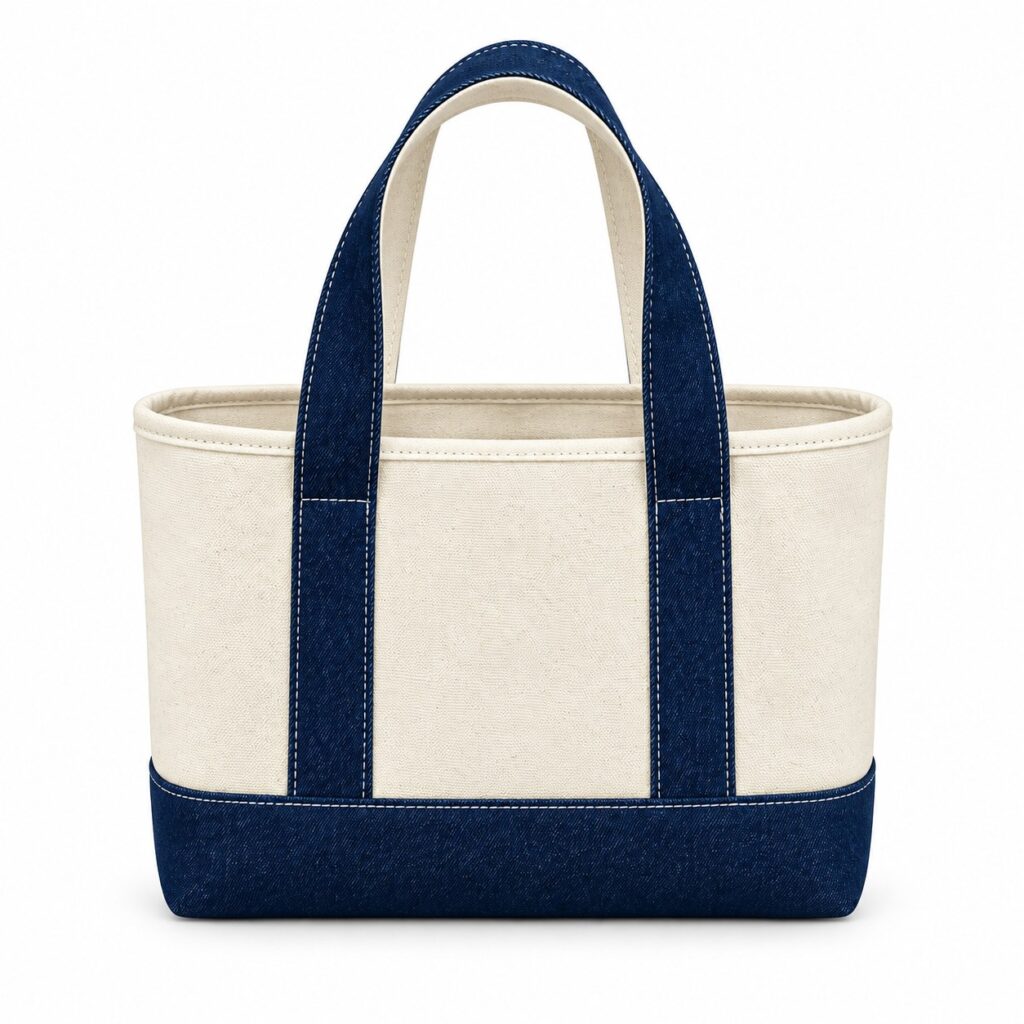
A bag that needs a flatter base does not necessarily need a different outer shape. A buyer may instead want to investigate a separate insert that sits inside the finished bag. That creates a component to specify, handle and care for, not just another line in the bag dimensions.
Removable base inserts for cotton tote bags can be considered when a boxed item needs a flatter support or the base component must come out for an agreed cleaning process. First compare the cotton bag with and without it. If it adds no useful function, leave it out rather than adding a separate core and cover by habit. Availability and suitability still need confirmation; an insert does not guarantee that the bag stands upright or carries a particular weight.
Distinguish an insert from the bag base
A gusset or shaped fabric base defines part of the bag’s construction. A removable insert is an additional piece that can be taken out without cutting the bag or opening its seams. Ask the supplier to show which arrangement is being quoted.
The distinction matters when comparing a loose board, a covered insert and a reinforcement sewn permanently between layers. “Reinforced bottom” could refer to any of them. The flat and gusseted construction guide covers the underlying bag shape; resolve that before drawing the insert.
A false-bottom project by SewCanShe illustrates a covered piece placed inside a tote. It demonstrates one construction concept, not a required material, commercial specification or Gahumi supply capability. Do not copy its measurements into a different bag.
Size it against the finished interior
Measure a tote base insert against the usable interior of the finished sample, opened naturally. Record the available width and depth. Show corner shapes, seams and any lining that the insert needs to sit against. Use millimetres and an annotated inside photograph.
Do not derive the insert size from the outside catalogue width. Ask the supplier to propose clearances appropriate to the sample. A piece that must be forced into the bottom or bends around a seam has not demonstrated the intended fit.
Trial insertion and removal through the actual opening. A base can be wider than the access route, particularly if another closure is added. Record whether the user needs to fold, turn or manipulate the insert, and decide whether that action is acceptable.
Try the representative contents with the insert in place. Check the internal height remaining and whether boxed items catch at its edges. Repeat the removal action with the bag empty, as a customer would before care or storage.
Name the core, cover and retention arrangement
Ask for the proposed core material, thickness, edge treatment and covering to be identified separately. A fabric cover does not make the hidden core cotton. If an all-cotton claim is part of the brief, the proposed extra component needs its own review rather than being overlooked.
To choose between a loose insert and a retaining sleeve, begin with the handling problem. A loose piece may be simple to remove but needs a trial for movement. A sleeve or another retention arrangement introduces more material, seams and access details. Ask which approach, if any, can be developed for the project.
Inspect the covered corners and the surface facing the contents. Record any catching, exposed edge or unexpected movement on the sample. A buyer can identify the issue without declaring an untested insert safe for fragile or sharp products.
Check removal, care and packing together
Confirm whether the insert must be removed before the intended care procedure and how the user will know. Agree instructions for the actual components; “wipe clean” or “washable” should not be added merely because the cover looks like fabric. Use the care-review checklist for the finished combination.
Decide how inserts and bags will arrive: fitted together, paired but separate, or grouped in labelled units. Ask for the proposed packed dimensions before estimating freight or storage needs. A rigid component can change the folding plan even when the bag itself is soft.
If replacement parts matter, ask whether the approved component can be identified and supplied later. Do not promise replacement availability, recyclability or easy material separation until the relevant details have been confirmed.
Discuss the bag and insert together
Send Gahumi an inside-view drawing, the intended contents, the required removal action and any material restrictions. Include quantities, decoration and delivery postcode. Ask for the bag and proposed insert to be identified separately in the quotation, with sampling and any required testing agreed before an order.
Discuss a removable-base proposal Share the base drawing on WhatsApp
Prefer email? Send your component brief to gzgahumibag@gmail.com.