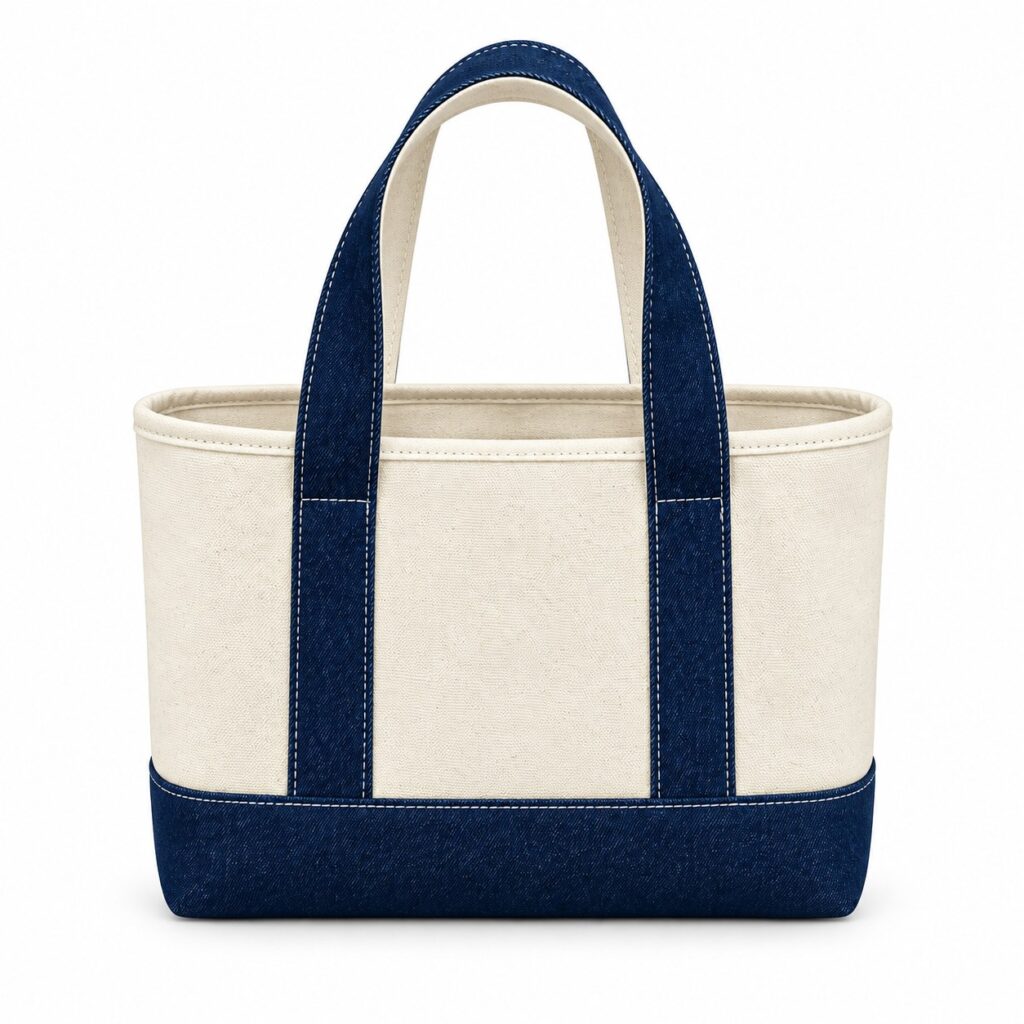
Place a thin brochure in one sample and a boxed product in another. The two bags may have the same listed width and height, yet behave quite differently. Depth and panel construction are the missing parts of that comparison.
Choose between a flat and a gusseted cotton tote by checking the shape of the contents and the way the bags will be distributed. This guide compares those construction choices for merchandise buyers; it is not a claim that one format is stronger, greener or better for every order.
Ask for a drawing of the actual construction
“Flat”, “bottom gusset” and “side gusset” are useful starting descriptions, but suppliers may present measurements differently. Request a front, side and base view. Ask which dimensions are taken with the bag laid flat and which describe the opened, finished bag.
A flat bag has no separately specified expanded depth in the brief. A gusset introduces a folded or shaped depth arrangement, but the exact panel layout still needs to be shown. Do not assume that every bag described as gusseted has both side panels and a separate base panel.
Label the width, height and depth in centimetres on the drawing. If the quote uses a different convention, clarify it before comparing prices. A shared product name is not enough to establish a like-for-like specification.
Start with thin contents or three-dimensional contents
For a programme, a few sheets or a slim booklet, put the exact paper pack into a flat sample first. Check the opening, corner clearance and how the bag hangs. If that trial works, additional depth needs a reason beyond looking more substantial in a photograph.
For boxed samples or a bundle of differently shaped merchandise, compare both formats using the same items. Review how they settle at the bottom and whether removal is straightforward. Keep packaging on the products during the trial if it will be present in actual use.
Do not calculate a dependable usable capacity by multiplying three catalogue dimensions. Soft bags change shape around their contents, and the opening can be a separate constraint. Ask for a physical sample when the fit matters.
Compare the bag while carried, not only on a table
Lift each filled sample in the intended way. Look at where the contents press against the sides, whether the opening is easy to reach and how the handles sit. Record these observations without assigning a safe load from appearance.
A shaped base is not a guarantee that a bag stands upright when empty or with your products inside. If standing presentation is important, include it in the sample review and tell the supplier exactly how the bag will be displayed.
For a project specifically involving food purchases, use the separate grocery tote buying guide. This construction comparison does not replace the care and separation questions relevant to that use.
Draw the artwork on the opened bag
Check the visible front panel with the intended contents in place. A graphic centred on the laid-flat outline may appear different when the sides fold or the base opens. Show the logo on a view that reflects the finished construction.
Ask the printing team to confirm the workable area around folds, seams and straps. Keep side or base decoration as a separate request rather than assuming the front print specification applies everywhere. Our artwork approval guide sets out the measurement record.
Include packing and distribution in the comparison
Ask how each proposed bag would be folded and packed for your order. If staff will hand bags out quickly, trial unfolding and filling a small sample group. If bags will be sold as merchandise, try the planned shelf, hook or counter presentation.
Request packing dimensions and carton quantities for the specific proposals before comparing freight costs. Do not assume a fixed saving from choosing a flat bag or a particular increase from adding depth. The final fabric, construction, folding and quantities all belong in that quotation.
Compare the complete specifications using the factory quote checklist. A lower unit price is not a useful result if one quote omits a panel, print or finishing detail.
Give the supplier one decision to resolve
Send Gahumi a photograph and dimensions of the contents, the proposed bag outline and quantities. State any requirement for a 100% cotton body, print design and delivery location. Explain whether the priority is a slim pack, shaped space or a particular presentation.
Ask which flat or gusseted construction can be reviewed and request a sample quotation. Approve the version that works with your actual contents, then keep its drawing and physical sample as the order reference.
Email the project details to gzgahumibag@gmail.com.