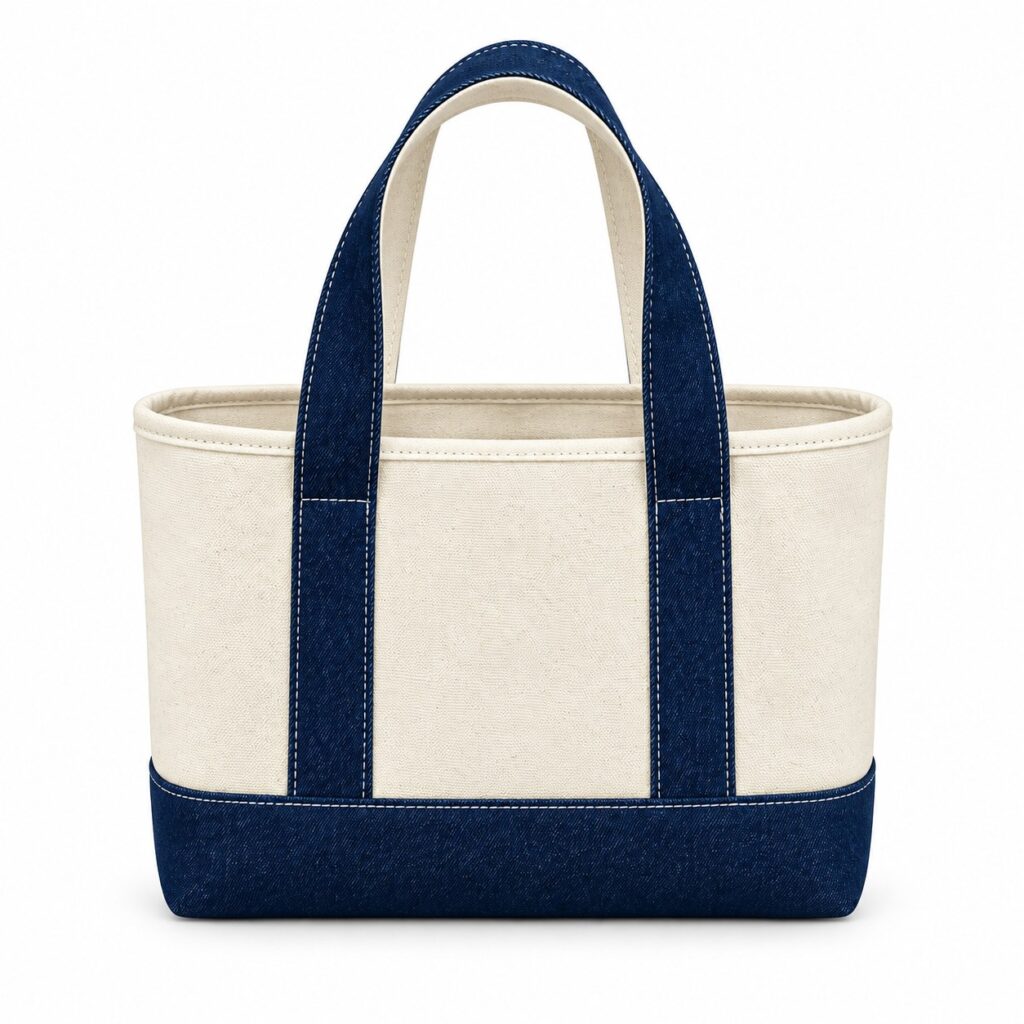
The front photograph is finished. Then the web team asks whether the back is plain, how the handles look over a coat and whether the small compartment shown in another file belongs to this version. The sample has already gone back to the buyer.
Cotton tote bag product photography works better with a shot list agreed before the sample leaves the room. The photographs should help a customer understand the actual bag and give the retailer files that are easy to use. They serve a different purpose from the artwork sent to print the bag.
Photograph the approved sample
Identify the sample by style, colourway and artwork version. Note anything that is provisional: a substituted label, an unapproved handle colour or an undecorated reverse. Decide whether photography should wait rather than asking a retoucher to invent the final detail.
Place the relevant specification beside the photographer’s brief. If the bag has not yet reached final approval, use the pre-production sample approval process to settle those differences first. A sample photograph is not evidence that every future delivery will be identical.
Show the views customers need
- What am I buying? Photograph the whole bag, with its silhouette and handles visible. Do not hide an unfinished edge outside the crop.
- What is on the other face? Show the reverse, including a plain back when that is the supplied version.
- How much depth does it have? Add a side or three-quarter view without packing the bag into a shape it cannot reasonably hold.
- How does it open? Show the opening and relevant inside finish. Include a pocket or closure only when it belongs to this sample.
- What does the surface look like? Take a close-up of fabric and decoration. This records appearance, not fibre composition or a laboratory result.
- How large does it look in use? Add a scale view with a person or clearly identified reference object. State separately whether any contents or accessories are included.
These six views are a starting point, not a mandatory gallery. Add a detail when it answers a genuine question and remove duplicates that show nothing new. For a cotton or canvas tote intended for regular use, a folded view can show how it stores between trips. Fabric close-ups should show the actual weave and finish, without adding organic, recycled or other material claims that the photograph cannot prove.
Separate the clean product view from the usage view
For a retailer using Google Merchant Center, check the current main image guidance. It distinguishes the primary product view from additional views and requires an accurate image of the item, without added promotional overlays.
Keep an uncluttered image available for that purpose. A lifestyle photograph may explain carrying scale, but a cup, book or plant must not make the offer ambiguous. A physical logo printed on the bag is not the same thing as a retailer watermark added over the photograph.
For a handle-drop view, record the model’s height and what is worn during the shoot. Present this as context rather than a universal fit claim. The handle-drop guide explains why the approved measurement still matters.
Match each image to the right colourway
Photograph each supplied colourway with consistent lighting and processing. Have the buyer compare the result with the physical reference. Screens vary, so an online photograph should not replace an agreed fabric colour reference for purchasing.
Use file names such as style-reference_colourway_front_version, and keep a matching image register. Do not give the web team five files called final.jpg. Record the permitted website, marketplace and advertising uses with whoever owns the photographs and any model permissions.
Ask the receiving channel for its current pixel dimensions, crop and file requirements. Keep high-resolution originals as well as delivery copies. Product-image requirements can change; a previously accepted export is not a permanent specification.
Check the final image files
The final delivery should contain the selected originals, agreed web exports and a list matching each image to its colourway. Check that the front and reverse belong to the same item. Write short, factual alternative text describing the visible view; do not turn it into a list of marketing keywords.
Before booking the shoot, ask Gahumi which physical sample and confirmed specification can be made available for your project. Send the proposed bag, quantity, artwork, destination and the details that customers need to see. Photography scope and rights should be agreed separately.
Discuss a photo-ready tote sample or talk through your sample brief on WhatsApp. You can also email gzgahumibag@gmail.com.