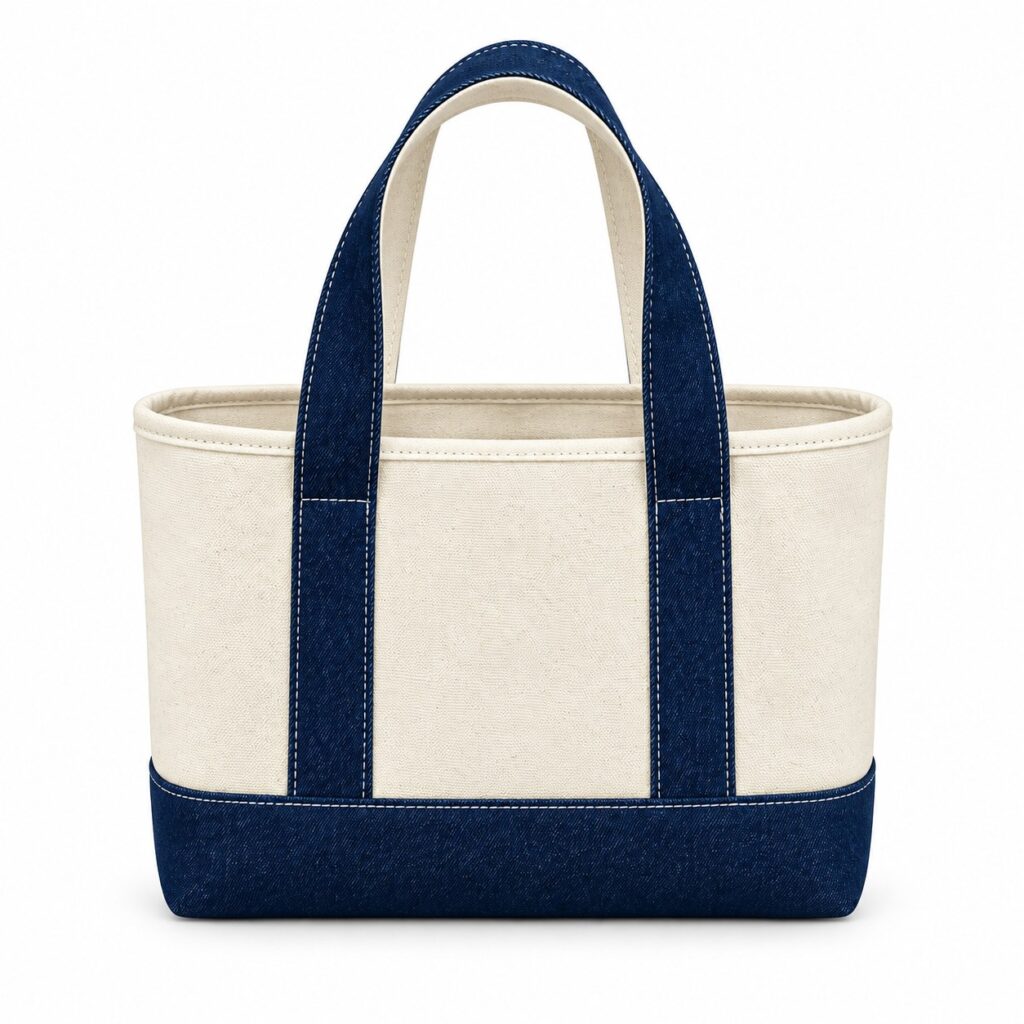
Design A sells eighteen bags and Design B sells twelve. It is tempting to order more of A immediately. But A may have started with twice the stock, received a window display and remained available for longer. The sales totals do not tell the whole story.
A cotton tote bag retail trial can help a shop choose its next assortment without pretending that a short test predicts a whole season. It gives the next buying discussion a clearer basis for choosing designs and quantities, while leaving the uncertainties visible.
Choose the decision before the trial begins
Decide whether you are comparing two illustrations, two colourways or the role of a tote within a wider range. Keep unrelated changes limited where practical. Identify the cotton or canvas fabric, dimensions and handles for each design. If the cloth, price, placement and construction all differ, the result cannot be attributed to artwork alone.
Use a defined start and end date. Include the shops and sales channels being observed, and nominate a person to reconcile the records. There is no universal test length or starting quantity for every retailer; use a window that your team can actually monitor.
Count available stock, not just the opening delivery
Record opening saleable units for each design, additional receipts, transfers in and out, returns, write-offs and closing stock. Keep display samples separate. A bag handed out as a promotion is not automatically a retail sale.
Choose how returns will be treated before calculating the comparison. A returned unit may be restored to saleable stock or held for review. Record the movement and its condition, not merely a negative sales number with no explanation.
Shopify’s inventory documentation illustrates why definitions matter: its sell-through report relates items sold to items sold plus stock remaining. A shop using a different report must check that report’s treatment of receipts and adjustments before comparing the percentages.
Read a small example without overclaiming
The following figures are illustrative only. They are not Gahumi customer results, recommended opening quantities or a forecast.
| Design | Opening units | Units sold | Closing units | Sold ÷ opening units |
|---|---|---|---|---|
| A | 40 | 18 | 22 | 45% |
| B | 20 | 12 | 8 | 60% |
A has the larger unit sales total. B has the higher proportion sold in this simplified example. Neither fact settles the reorder on its own: buying cost, selling price, availability and the retailer’s objectives still need review.
Do not use the simplified denominator unchanged when stock moves during a real trial. Reconcile those movements or use the defined inventory report consistently. Otherwise a transfer to another shop can look like demand.
Note when customers could actually buy each design
Mark dates when a design was unavailable, removed from display or hidden behind another item. Record markdowns, promotions and substantial position changes. A zero-sales day during a stockout is not evidence of customer rejection.
For a small shop, staff notes can add context to till data. Customers may ask about shoulder fit, miss the price or mistake the display sample for the only stock. Note comments about using the cotton bag again too, such as its opening or fold, rather than assuming the illustration is the only reason to buy. These are observations, not survey percentages or proof of a longer product life.
The shop display and storage guide can help make the selling arrangement repeatable. This trial is about measuring the assortment decision, rather than simply keeping a display tidy.
Decide what to keep or change
For each design, choose continue, revise, observe further or stop, and write the reason. Separate a promising illustration on an unsuitable bag shape from a construction problem shared by both designs.
Turn the chosen mix into an order proposal only after the review. Our multi-design quantity matrix keeps the resulting production lines clear. The trial does not establish the supplier’s minimum quantity or reserve production capacity.
Send Gahumi your proposed assortment, confirmed bag dimensions, artwork, quantity range and destination. Share aggregated product observations rather than customer names or payment records. Ask what sample and quantity options are available; a trial result is a useful input, not a guarantee of future sales.
Discuss a retail assortment sample plan or send the proposed mix on WhatsApp. For a written brief, email gzgahumibag@gmail.com.