Choosing between cotton mesh and canvas tote bags starts with what must stay inside, what may remain visible and where the shop’s design needs to appear. An open net body and an opaque cloth panel do different jobs, even when both proposals use cotton.
A mesh shopper might be worth considering for a particular collection of packaged goods. A solid canvas tote may suit a different collection. Neither deserves approval from an empty product photograph, and the material name does not settle the finished construction.
Put the smallest item in the brief
Large boxes are easy to notice during development. Small items in a mesh tote deserve equal attention. Include the smallest item that could be carried loose, together with any normal sleeve, wrapper or container. If it needs separate packaging, keep that packaging in every trial rather than removing it to make the photograph cleaner.
Can a mesh tote carry small loose items? That depends on the actual openings and contents. Put the identified items into the sample and check the base, sides and transitions between materials. If the arrangement cannot retain them as intended, change the body proposal or keep them in suitable separate containment. A general bag size cannot answer this question.
Check loading as well as retention. Open the bag at the counter, insert the awkward package and remove it again. Watch for corners catching and for the mouth changing shape as the contents settle. Record the clear opening on the actual sample; a laid-flat width is not necessarily the access available during packing.
For food-related projects, this remains an outer carrier brief. The farm-shop packing guide deals with separation and appropriate product packaging. Mesh appearance does not establish direct food-contact suitability or temperature control.
Give the graphic a real surface
Westford Mill’s W150 is a useful construction example: its mesh shopper has a separate cotton front panel intended for decoration. That is one product’s arrangement, not evidence that Gahumi supplies the same structure or that its load and certification statements apply elsewhere.
A solid decoration panel needs its own outline and position on the proposed bag. Show the authorised graphic at actual size, including the space it needs around lettering. Review how the panel sits against the open material when the bag contains the intended purchases.
Does cotton mesh need a separate print panel? Not every bag needs a printed graphic. Where clear branding is important, ask the decoration provider which identified surface and process it can assess. A solid panel is one proposal to review; do not assume that an artwork preview can establish how fine lettering will reproduce directly across openings.
Opaque cotton tote panels can also be specified for areas where the buyer does not want contents visible. Mark those areas explicitly instead of asking for a mesh bag and later rejecting its open appearance. Keep the panel, mesh, handles and joining materials separately identified.
Choose the construction that completes the handover
Try each proposal with the same contents and packing action. Check what the recipient can see, whether the intended items remain contained and whether staff can find the handles without rearranging the purchase. These observations provide a practical choice without inventing a strength or comfort rating.
If extra depth is required, use the grocery tote construction guide to define it separately. Adding a gusset does not by itself resolve an open-material retention problem.
Finish with a marked panel drawing, contents list and sample reference. Confirm any required cotton composition for each fabric, then agree appropriate care for the completed combination. Intended repeat use is a product objective, not evidence that mesh or canvas has a lower environmental impact.
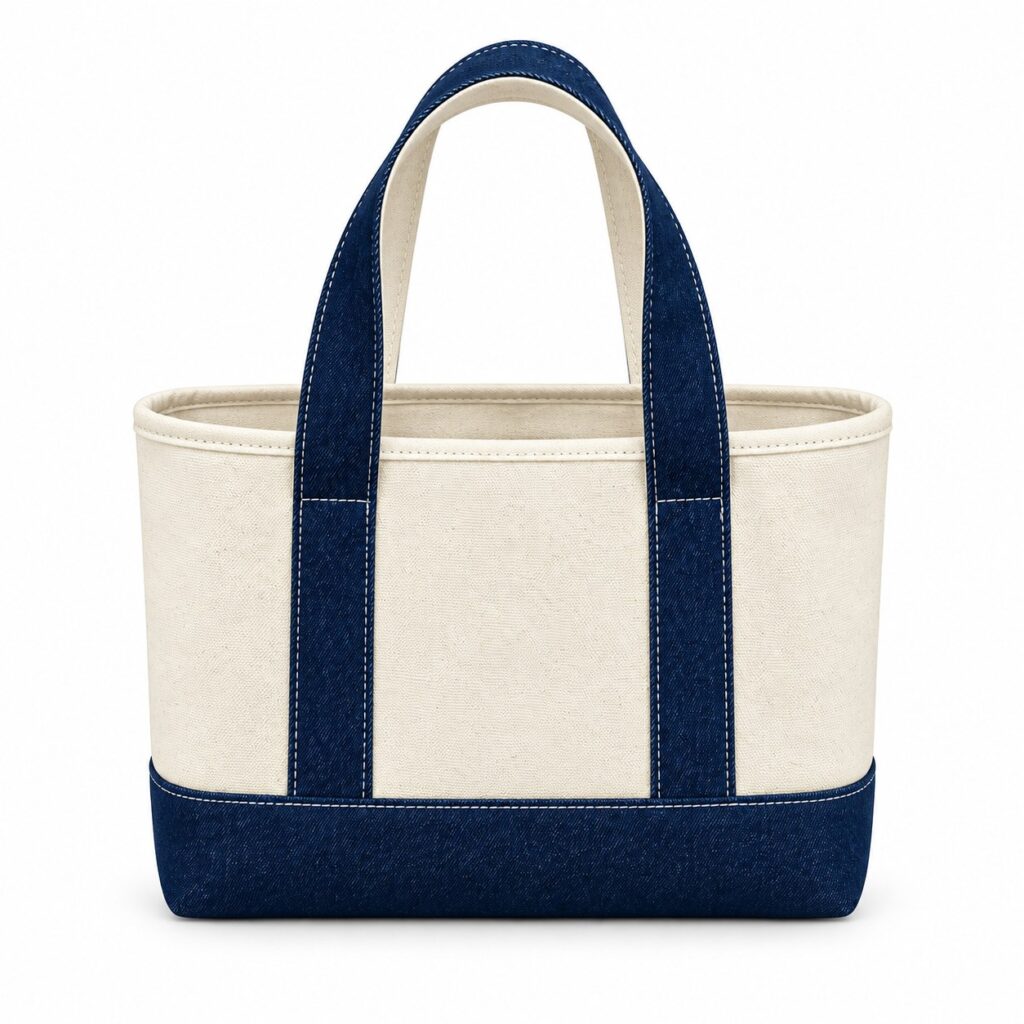
Send Gahumi that package with artwork, quantities and destination. Ask whether the proposed mesh and solid-panel combination can be sourced and developed, or whether a solid cotton tote is the more workable alternative. The accompanying image illustrates a general tote style, not a mesh construction sample.
Email your brief to gzgahumibag@gmail.com.