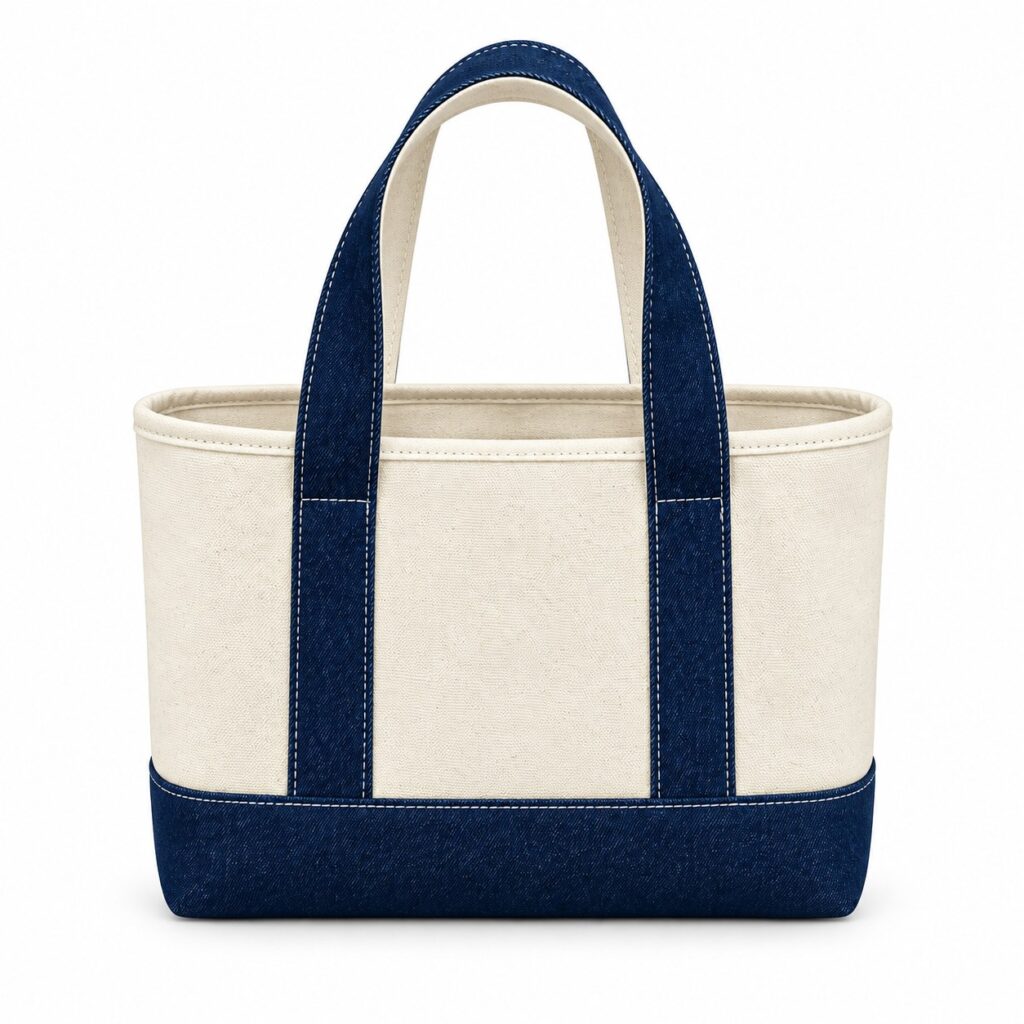
The design team has a short line ready for a hangtag: “a better bag for the planet”. The buying team has a fabric specification. Before the line goes to print, somebody needs to explain how those two things connect. A material description is not automatically evidence for a broad environmental promise.
Cotton tote bag environmental claims need evidence for the words the customer will read. Record the exact statement, what supports it, any limits and who has reviewed it for the intended market. A fabric specification alone cannot settle that decision.
Start with the sentence the customer will actually see
Collect the proposed text from the bag, hangtag, packaging, product page and campaign. Include logos and imagery where they create an environmental impression. Reviewing an internal specification alone misses what the customer is being told.
The UK CMA Green Claims Code sets out principles including accurate, clear, substantiated claims and fair comparisons that consider the product’s life cycle. Broad wording is harder to support than a specific statement. For sales elsewhere, ask the responsible market reviewer to check the applicable local requirements.
Use the exact proposed wording in the record, including a nearby explanation. “Cotton body” and “entirely cotton” have different scopes. A claim about the bag should not be supported only by evidence about a carton or one panel.
Match each claim to its evidence
Give each statement a reference. The record should allow a colleague to find the supporting material and understand the decision without searching through an email chain. A practical entry contains:
- The wording and where it will appear.
- The product version and component or activity it describes.
- The evidence source, date and relevant section.
- Any conditions, exclusions or comparison assumptions.
- The review owner, decision and date for reconsideration.
Use statuses such as supported as written, revise or do not use. “Evidence requested” is not the same as approved. Keep pending statements out of released artwork, rather than adding a small qualification after the main file has already been sent.
For organic-content wording, use the separate sourcing and certification evidence review. The claims record need not reproduce those documents; it needs to identify which wording they support and for which goods.
Repeated use does not prove a carbon saving
A statement that a bag is intended for repeated use does not establish a numerical saving against another product. A comparison needs a defined basis, including the alternatives, their functions, the environmental measures and the assumptions about use and care.
Do not borrow a reuse number from a general study and present it as a tested result for the ordered tote. Fabric weight, manufacture, distribution, cleaning and the comparison being made may differ. Have a suitably qualified reviewer assess whether a study supports the precise claim.
For a cotton or cotton canvas shopping tote, useful repeat use starts with an appropriate opening, a suitable handle fit and a design intended to remain useful beyond a short campaign. Review those choices on the sample. The printed cotton tote guide develops that approach; it is not evidence of a carbon saving or an environmental ranking.
Keep packaging claims and bag claims apart
If the project reduces individual wrapping, record exactly what changed and the evidence for it. A change to one packaging item does not establish that the complete delivery is plastic-free, waste-free or lower-impact overall.
Likewise, do not describe an item as recyclable merely because one material can be recycled somewhere. Ask the market reviewer to examine the complete item, how parts are joined and the collection arrangements relevant to the customer. When those facts are missing, remove the claim rather than filling the gap with a familiar symbol.
Consider the impression created by a badge or leaf graphic next to qualified text. A careful sentence can still be undermined by an unreviewed certification-style mark. Ask who owns the mark and whether its use is permitted.
Check the final wording before printing
Attach the accepted wording to the artwork reference, not just to the purchase order. Check the final proof against the claims register. If a sentence was shortened to fit, send the revised version back for review; small edits can change its meaning.
Give the retailer or distributor the same accepted text. A product listing should not restore a broad promise that was removed from the hangtag. Record translations as versions of the approved statement and have them checked in context.
Review the wording again when materials, decoration, packing or the claim itself changes. Decide who will monitor evidence validity and current market requirements. An approval for last year’s specification should not silently cover a different bag.
For a Gahumi enquiry, send the proposed bag, quantity, destination and exact statements your team is considering. Include the evidence requirements before sampling. Ask what information can be supplied for that project; this article is not a certification, product claim or legal approval.
Email gzgahumibag@gmail.com with the brief and the person responsible for reviewing the claims.