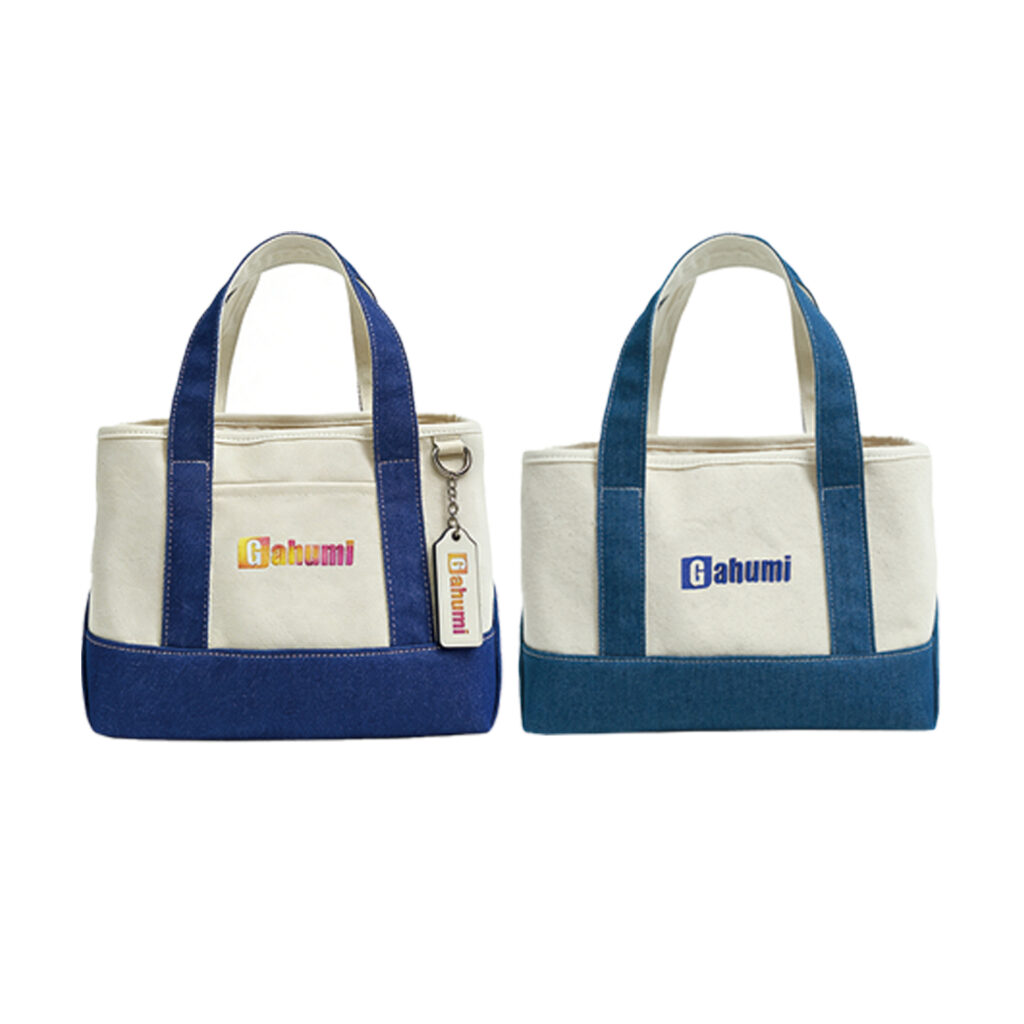
Printed cotton tote bags can look similar in a quotation. Compare the physical samples, and the differences become clearer: the fabric feels different, the handles sit differently, and the same artwork can produce a different finish.
For retail brands, event organisers and promotional distributors, a useful bag starts with those details. A 100% cotton tote should suit what customers will carry, show the artwork clearly and feel comfortable enough to use again. Choosing the fabric, printing and construction together gives the project a stronger foundation.
What to Specify When Ordering 100% Cotton Tote Bags
“Cotton” describes the fibre content. “Canvas” describes a fabric construction; canvas is commonly a plain woven fabric. A quotation that says only “canvas bag” therefore leaves the material composition unclear.
If your project requires 100% cotton, state that requirement for the bag body and handles. Specify any lining, contrasting panels, sewing thread and labels separately. This helps the supplier understand which components your material claim must cover.
The fabric colour also deserves attention. Natural cotton, white cotton and dyed cotton create different backgrounds for the artwork. A logo approved on a white screen may look different against a natural cream fabric. Review the actual fabric and printed sample together before approving the colour.
For custom cotton tote bags with a logo, include the finished dimensions, handle drop and intended contents in the first brief. A bag for books needs a different shape and construction from one designed to hold a few event brochures.
Choose Fabric Weight Around the Bag’s Intended Use
Fabric weight affects the feel and structure of printed cotton tote bags. Suppliers may quote it in grams per square metre, usually written as GSM, or ounces per square yard.
The following weights provide useful starting points for a discussion:
| Canvas weight | What the weight means | What to assess on the sample |
|---|---|---|
| 8 oz | Less nominal fabric mass per square yard than the options below | Fabric opacity, flexibility and support for the intended contents |
| 12 oz | More nominal fabric mass per square yard than 8 oz | Balance of structure, carrying comfort and fabric texture |
| 16 oz | More nominal fabric mass per square yard than 12 oz | Finished bag weight, folding, handle comfort and seam construction |
These are starting points rather than load ratings. Fabric weight alone cannot establish how much a finished bag will carry or how long it will last. The weave, seams, handle attachment and overall design also matter.
Ask for swatches when comparing fabrics, then assess a finished sample with the items the bag will actually hold. You can use Gahumi’s canvas weight guide to prepare the material specification.
Match the Printing Method to Your Artwork
The best printing method depends on the design, fabric colour, print area and order requirements. Send the original artwork early, with the required print dimensions and position. This gives the supplier something specific to assess.
Screen printing for defined colours and bold artwork
Screen printing is a practical option to discuss for logos, lettering and illustrations with defined colours. It is particularly useful when the same artwork will appear across an order.
Check small text, narrow lines and solid areas on the selected cotton fabric. A textured canvas surface can affect the appearance of fine detail, so a digital mockup should be followed by a printed sample.
For a logo with several colours, ask the supplier to confirm the colour references and alignment between the printed elements.
Digital printing for detailed designs
Digital printing is worth considering for artwork containing gradients, photographs or many colours. The supplier should confirm the particular process and its suitability for the chosen cotton fabric.
Review the smallest details at the final print size. Enlarging a design on a computer screen can hide problems that become obvious when the artwork is printed on the bag.
Fabric colour remains part of the decision. Ask how the design will reproduce on the actual material, especially when a light element needs to stand out against a darker background.
Heat transfer for selected graphics and placements
Heat transfer offers another route for applying detailed or multicolour graphics. The finished feel depends on the transfer system, artwork coverage and fabric.
On the sample, touch the printed area and fold the bag as a customer would. A large graphic may change the feel of the front panel. Confirm the care instructions and assess the print under the agreed washing conditions.
Gahumi’s printing and branding options provide a starting point for comparing these methods against your design.
Plan for repeated use without a blanket environmental claim
For a cotton tote intended for repeated use, consider the everyday role it should serve. Comfortable handles, a useful size and an appealing print give it a role after the original purchase or event.
Cotton bags still require resources to produce. UNEP’s assessment of shopping bags and their alternatives explains that environmental comparisons depend on the full life cycle, and that cotton alternatives do not outperform plastic bags in every environmental category. Repeated use is therefore central to the project’s environmental purpose.
That has practical consequences for the design. A tote that is awkward to carry or too small for everyday errands may see little use. Check that the intended contents fit, the handles work in a carrying trial and the care instructions suit the finished sample. Those are practical design decisions, not evidence of a measured environmental saving.
Keep material descriptions precise as well. “100% cotton” does not establish that a fabric is organic or recycled. If either is part of your purchasing requirement, request the relevant material documentation before agreeing the product wording.
Packaging belongs in the same discussion. Ask whether bulk packing will meet your distribution needs and identify when individual wrapping is necessary for protection or retail presentation.
Check the Sample Before Approving Bulk Production
A physical sample brings the fabric, construction and print together. Use it to agree the finished product before committing to the bulk order.
Review these points:
- Material: Confirm the composition, fabric weight, colour and texture against the specification.
- Dimensions: Measure the bag, base depth and handle drop.
- Construction: Inspect handle attachments, seams, corners and the opening.
- Artwork: Check the print size, position, colours and smallest details.
- Print feel: Handle and fold the printed panel to assess the finish.
- Performance: Agree any required load, rubbing or washing checks and the acceptance criteria.
Keep the approved sample and record revisions in writing. If the logo moves, the fabric changes or the handle length is adjusted, make sure the final specification reflects that decision.
A washing check should follow the intended care instructions. Record any changes in dimensions, fabric colour and print appearance so both teams have the same reference for approval.
Work with Gahumi on Your Printed Cotton Tote Bags
Gahumi manufactures custom cotton tote bags in its own factory. Our factory overview shows the production facilities and explains how material, construction, branding and quality checks fit into the order process.
For your printed tote project, our team can review the artwork alongside the fabric and bag design. This is useful when a logo sits near a handle, pocket or panel seam, or when you are comparing fabric options before sampling.
When ordering printed cotton tote bags in bulk, approve a sample in the chosen fabric and print before confirming production.
Send your artwork, reference design, dimensions and target quantity through Gahumi’s inquiry page. Include the delivery destination, required arrival date and any material documentation or testing needs.
If you have not chosen the fabric weight or printing method, tell us what the bag will carry and how you expect customers to use it. We can review the options with you and prepare a quotation for your printed cotton tote bags.
Request a printed sample quoteDiscuss fabric and artwork on WhatsApp
Send the same project details by email to gzgahumibag@gmail.com.