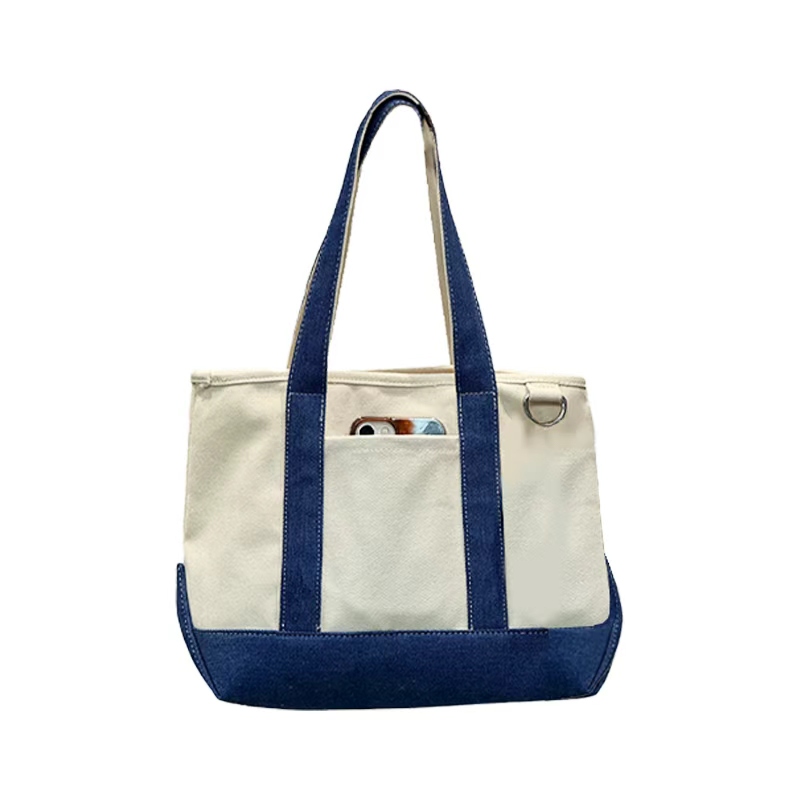
For European retailers, event teams and private-label brands, a tote bag is no longer only a giveaway. It can be reusable retail packaging, a practical event companion and a visible part of a brand experience.
Choosing a cotton tote bag for repeated use requires more than adding a logo. Buyers need to balance fabric, construction, usability, branding and the evidence behind any sustainability claim. This guide explains how to make a better sourcing decision for a European-facing programme.
Start with the real use case
The right tote bag begins with how it will be used.
For trade shows, conferences and high-volume promotions, a lightweight 100% cotton tote can keep distribution practical while giving visitors something useful to take home.
For a retail range, compare a flat tote with a gusseted sample using the books, groceries, clothing or gift boxes it is meant to hold. A gusset changes the shape and usable space, but neither it nor a particular handle style establishes a carrying capacity. Check the whole construction with representative contents.
For corporate gifts and private-label collections, decide whether an interior pocket, zip closure or woven label solves a real need. Compare the fabric and assembled sample rather than assuming a heavier canvas will be preferred or reused more often.
The aim is not to add every possible feature. It is to specify the features that match the programme, expected lifetime and budget.
Set the brief for your actual customers
European customers do not share one style preference. Start with your own store range, audience and intended use, then compare design directions with the people who will select or distribute the bags.
Common directions to consider include:
- Natural, undyed-looking cotton or carefully selected brand colours
- Clean one-colour or two-colour logo printing
- Handle drop and opening clearance checked for the intended carrying style
- Handle attachment and stitching reviewed on the finished sample
- A gusset or box bottom for retail shoppers
- Clear information about material, production and packaging
Decide whether the artwork should remain relevant after the campaign ends. A date-free design is one option, not proof that a bag will be kept or reused. Ask whether the intended customer has a practical reason to carry it again.
Understand “100% cotton” and “eco-friendly”
“100% cotton” describes the fibre composition within the stated scope. Confirm whether that scope is the body fabric or all specified textile components, and identify thread, labels, closures and decoration separately. Cotton content does not automatically mean organic, certified, recycled, carbon-neutral or plastic-free.
For a credible European sourcing programme, use only the environmental claims your supplier can support with documentation. If organic cotton is requested, ask for the relevant certification evidence. If recycled content, responsible packaging or social-compliance standards are important, request the documents before using those claims in packaging or marketing.
Use specific descriptions only once the relevant composition or design evidence has been confirmed. Possible wording includes:
- “Reusable tote with a 100% cotton body fabric”
- “Cotton body fabric, with the composition confirmed for this specification”
- “Designed for repeated retail or event use”
Avoid vague claims that cannot be verified. Good sourcing communication protects both your brand and your customer relationship.
Choose the right cotton construction
Fabric weight and construction influence how the bag feels, prints and performs.
If compact event distribution matters, compare lighter candidate fabrics in the intended fold and test the artwork on them. Check fabric coverage, print detail and handling with the planned contents; nominal weight does not settle those questions.
For a retail or gift programme, compare the hand feel and presentation of the actual cotton or canvas samples. Include the proposed handles, decoration and any packing insert so that you are judging the assembled product.
If considering a heavier canvas, check seam bulk, fold, finished shape and shipping weight as well as appearance. Agree any intended-load assessment for the completed bag; heavier fabric alone is not a load rating.
Request a physical sample before approving production. Use it to check fabric feel, print quality, stitching, handle fit and how the intended contents sit in the bag. If you need to make a carrying-capacity or durability claim, agree an appropriate assessment for the finished construction rather than relying on a brief handling check.
Make custom branding feel intentional
The best branded tote bags look designed, not simply printed.
Start with the artwork. Bold logos, line illustrations and clear typography often work well with screen printing. Detailed artwork may need a different print method, so confirm colour accuracy and edge quality during sampling.
Then consider the finishing details:
- Handle length: hand carry, shoulder carry or both
- Bag shape: flat, gusseted or box-bottom
- Closure: open top, button, zip or drawstring
- Branding: print, woven label, embroidery or inside label
- Packaging: individual packaging only when it is genuinely needed
Compare a natural cotton base and restrained branding with the colours and coverage suited to your range. A Pantone reference communicates a target rather than a guaranteed match: agree the substrate, approval sample and acceptable appearance. Confirm which decoration methods are available for the chosen construction.
Questions to ask before placing an order
Before approving a custom cotton tote bag, confirm the following with your supplier:
- What is the exact fabric composition and weight?
- What are the final bag dimensions, gusset depth and handle length?
- Which print method is recommended for the artwork?
- Can the supplier provide a pre-production sample?
- What quality checks are completed before shipment?
- What documentation is available for any material or sustainability claim?
- What are the MOQ, production lead time and delivery terms for Europe?
- How will the bags be packed to protect them during transport?
A clear specification sheet reduces revisions, avoids misunderstandings and makes quotes easier to compare.
Build a tote bag programme customers will keep using
A reusable cotton tote works best when it is designed for a genuine role in the customer’s day. Think beyond the event itself: Will it carry shopping, work materials, books or everyday essentials? Will the handles, fabric and print still look good after repeated use?
For European brands, the strongest approach is practical product design combined with honest material information. Choose the right construction, approve a sample and make sustainability claims only where the evidence is available.
Share your required quantity, preferred bag style, artwork and delivery market with Gahumi to discuss a project-specific quote. State any essential cotton composition or documentation requirement so that availability and scope can be checked before you approve an order.
Read the two-tone cotton canvas specification guide for component choices and the bulk tote order checklist for the approval record.
Send your retail bag briefDiscuss materials and design on WhatsApp
Prefer email? Send the relevant bag details to gzgahumibag@gmail.com.