When the pattern belongs to the cloth itself, the bag brief begins with a material decision rather than a print file. A woven jacquard can bring a motif into the fabric construction. The buyer then needs to select the actual cloth and decide what portions of that design should appear on the finished tote.
A cotton jacquard tote fabric specification should identify the material, its composition and its visible design before the maker prices cutting and assembly. The word jacquard alone does not settle those details. This guide concerns woven jacquard, not every textile sold under that name.
Ask whether you are selecting cloth or commissioning it
Choosing an existing fabric and requesting a newly woven design are different enquiries. For an existing cloth, obtain its reference, a physical sample and the available specification. For a new design, ask the responsible material provider what development information, commercial terms and samples it would need.
CottonWorks’ jacquard-loom definition describes individual warp-end control as part of creating woven design. It explains a structural route to a motif; it does not establish a particular fabric’s cotton content, repeat size or suitability for a tote.
Is a jacquard tote necessarily 100% cotton? No. Confirm the full composition of the proposed cloth. Pendleton’s cotton jacquard tote, for example, lists a woven cotton blend rather than an all-cotton shell. Its specification belongs to that product, not to the material being requested from Gahumi.
If the project requires 100% cotton body cloth, state that as a sourcing requirement. Keep handles, lining and other components on their own lines. Availability and any design-development capability require confirmation; a bag maker should not be presumed to weave custom jacquard in-house.
Read the fabric as both a surface and a repeat
A woven jacquard fabric reference should include the intended outer face, the reverse and a portion large enough to understand the pattern repeat. A tiny swatch may identify colour and feel while cutting off the part of the design the buyer actually wants to see.
Ask the provider to identify the repeat dimensions and any relevant direction. Mark those against the finished bag panels. Review the relationship between motifs, top edge, base and handle attachments at actual scale. An attractive cloth photograph does not show the crop created by the proposed pattern pieces.
Decide whether variable placement is acceptable. Pendleton’s listing explicitly notes that pattern placement may vary, illustrating a commercial choice that should be made before approval. Another project might require a particular motif on the front; that is a separate feasibility and quotation request.
For a jacquard tote panel crop, specify what must remain visible and what variation is permitted. Essential lettering deserves particular care. Do not approve a variable crop while expecting every bag to reproduce the same photographed section.
The repeat-print guide deals with a related but different route. Here, the selection and crop belong to the supplied woven material; they are not instructions to a printer for a new ink repeat.
See what the reverse becomes inside the bag
A jacquard fabric reverse review should use the actual cloth and proposed construction. Establish whether that face will be exposed inside, covered by a lining or used elsewhere deliberately. Inspect the physical surface and ask the material provider about any handling or finishing question it raises.
Does a patterned reverse make the tote reversible? No. The complete seams, attachments, pockets and labels would need their own two-face construction. The reversible tote guide covers that separate development decision.
Request an assembled sample showing the chosen crop and inside finish. Put the intended contents in it, remove them and fold the bag as planned. Record what changes in the visible pattern when the sides open or a handle falls across the face. Agree the care and any performance evidence appropriate to the actual materials, without assigning a lifespan from the weave name.
The final purchasing package can be concise: cloth reference and composition, face/reverse sample, repeat and panel crop, accepted placement variation, component list and complete sample approval. Confirm any later fabric substitution against that package rather than accepting something described only as a similar jacquard.
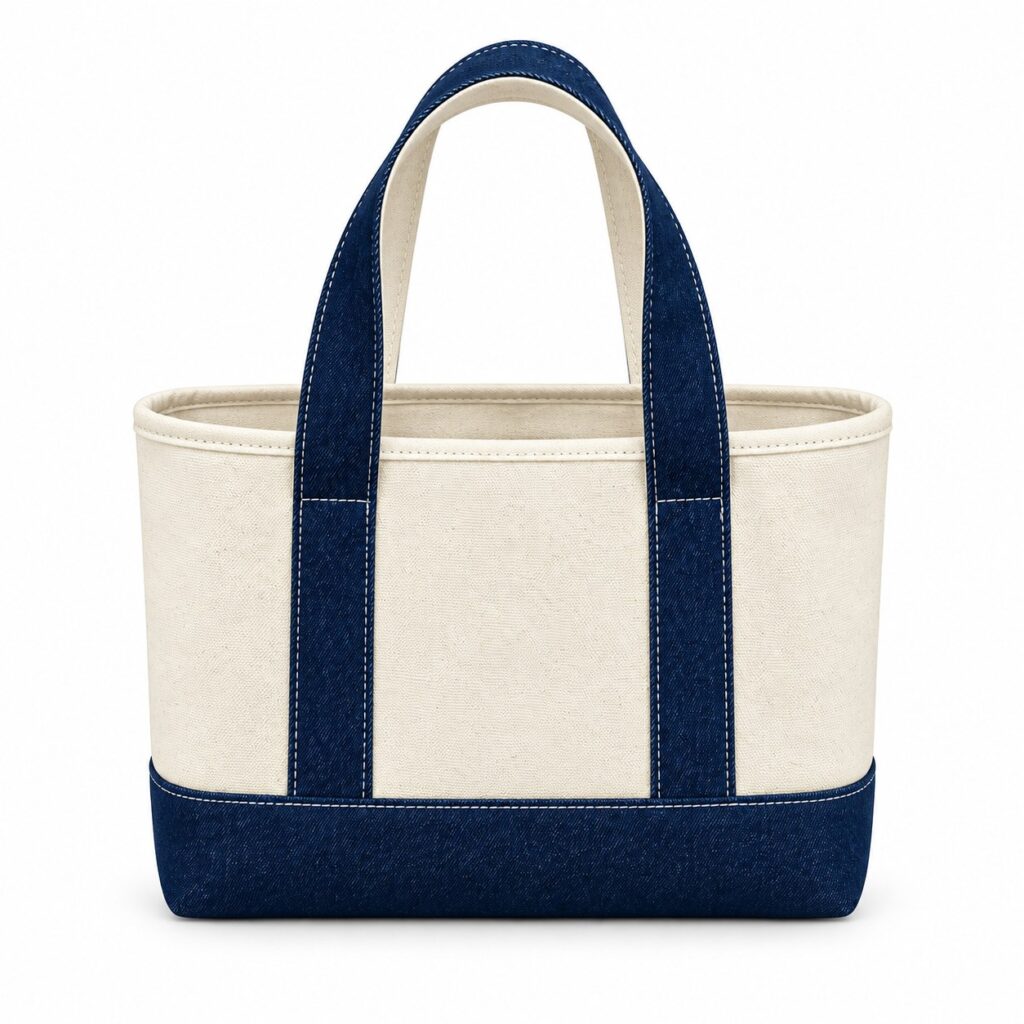
Send Gahumi a permitted cloth reference or an original design concept, required composition, bag dimensions and quantities. Ask what sourcing and sampling can be considered. The general exterior photograph is not a jacquard swatch or evidence of its composition.
Email authorised references and requirements to gzgahumibag@gmail.com.