Once the lettering output and permissions are settled, record the accepted version in the artwork size and placement brief. Keep its intended dimensions and position attached to the same handoff rather than leaving them in a separate proof.
The slogan looks right in the designer’s document, but the lettering changes when the production team opens it. The missing font is a file dependency, not permission to substitute a similar-looking typeface.
A cotton tote artwork font handoff should settle two questions before print preparation: does the recipient need to edit live text, and what does the applicable font licence allow? The answer determines which files can be supplied without losing the approved lettering or assuming rights that have not been granted.
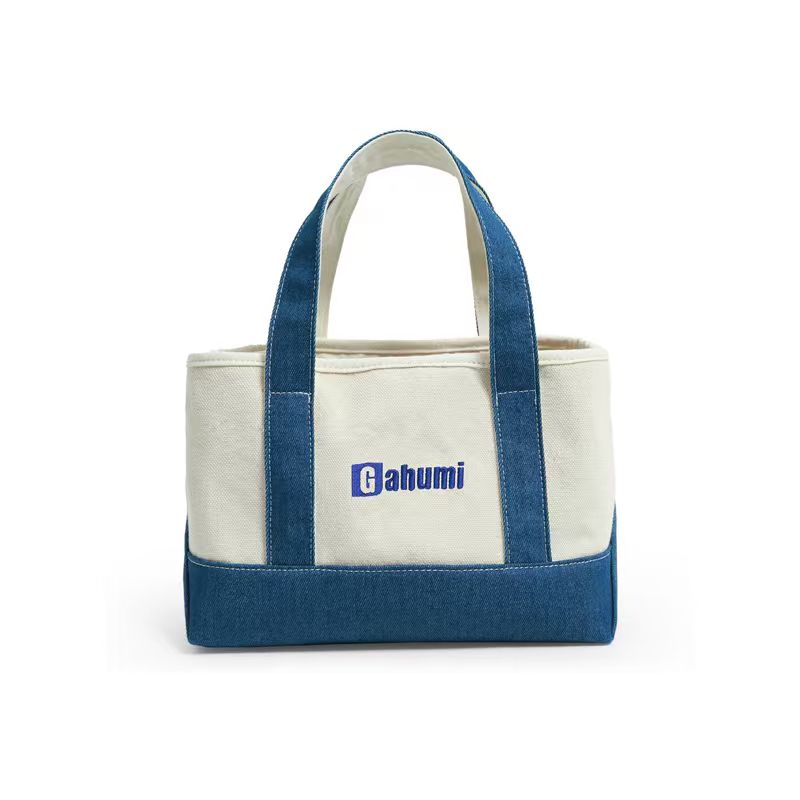
The pictured Gahumi tote is a product reference, not a typeface recommendation or evidence of a font licence.
Decide whether production needs editable text
A fixed, approved slogan and an unfinished design are different handoffs. For fixed wording, ask the designer and printer which permitted output will retain the letterforms for the proposed process. The file should have a readable preview, final dimensions and a clear version.
Outlined lettering for tote printing can remove the recipient’s need to access a live font for that fixed graphic. It is one possible delivery route, not a universal instruction to outline every file. Properly embedded document output may be another option where the licence and workflow permit it.
If the recipient needs to change words, spacing or language, identify that requirement explicitly. Keep the editable master with the authorised designer and agree who will make revisions. Do not silently reconstruct missing letters or replace them with a convenient font.
Can I send font files with my tote artwork?
Check the specific licence before packaging them. Permission to produce merchandise does not automatically answer whether font software can be copied to another party. The recipient’s intended use matters too, particularly if it needs direct access to edit the text.
Adobe Fonts’ licensing FAQ, for example, permits merchandise design within its stated terms while distinguishing that use from transferring font files. It also distinguishes supplied graphic output from a collaborator’s direct access to fonts. These are Adobe examples, not rules for every typeface.
Adobe’s packaging guidance explains that licence terms can differ, including exceptions in some agreements. Have the responsible rights reviewer check the actual font source, agreement and delivery route. A printer should not be expected to resolve an unknown licence from the font’s filename.
Keep an approved lettering reference
Retain a preview showing the whole slogan and any letters, accents or symbols that are easy to overlook. Compare the supplied production file with that preview before it moves to sampling. Check spelling, punctuation, line breaks, spacing and the intended letterforms.
A technically valid file can still contain the wrong words. Equally, a proof that opens correctly does not establish its readability on cotton. Apply the full-size lettering review to the important details on the proposed fabric.
If the only surviving logo needs reconstruction, use the separate redraw review. Do not hide reconstruction inside a font-replacement task. The brand owner needs to see any interpretation made from an unclear reference.
Does converting text to outlines grant permission to use it?
No. Changing the delivery format does not establish an entitlement to use the source font or the underlying design. Identify the applicable permissions first, then choose an allowed output. Where terms or ownership are uncertain, leave the artwork unreleased until the authorised reviewer resolves them.
Keep the font family and style, the design reference, the chosen output route and the person responsible for edits in the project record. If a later language version or personalisation request needs live-font work, review that use rather than assuming the original fixed slogan approval covers it.
The printer still needs the cotton fabric, final graphic dimensions and intended position. A font decision does not guarantee reproduction, colour, durability or any environmental attribute of the decorated bag.
For a Gahumi enquiry, send the approved graphic and preview, bag drawing, quantities and any unresolved file requirements. Ask which production format can be assessed. Font permissions remain with the responsible parties and their advisers; this guide does not grant a licence.
Email the graphic and preview to gzgahumibag@gmail.com.