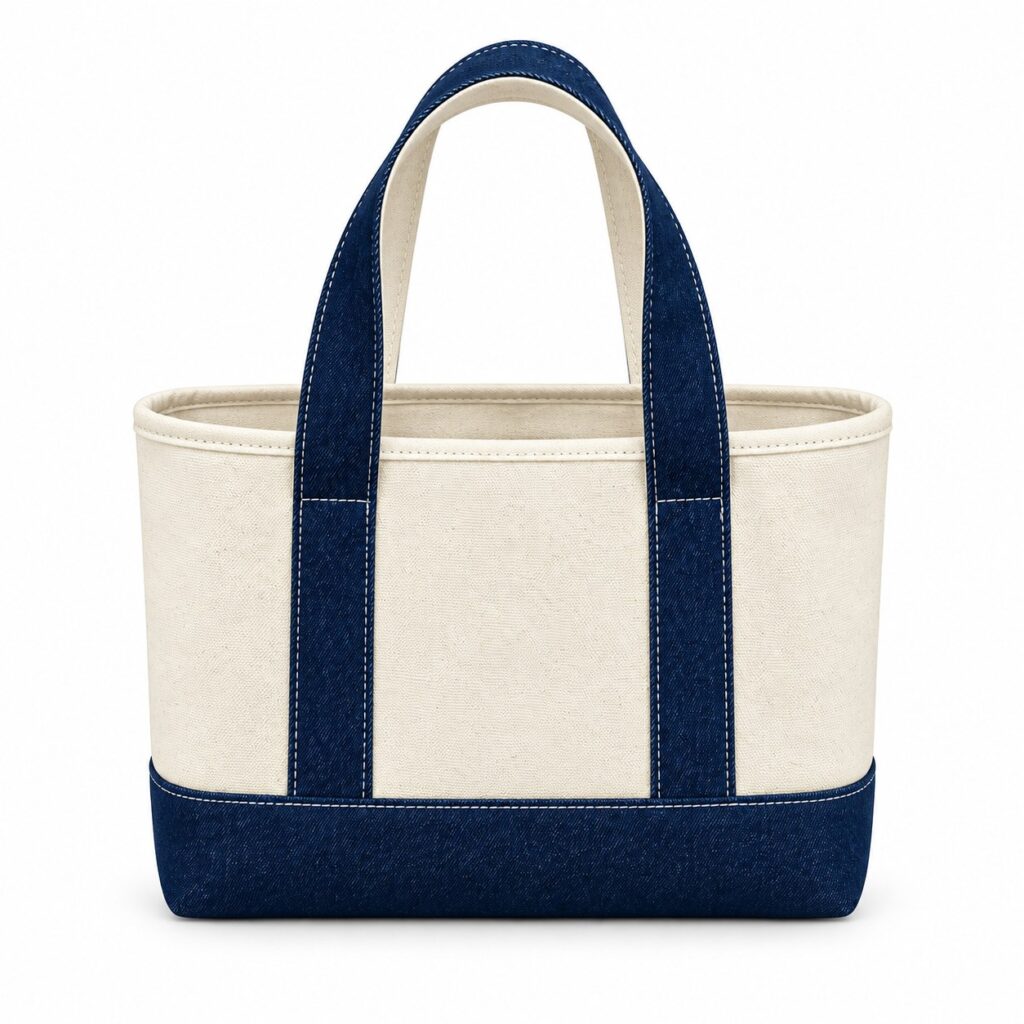
The bottle slides into the holder on an empty sample. Add a book and a lunch container, and the same opening is harder to reach. A useful bottle compartment has to work within the tote, not only on its own.
Develop a cotton tote bottle holder around an identified bottle and the rest of the intended load. This is an everyday organisation feature, distinct from protective packaging for glass bottles or an insulated drinks carrier.
The pictured Gahumi bag is an exterior reference. It does not show a confirmed bottle holder; this construction needs its own project review.
Bring the whole bottle to the discussion
What measurements does a tote bottle holder need? Record the bottle’s height and widest profile, including the lid, grip, handle or loop that must pass the opening. Use the complete item in its normal condition rather than a nominal capacity such as 500 ml.
A narrow cylinder and a handled tumbler can hold similar amounts of liquid while presenting quite different shapes. Photograph the item from the side and above. Identify which part should remain accessible when the bottle is in place.
The ROKA Marylebone product description includes a water-bottle holder, and the Monos cotton canvas tote identifies interior bellowed pockets for a bottle or umbrella. These examples support considering a dedicated compartment; they do not provide a specification for your bottle or a Gahumi order.
Find out where the bottom sits
A cotton tote bottle sleeve base needs an explicit drawing. Ask whether the compartment has its own bottom, meets the bag base or uses another proposed support arrangement. A panel attached at the sides does not, by appearance alone, explain where the bottle’s weight rests.
Request the finished usable opening and internal depth. Ask the maker to show how the proposed holder joins the body or lining, and how those attachments appear from outside. Have any performance requirement assessed separately; a fit sample does not establish a carrying rating.
Use an annotated inside view and an agreed measurement method. The finished tote measurement guide explains why cut panel sizes should not be confused with the space available after assembly.
Keep this distinct from the general inside-pocket brief. A place for a travel card is not a substitute for a taller object with a defined base and top access.
Let the compartment share the actual space
If a laptop shares the tote with the bottle, show the device in its normal protective sleeve alongside the other intended contents. If the bottle leans into the device space or blocks a zip, record that as an unresolved layout issue. Do not assume a fabric divider makes the combination spill-proof.
Can a tote bottle holder prevent leaks? A holder is not evidence that a bottle is leakproof or that the bag contains liquid. Bottle closure, protective packaging and any claimed resistance to liquid need their own assessment. Keep drinks away from items that could be damaged by a spill during the practical review.
Check insertion and removal with the bag both set down and carried in the intended way. Ask someone who has not seen the design drawing to try it. Useful observations include a lid catching, fingers having little room at the opening or the holder collapsing when empty.
Approve the holder, not a vague extra pocket
A cotton tote bottle compartment sample should identify the bottle reference, opening, base construction, position and agreed contents. Retain an inside photograph showing the relationship to other pockets. If the bottle model changes, reassess the fit.
Specify the reusable cotton-canvas body and proposed holder cloth separately. Where 100% cotton is required, confirm which components that wording covers. Do not describe the bag as insulated, waterproof or environmentally improved merely because it includes a reusable bottle space.
Send Gahumi the bottle photographs, bag drawing, proposed quantity and delivery country. Ask which construction can be considered, what materials are proposed and what sampling and evaluation would need to be quoted.
Alternatively, email the measurements to gzgahumibag@gmail.com.