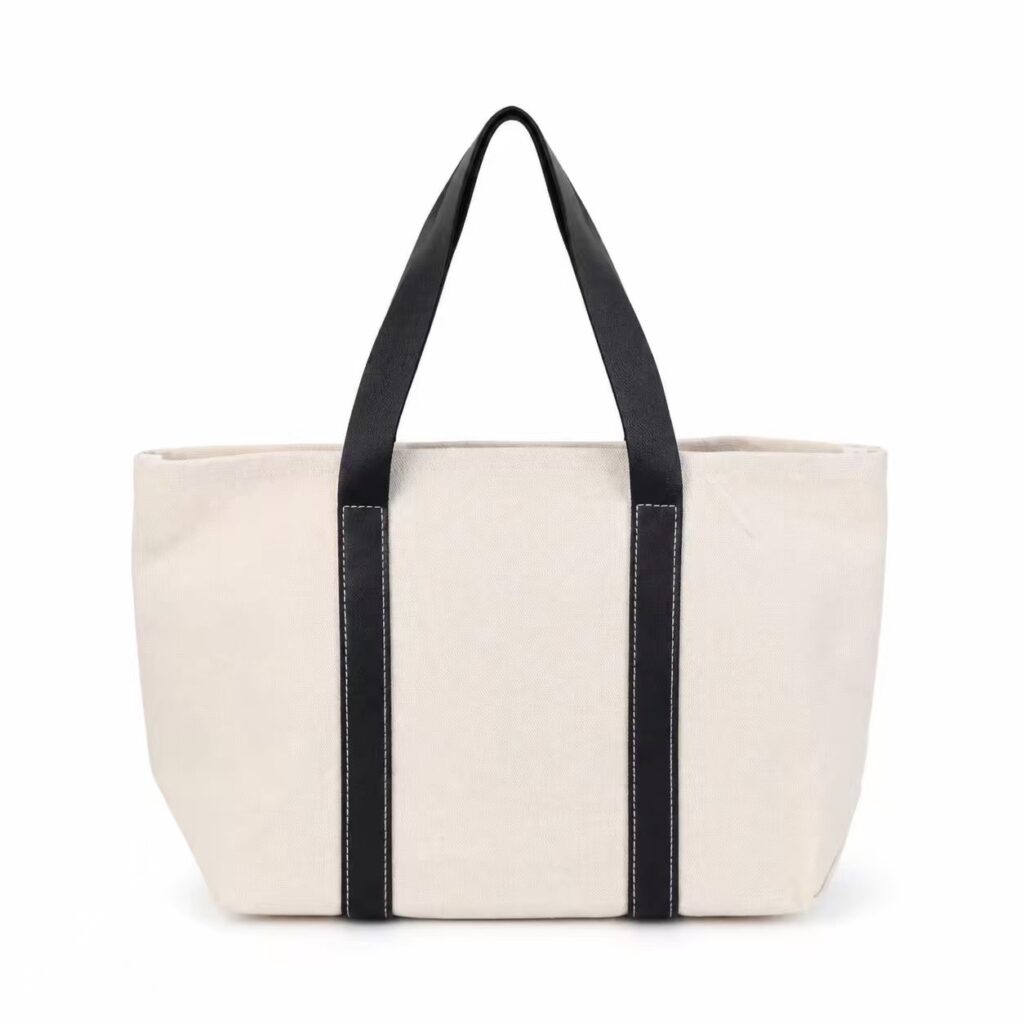
The contrast line looks convincing on the front drawing. At the bottom corner it meets another seam, then disappears into a thick junction. That meeting, rather than the long straight section, may decide whether the buyer likes the finished detail.
Cotton tote piping needs an agreed route and profile. Start with the visible detail you want; put any separate structural requirement into the brief in its own right.
Show the raised detail you actually mean
Coats’ seam overview distinguishes decorative piping effects from other seam arrangements. Use that distinction to discuss the actual profile and assembly with the maker.
Ask for a section or physical example of the proposed detail. Identify any core, its covering and the portion that will remain visible after sewing. Do not assume every effect called piping uses the same parts.
Is piping the same as binding an inside seam? No. Establish whether the request concerns a visible raised line or a strip enclosing an edge. The inside finish guide covers the latter decision separately.
Mark the places where the line changes direction
Draw the piping path on front, side and underside views. Mark turns, intersections, starts and ends. Ask which junctions the maker proposes and how each will appear on the finished bag.
An exposed piping profile should be described by the visible shape and agreed measurement, not by the unsewn strip width alone. Keep the cotton body, background colour and proposed line in the same reference so reviewers can judge the contrast.
Can piping be added without reviewing the bag outline? Check the revised sample and drawing. Do not assume the original seam position, finished dimensions or empty fold remain unchanged after adding another detail. The panel specification guide helps locate the neighbouring joins.
Ask for the difficult junction first
A piping junction sample should include the proposed turn or meeting of seams, with the relevant cloth layers. A short straight length may communicate colour, but it cannot approve a different corner.
Examine the outside and the inside. Record an uneven line, abrupt end, exposed component or unexpected bulk for discussion with the supplier. Then check the complete sample with representative contents and in its intended packed fold.
For a piped cotton canvas bag, specify the piping core and cover materials independently of the reusable body. A cotton cover does not prove that the hidden core is cotton. Keep any additional thread and support components in the material record, too.
Agree care for the completed combination. If the buying decision depends on abrasion or washing performance, include the intended assessment in the enquiry alongside the appearance sample.
Request a quote for a resolved route
Send the path drawing, profile reference and junction priorities with the bag dimensions, artwork, quantity and destination. Ask Gahumi whether the proposed detail can be developed and which sample would resolve the uncertain parts. Record any accepted alternative before using it in the bulk specification.
Send your detail reference to gzgahumibag@gmail.com.