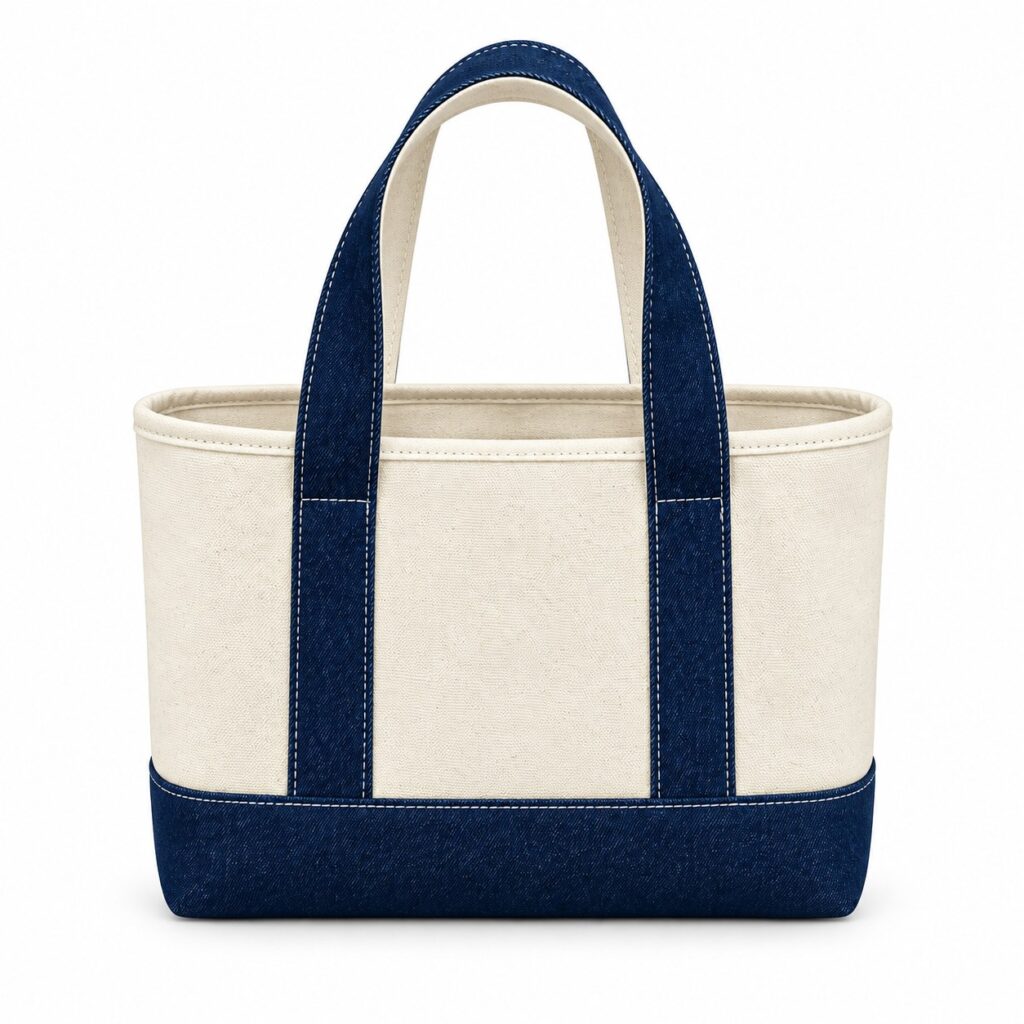
A navy base, natural canvas body and matching handles can give a tote a recognisable look before a logo is added. With custom patchwork cotton canvas tote bags, the position of each panel matters as much as the colour. Move a seam a little higher and the print area changes. Choose a different fabric for the base and the bag may feel different when filled.
For retailers, event organisers and promotional distributors, those details belong in the first design brief. A useful specification connects the panel layout with the cotton composition, artwork and intended contents, so the sample can answer the questions that a flat drawing leaves open. It also gives suppliers the same construction to use when preparing comparable quotations.
Put every panel on one annotated drawing
Patchwork describes a bag assembled from separate fabric pieces. A two-tone tote is one version of that design, often using a contrasting base, side panel or pocket. More colours create more decisions about cutting, joining and alignment, so choose the layout around the look and use you need.
For a bookshop tote, a broad front panel may leave room for an illustration. A retail collection might use the same body shape with different base colours. When developing two-tone canvas tote bags or a design with several smaller pieces, label each panel on the front, back and side views. Give matching pieces the same reference.
Mark each colour boundary from the finished opening or base. For a diagonal join, show both endpoints. These measurements describe the finished appearance; ask the factory to account for seam allowances in its cutting pattern. A drawing should also show whether the contrast colour continues around the sides or stops at a side seam.
| Design detail | Specify in the brief | Review on the sample |
|---|---|---|
| Body and base | Finished dimensions and height of the contrast panel | Panel proportions when the bag is standing and filled |
| Handles | Width, handle drop and colour on each side | Comfort and attachment points |
| Pockets and side panels | Size, position and fabric colour | Access and alignment with nearby seams |
| Logo panel | Artwork dimensions and position relative to finished seams | Visible space after handles and pockets are sewn on |
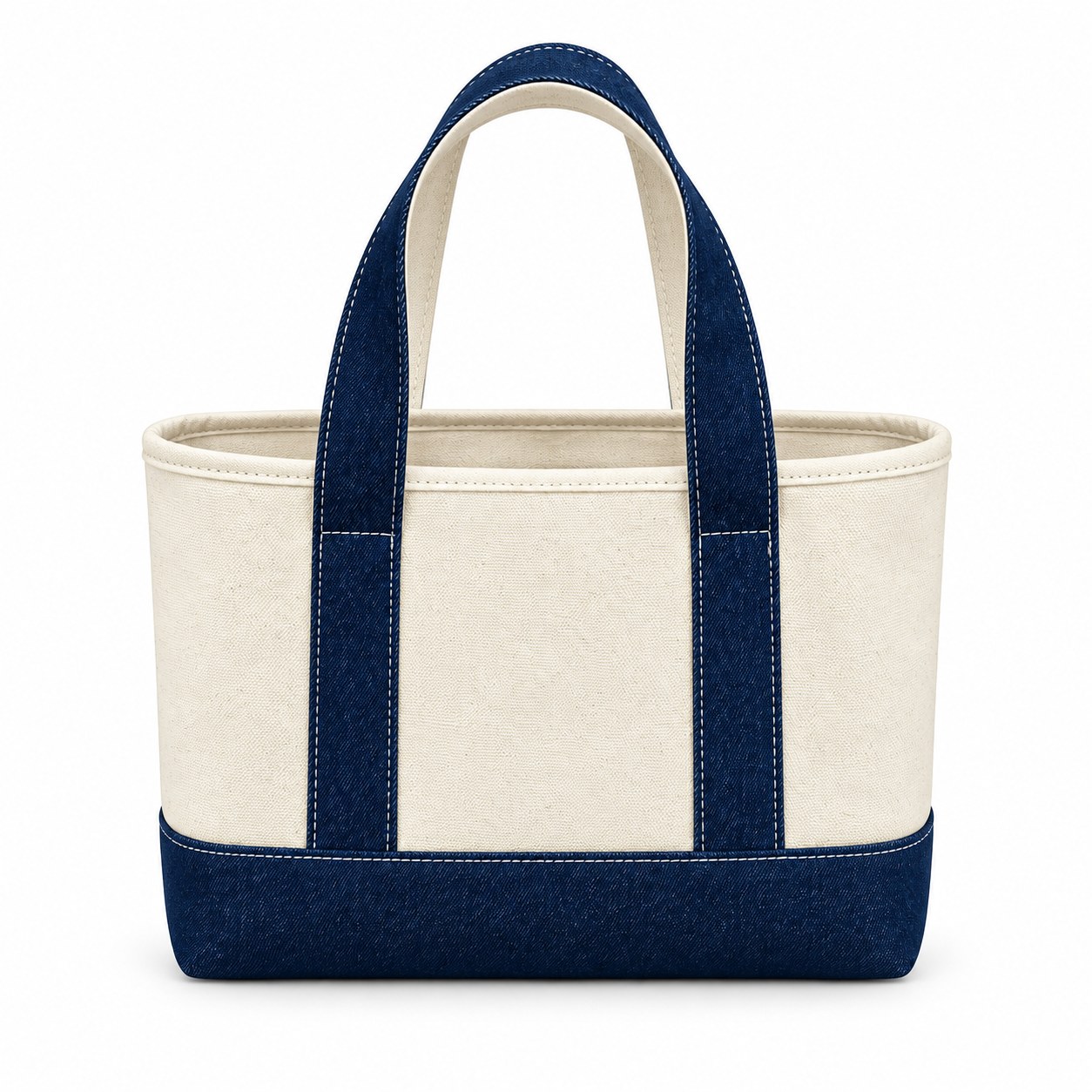
Specify the cotton content panel by panel
A description such as “cotton canvas bag” can leave the contrast sections unclear. If the project requires 100% cotton, state the composition for the main body, base and other fabric panels. List handles, lining, sewing thread, labels and reinforcement materials separately, and agree which components the finished product description will cover.
A denim-look base, for example, should be checked by its stated fibre composition rather than its appearance. The same applies to a cotton-looking handle or lining. Record the materials in the quotation and approved specification so substitutions are visible before production.
Agree the fabric combination and seam construction together
Fabric weight influences how the panels sit together. A firm base can give a bag a different shape from a softer body, while a thick join may feel bulky around a corner. Compare swatches, then judge the combination on a finished sample. Gahumi’s canvas weight guide explains the units used when discussing fabric options.
Even panels described as the same weight can differ in texture and finish. If washing is part of the intended use, assess the assembled bag under the proposed care instructions. Check whether the panels still lie flat, the opening keeps its shape and the colours remain suitable together. Agree any required testing and acceptance criteria before approving the order.
Ask which joins are structural and how the cut edges will be finished inside the bag. Where several seams meet, inspect the thickness and corner shape on the sample. The stitching should suit the proposed construction; a particular stitch pattern should be agreed for the design rather than treated as proof of a load capacity.
Plan the logo before confirming the panels
Two-tone canvas tote bags with a logo need enough usable space between seams, handles and pockets. Put the artwork on the bag drawing at its intended size. Measure its position from finished seams rather than relying on “centred” as the only instruction.
A single-colour panel is usually a simpler starting point for reviewing artwork. A logo that crosses onto a darker panel needs its appearance checked on both colours. Raised seams also need attention when choosing how to apply the decoration; heat transfers depend on even application pressure, so a transfer should not be assumed to solve a seam problem.
If the artwork must run across a join, discuss the printing and assembly sequence before sampling. Review the result on the completed bag. Use the printing and branding page to start the discussion, then confirm the method for your chosen fabric and artwork.
Approve the sample from the outside and inside
An empty bag can hide problems that appear when the panels take the shape of the contents. Fill the sample with the items it is intended to carry, then inspect the base, corners and handle connections. This practical check helps identify revisions; any required load rating needs an agreed test.
Before signing off patchwork cotton tote bags for bulk production, review these points:
- Panel boundaries match the drawing, including their endpoints and continuation around side seams.
- Structural seams and handle attachments show no visible opening or loose stitching during the agreed carrying check.
- Edges are finished appropriately, including inside corners and exposed seam allowances.
- Dark and light fabrics are checked for colour transfer using an agreed rubbing or washing procedure.
- The logo remains visible and correctly positioned when the bag is filled.
Keep the approved sample alongside the final specification. Record changes to panel height, fabric, handle drop and artwork position together, so the production reference reflects the bag you actually approved.
Record material claims and colour availability
A patchwork design does not establish that a bag uses surplus or recycled material. The panels may be cut from newly produced canvas in different colours. If reusing offcuts is part of the brief, ask which components use them, how their source is recorded and whether the same colour combination can be supplied again.
For an assortment made from available remnants, agree whether the buyer approves an exact colour layout or a range of permitted combinations. That distinction affects product photography and what customers can expect to receive.
Likewise, 100% cotton describes fibre content; it does not establish organic or recycled status. Textile Exchange’s claims guidance recommends strong verification for material claims. Request evidence for the wording you intend to use on packaging and product pages.
For a reusable cotton tote programme, assess carrying comfort, shape and care requirements. Describe these features accurately without assuming an environmental benefit for the finished bag.
Send your panel brief to Gahumi
Gahumi manufactures custom cotton tote bags in its own factory. Our factory overview introduces the production facilities and the details buyers should confirm when developing a bag.
Send your annotated panel drawing or reference photo, finished dimensions, artwork and quantity per colourway through our sample and quotation enquiry form. Include the delivery destination, required arrival date and any material documentation or testing requirements. If you have not chosen the fabrics, explain what the bag will carry and how you want it to feel.
Ask the quotation to identify panel fabrics and proposed design changes, with sampling, minimum order and production timing confirmed for that specification. Include the postcode for a European delivery quote.
Request a sample or quote · WhatsApp · gzgahumibag@gmail.com