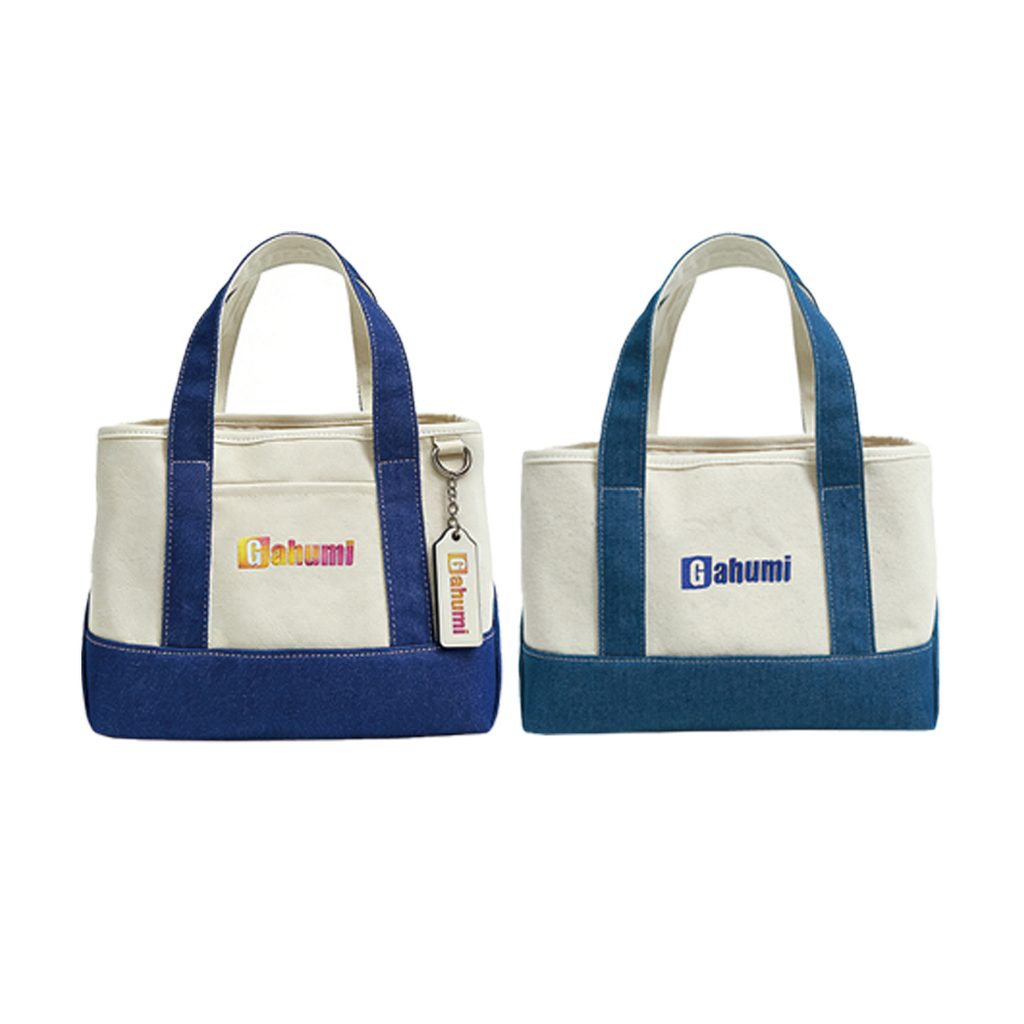
Use the complete printed canvas tote ordering checklist to carry a like-for-like quotation into the next decisions. The accepted price scope still needs to remain connected to the agreed bag, sample, packing and delivery basis.
Custom cotton tote bag cost can vary even when two factories quote the same-looking colour-block bag. Both quotes may be genuine. Quotation assumptions usually explain the difference: fabric weight, panel construction, print method, quantity, packaging and delivery terms.
Comparing only the final unit price can hide those differences. For example, a lighter fabric, a smaller print area or bulk-only packing can make a quote look cheaper without describing the bag you actually need.
This guide explains what moves custom cotton tote bag cost, what a complete quotation should contain and how to compare two factory quotes line by line. The same method works for plain cotton totes, two-tone bags and more complex colour-block designs for European retail, event and gift programmes.
The six inputs that move custom cotton tote bag cost
| Cost input | What to confirm | Why it changes the quote |
|---|---|---|
| Fabric type and weight | Cotton type, weave and GSM or oz weight | Fabric mass, sourcing requirements and any documented certification scope are separate quotation inputs. |
| Bag size and construction | Width, height, gusset, pocket, zip and base | More fabric, cutting and sewing time increases the cost. |
| Panels and colour blocking | Number of panels, contrast parts and seam layout | Every additional panel adds cutting, matching and quality-control work. |
| Decoration | Method, colour count, print area and position | Screens, plates, embroidery programmes and application time are priced differently. |
| Quantity | Quantity per colour and per design | Set-up costs and material utilisation are spread across the order. |
| Packaging and delivery | Polybags, labels, cartons, EXW, FOB or DDP | Finishing, export packing and shipping responsibilities can change the landed cost. |
1. Fabric type and weight
Fabric is usually the first line to check in a cotton tote bag quotation. “Cotton canvas” is not a complete specification. Ask for the weight, weave, colour process and whether the stated weight applies to the finished fabric.
Use the nominal weights to compare identified fabrics, not to assign a carrying grade or a guaranteed feel:
| Nominal fabric weight | What it establishes | What to assess |
|---|---|---|
| 8 oz canvas | Less mass per square yard than the other options shown | Coverage, fold, print surface and handling with the intended contents. |
| 12 oz canvas | More mass per square yard than 8 oz | Actual weave, finish, assembled shape, handles and seams. |
| 16 oz canvas | More mass per square yard than 12 oz | Sample feel, seam bulk, folded size and complete shipment weight. |
Weight does not establish stiffness or a safe load for the completed tote. The right comparison is physical, not just numerical. Ask for swatches or a pre-production sample and compare the handle feel, opacity, seam behaviour and print surface. You can also compare canvas weights in the materials guide before requesting a quote.
Organic or recycled requirements may also change a quotation because sourcing and documentation requirements are different. If a project has a specific material claim, put it in the brief before the factory prepares the quotation.
2. Bag size and construction
The width, height and gusset determine how much fabric is cut from each metre. A small size change can alter the cutting layout and fabric utilisation. A quotation should show finished dimensions rather than only a product name such as “large shopping tote”.
Construction details add labour as well. Specify pockets, zips, reinforced bases, boxed corners, binding and internal seams in the quotation. Do not compare a simple open-top bag directly with one that has a zip, pocket and reinforced handles.
3. Panels and colour blocking
A plain one-colour tote normally uses a simpler cutting and sewing sequence. A two-tone or colour-block tote introduces separate fabric lots, extra cutting pieces and seam-matching checks. A contrast base or pair of handles may be straightforward; an asymmetric multi-panel layout takes more control at the cutting and sewing stages.
The panel count should therefore be visible in the quotation. If a supplier prices a four-panel colour-block design like a plain tote, ask which construction the price assumes and which details the team will confirm after sampling.
For examples of the decisions involved, see Gahumi’s custom cotton canvas bags with two-tone designs.
4. Printing and branding
The artwork affects both set-up and production time. A one-colour screen print, a multi-colour screen print, a heat transfer, embroidery and a woven label are different operations.
Before comparing a branding line, confirm:
- the decoration method;
- the number of colours or stitch count;
- the print or embroidery area;
- the position on the bag;
- whether artwork preparation, screens or plates are included; and
- whether the decoration is applied before or after panels are sewn.
A quote that says only “logo printing” is not detailed enough for a purchase decision. For a complex logo, gradients or artwork crossing a seam, ask the factory to review the file and provide a digital mock-up before sampling.
5. Quantity and cotton tote bag MOQ
Unit price usually falls as quantity increases because cutting patterns, print set-up and machine preparation are spread across more pieces. Fabric utilisation can also improve at a larger quantity.
For a practical checklist, see our custom tote bag MOQ guide. MOQ should be read together with the design. A simple print on a running style may be handled differently from a fully custom colour-block bag with new panels, labels and retail packaging. Instead of asking only for the lowest MOQ, ask the factory to quote two or three quantity levels and state what is included at each level.
This gives you a useful comparison between:
- a lower-quantity sampling or market-test run;
- the quantity that best fits your launch plan; and
- a larger quantity to check whether the quoted unit price changes.
The correct cotton tote bag MOQ is therefore a project decision, not a universal number. It should be confirmed against the final design and packaging specification.
6. Packaging, trade terms and delivery
Packaging is often missing from an early estimate. Confirm whether the price includes bulk packing, individual polybags, hang tags, sewn-in labels, barcode labels, inner cartons and export cartons.
Trade terms matter just as much. EXW, FOB and DDP move different costs and responsibilities between the supplier and buyer. A quote with a lower unit price may still have a higher landed cost once freight, insurance, import duties or local delivery are added.
Ask every supplier to state:
- the delivery point;
- what freight is included or excluded;
- the quotation validity period; and
- the expected production and shipment schedule after sample approval.
What a complete tote bag quotation should contain
Use this checklist before comparing bulk cotton tote bag pricing:
- Unit price at a stated quantity and design quantity.
- Fabric type, weave, colour and GSM or oz weight.
- Finished dimensions, gusset and construction details.
- Panel layout and colour-block requirements.
- Decoration method, colour count, positions and set-up costs.
- Sample fee, sample scope, revision policy and approval process.
- Packaging, labels, carton quantity and export packing.
- Trade terms, delivery point and explicit exclusions.
- Quotation validity period.
- Confirmation that approved samples or specifications will be used as the bulk-production reference.
An itemised quotation can be checked. A lump-sum figure cannot tell you which assumption created the price.
How to compare two factory quotes line by line
First send every supplier the same brief: finished dimensions, reference images, logo files, quantity, delivery country, target date and intended use. Then place the responses in a comparison table. The figures below are illustrative quotation examples, not Gahumi prices, minimum quantities or validity terms.
| Line | Quote A | Quote B | Question to ask |
|---|---|---|---|
| Fabric | “Cotton canvas” | 280 GSM cotton canvas | Are both suppliers quoting the same weight and weave? |
| Decoration | “Logo printing” | Two-colour screen print, set-up itemised | Does the price include the actual artwork and colour count? |
| Packaging | Not mentioned | Individual polybag and export carton | What is the default packing in Quote A? |
| MOQ | 500 pieces | 300 pieces | Is the lower MOQ based on a standard style or the full custom design? |
| Terms | EXW | FOB | Are the delivery points and freight responsibilities the same? |
| Validity | 7 days | 30 days | Can the price remain valid until your purchase order is approved? |
Four common comparison traps appear repeatedly:
- The lighter-fabric quote: the same size costs less because the fabric is thinner.
- The print-count surprise: the supplier assumed one colour while the artwork needs three.
- The default-packaging quote: the price excludes retail labels or individual packing.
- The MOQ-for-price swap: the unit price is lower only because the required order is much larger.
When a quote looks unusually low, ask which specification is different before asking for a discount.
Cotton bag sampling cost: what you are actually buying
The per-piece cost of a sample is normally higher than the bulk unit price. A sample still requires fabric, cutting, sewing, decoration and finishing, but there are not enough units to spread the set-up work.
Sampling is not just a charge. It buys information that an email cannot provide:
- how the colour-block seam meets;
- how the contrast handles feel when loaded;
- whether the logo reads against the panel colour;
- whether the finished size matches the intended use; and
- whether the packing and labels fit the retail programme.
Ask what the cotton bag sampling cost includes, how many revision rounds are allowed and whether any part is credited against the bulk order. The answer varies by supplier, so it should be written into the quotation before payment.
How Gahumi supports the quotation and sampling process
Gahumi is a source factory for custom cotton and canvas bags in Guangzhou, with 32 years of textile and bag-making experience. The team reviews the brief with production before confirming the construction, fabric and decoration details.
Here is the practical process for a colour-block project:
- Review the reference image, finished dimensions and intended use.
- Confirm fabric weight, panel layout, handles and branding method.
- Prepare a quotation with the main cost lines separated.
- Develop a digital mock-up and pre-production sample.
- Record the approved version as the reference for bulk production.
- Confirm packing, delivery terms and shipment requirements.
To review factory background and production capabilities, visit the custom cotton tote bag manufacturer page. You can find printing options on the custom printing page.
To receive a comparable quotation, send these seven items:
- finished dimensions and gusset;
- reference images or a drawing;
- logo artwork in a usable vector format;
- fabric and colour preferences;
- estimated quantity per design and colour;
- delivery country and target date; and
- intended use and packaging requirements.
FAQ: custom cotton tote bag cost and quotations
What affects custom cotton tote bag cost the most?
Fabric weight, bag size, panel complexity, decoration method, quantity and packaging are the main production drivers. Freight and delivery terms affect the final landed cost.
Why do two suppliers quote different prices for the same tote bag?
Usually because the assumptions differ. One may quote a lighter fabric, fewer print colours, bulk packing, a higher MOQ or a different delivery term. Make the specification identical before comparing the totals.
What information is needed for an accurate quotation?
Send the finished dimensions, fabric weight, colour-block layout, handle details, artwork, decoration method, quantity, packaging, destination and deadline. An incomplete brief leaves more risk for the supplier to price.
What is the MOQ for custom cotton tote bags?
MOQ depends on whether the order uses a running style or a new cutting and colour-block layout. Ask for quantity options against the exact design rather than relying on a generic number.
Is cotton bag sampling cost separate from the bulk order?
It is commonly quoted separately. Ask what the fee covers, how revisions work and whether the supplier credits it against the confirmed bulk order.
Which trade term should a European buyer choose?
That depends on your freight, customs and delivery setup. Compare EXW, FOB and DDP only when the delivery point and inclusions are written clearly in every quotation.
Get a quotation you can compare
Send the seven brief items above through Gahumi’s inquiry page. The production team can review the fabric, colour-block layout, branding, packaging and target quantity before preparing a factory-direct quotation.
The goal is not simply to find the smallest number. It is to receive a quotation that describes the bag you want, shows what is included and gives your team a reliable reference for sampling and bulk production.
Request an itemised project quoteDiscuss quotation assumptions on WhatsApp
Send the same project details by email to gzgahumibag@gmail.com.