The portrait is clear on a monitor, but the proposed stitched version loses the line of a face against the background. Adding more thread colours is not yet an answer. The buying team first needs to decide what must remain recognisable and which interpretation it will accept.
Photo embroidery on cotton tote bags turns an image into a stitched design rather than a photographic print. For an authorised portrait, exhibition image or campaign photograph, approve that interpretation before treating it as a production-ready decoration.
Choose the subject before converting the image
Pick the person, object or part of a scene that gives the image its purpose. Mark the important features on a copy: the outline of a face, an animal’s markings or the shape of a building. Keep the authorised original unchanged.
A crowded group photograph and a close view of one subject ask different things of the stitched result. Can any photograph become a clear embroidered tote design? No dependable promise covers every source. Ask the provider to assess the actual image and intended size before a conversion is commissioned.
A portrait embroidery crop should show what has been retained and removed. A tighter crop may help the subject occupy more of the design, but the image owner must approve that change. Do not crop out a meaningful detail simply because it makes digitising more convenient.
Approve the interpretation rather than an automatic conversion
Brother’s PE-DESIGN 11 page describes PhotoStitch as creating embroidery from photographs and explicitly names tote bags among its applications. This establishes a real design route, not a requirement to use that software or evidence that Gahumi provides the service.
Ask the proposed provider to explain its thread interpretation of a photograph. Which features will remain, which may be simplified, and is the proposal coloured, tonal or a more graphic treatment? A recognisable stitched interpretation need not reproduce every pixel to meet a well-defined brief.
Show the embroidered width and height in millimetres. Compare previews at that intended size, not only zoomed in on a screen. If a change to the crop, contrast or drawing is proposed, retain the version the image owner accepted.
The photographic print guide deals with a different output. Do not ask for a printing colour-profile conversion and assume it also specifies how a photograph becomes thread.
Use the sew-out to make the buying decision
Does a photographic print approve an embroidered version? No. A print can identify the authorised image, but it does not show the stitched texture, thread treatment or effect on the cotton panel. Request a representative sew-out on the proposed fabric when the provider can support one.
For a photo embroidery sew-out comparison, place the accepted image preview beside the stitched example at its actual size. Start with the features selected in the brief. Can the reviewer recognise the subject without being told which detail to imagine?
Then look at the wider image. Check whether the subject remains distinct from its background, whether light and dark areas remain useful, and whether an accepted simplification has changed the meaning. View the panel naturally rather than stretching it to hide distortion.
Connect requested changes with the next identified sew-out. The embroidery file handoff guide helps keep that result attached to the correct artwork and output. File delivery alone is not acceptance of the portrait.
Keep a workable alternative in the brief
If the important features cannot be retained at the chosen size, consider an authorised simpler illustration, a different crop or a separate printing proposal. Do not approve an unclear result merely because conversion work has already been done.
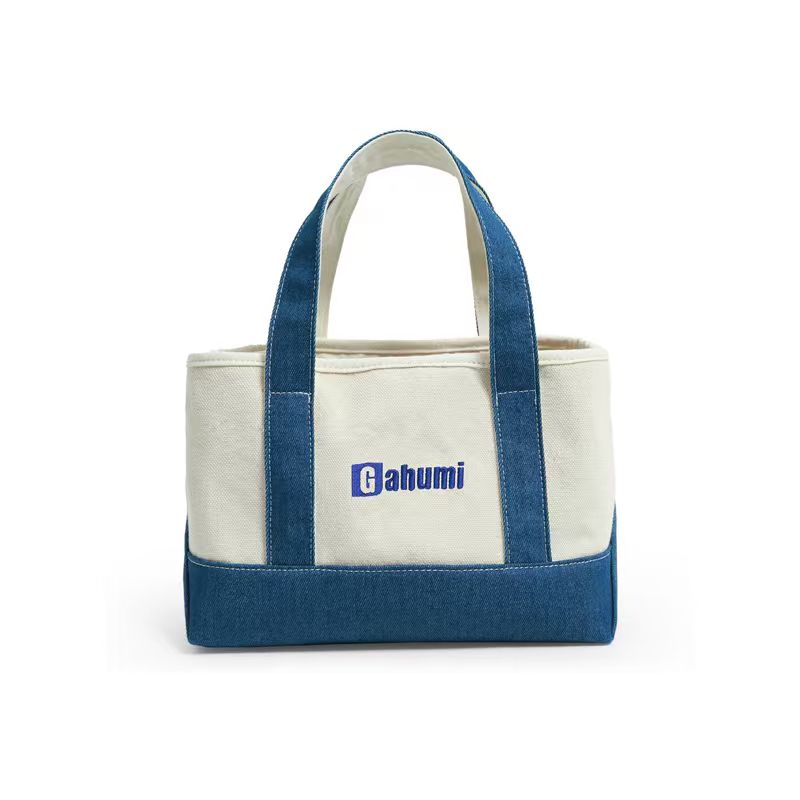
Confirm cotton body composition separately from thread, backing and lining, and agree care for the finished construction. Neither a photograph nor its stitched interpretation proves an environmental advantage. The accompanying image is a general tote exterior, not a photographic embroidery sample.
Send Gahumi the authorised image, essential features, desired dimensions, bag specification, quantities and destination. Ask whether a photo-embroidery feasibility review and sew-out can be arranged before accepting any service, cost or timing.
Send the authorised brief to gzgahumibag@gmail.com.