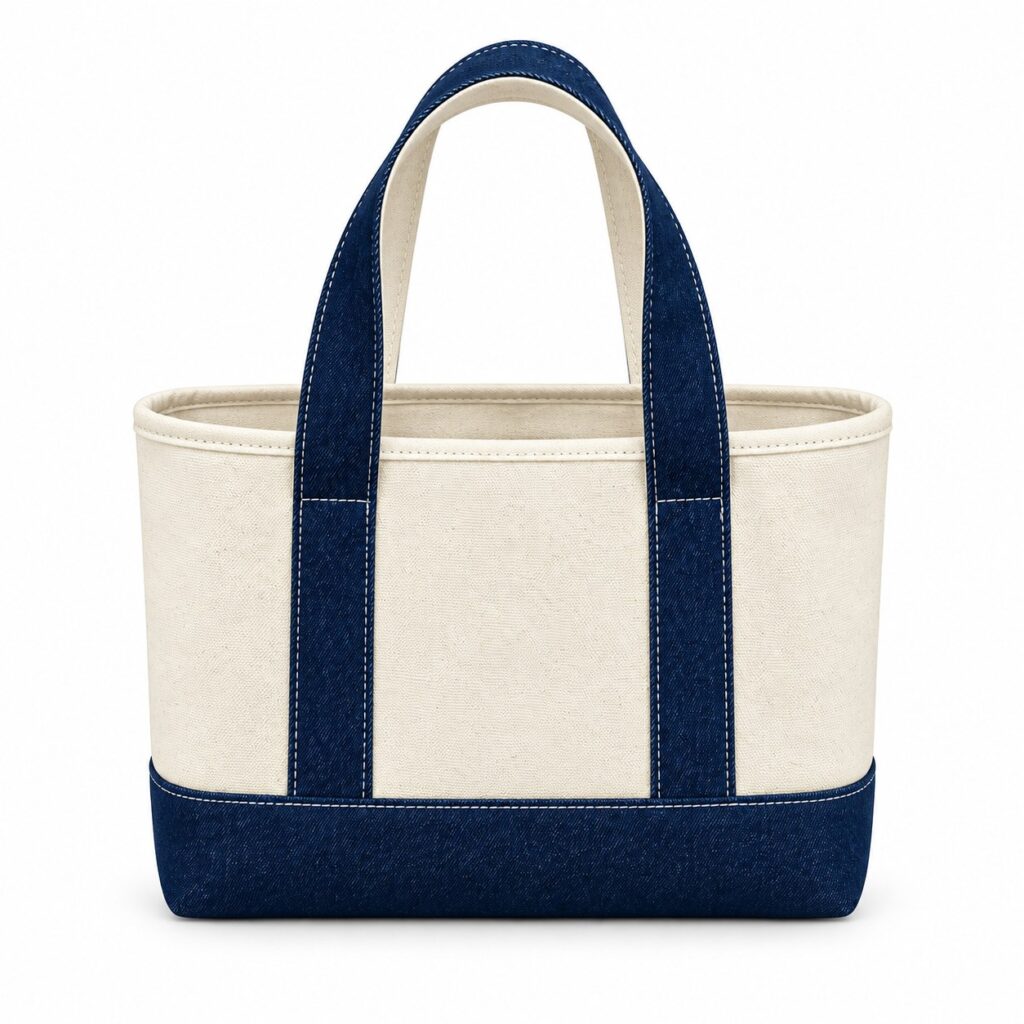
An existing cotton tote is selling under one product reference. A second manufacturer offers a bag that looks similar in a photograph. Before using it for the same range, the buyer needs to decide what must remain identical and which differences would require a new version.
Qualifying an alternative cotton tote manufacturer is therefore a product-equivalence decision, not simply a second quotation. A lower price does not settle whether the handles, shade, print, care wording and retail information still describe the product customers expect.
Transfer only the reference you are entitled to share
Assemble the buyer-controlled specification, approved artwork and an identified physical bag. Check your authority to share drawings, artwork and other files before sending them to another party. Owning a purchased bag does not by itself settle rights to every production document.
Name the reference sample and record its condition. A faded display bag or a washed personal tote may no longer represent the accepted original appearance. State any limitation instead of asking the new supplier to copy an uncertain reference.
Keep the supplier enquiry separate from an instruction to duplicate protected material. The aim is a permitted product brief with clear requirements, not an unqualified request to reproduce another factory’s methods.
Write the non-negotiable product requirements
Define the properties that affect the current range: finished dimensions in centimetres, fabric reference and weight in g/m², body and handle composition, construction, colour relationships and decoration. Identify which are requirements and which can be proposed differently.
An alternative supplier comparison should include the inside finish, label information and approved care basis, not only the front photograph. A new lining, thread or transfer material may change the component record even when the visible logo appears similar.
If the range requires a 100% cotton body, obtain confirmation for the proposed new fabric. Do not transfer the original material statement, organic documentation or test result to a different source without establishing its relevance.
Use a difference matrix before calling the bags equivalent
For each requirement, record the original reference, the new proposal, the observed difference and the decision owner. Add a status such as accepted, further evidence needed or separate variant required.
Suppose the new bag fits the same catalogue but its handle attachment sits closer to the printed illustration. That may need a revised placement drawing and another sample. It should not be hidden inside an overall statement that the size is the same.
Compare both finished samples with the same contents and viewing conditions. Use the measurement record for the agreed points. Agree any formal performance evaluation separately; a side-by-side handling exercise does not establish a load rating.
Decide what happens at the shop
If both sources will supply the range, define how batches remain identifiable in purchasing and stock records. Ask the retail team whether the accepted differences are compatible with one product listing or need a distinct variation.
A change of source should trigger a review of images, material wording and care information against the accepted new bag. Do not assume a photographed original can represent every later construction. Our product-data guide covers that downstream handoff.
Describe intended reuse realistically. A second supplier’s cotton fabric does not automatically carry the same washing evidence or support a lower-impact claim.
Keep source qualification separate from order release
The CIPS procurement cycle includes considering alternatives where supply depends on one source. That does not mean a second source is always appropriate, or that an acceptable sample reserves production capacity.
Record the approved construction, outstanding questions and scope of acceptance before placing an order. Ask for project-specific quantity options, sample costs and timing; do not assume the original supplier’s terms apply.
For a discussion with Gahumi, send the permitted reference package, required quantities and destination. Highlight the differences your team could accept and those it cannot. That keeps the enquiry focused without treating a visually similar tote as an already approved replacement.
Send the reference list by email to gzgahumibag@gmail.com.