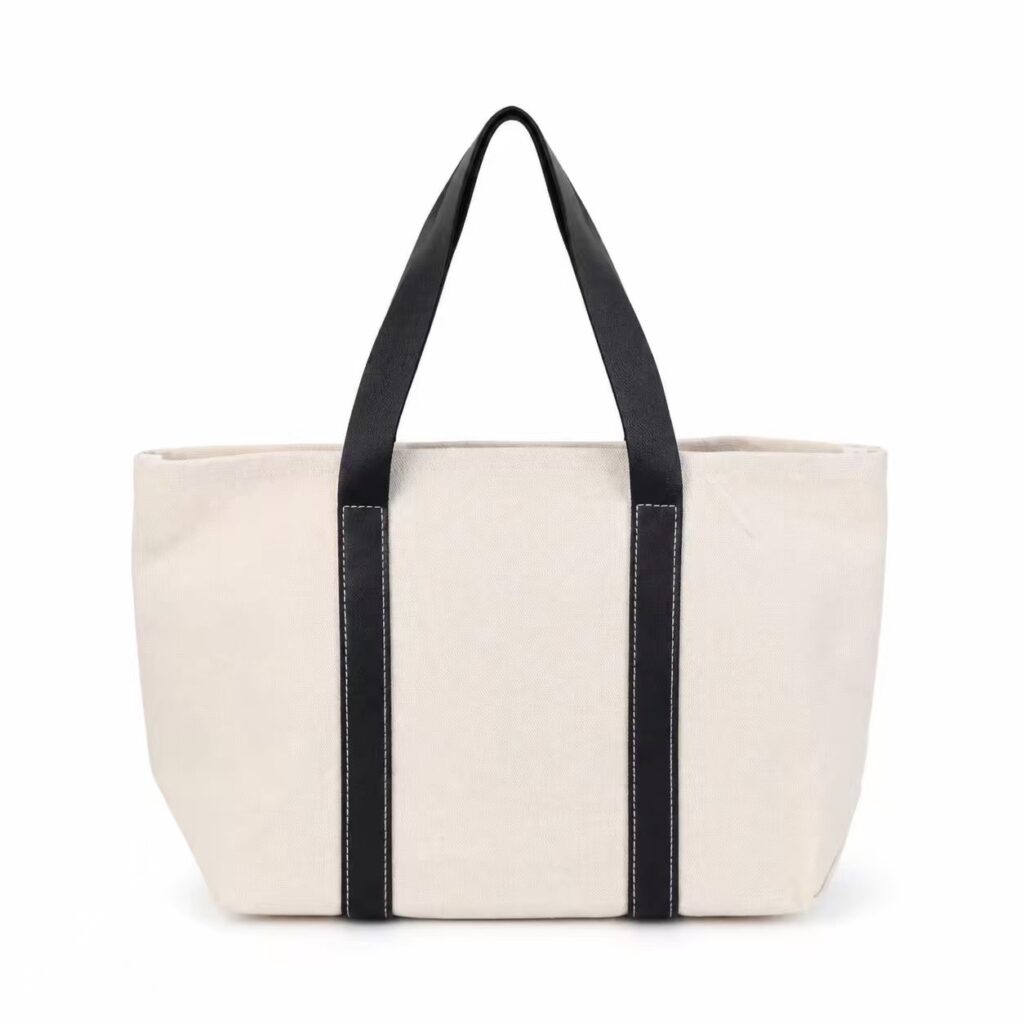
Before a retailer prints “machine washable” on a tote label, the finished bag needs to support that wording. The fabric, print, handles, contrasting panels and trims all belong in the review. An unprinted swatch covers only part of the product a customer will take home.
Agree cotton tote bag care instructions during sampling, while there is still time to review the wording for labels, packaging and product pages. For a European retail range, this also gives the buying and marketing teams one approved reference to use across the languages they need.
Decide what cleaning method you are considering
Start by asking the supplier how the proposed finished bag should be cleaned. Discuss washing, spot cleaning, drying and ironing where relevant. A 100% cotton fabric specification alone cannot settle those instructions because the print and other components are part of the finished product.
Explain how the bag will be sold and used. A reusable shopping tote, a printed souvenir and a structured retail bag may have different care expectations. If a washable bag is a purchasing requirement, put that in the original brief and agree how the requirement will be checked.
Gahumi’s printed cotton tote bag guide helps connect the fabric and print choices before the care review begins. The proposed cleaning method should then be assessed on that specific combination.
Choose samples that represent the order
Use a finished printed bag made to the proposed specification. Record its fabric reference, colour, print process, artwork version and construction details. Keep a separate untreated sample for comparison, clearly marked so it does not enter the cleaning trial by mistake.
If the order contains different fabric colours, prints or trims, ask which versions need separate checks. A result from one colour combination should not automatically become the approval for the whole range. Agree the sample selection with the supplier and the person responsible for product quality.
Allow for samples that will be changed by testing. Keep an approved production reference as well as any cleaned examples. Our MOQ and sampling guide is useful when discussing sample quantities, charges and revisions alongside the bulk order.
Write down the method before starting
Begin with a simple record of the untreated bag. Measure the opening, width, height, base depth and handle drop using a consistent method. Photograph the print and note any existing marks, creases or construction differences. These observations help avoid confusing an original feature with a change caused by cleaning.
For a proposed washing method, record the agreed conditions, detergent, washing arrangement and drying method. Use the conditions being considered for the care wording. If the supplier recommends spot cleaning, record how that method will be assessed on the finished bag instead.
Agree the number of trials and the acceptance criteria for this order. A check on one sample does not justify a claim about a fixed number of washes. If a specific performance claim is required, ask what evidence and testing would be needed to support it.
Compare the whole bag after cleaning
Let the sample dry using the agreed method before comparing it with the untreated reference. Use the same measurement points and similar lighting for the photographs. Record what changed, including an acceptable change, so that the approval has a clear basis.
- Shape and dimensions: Compare the opening, body, base and handle drop. Check whether the intended contents still fit comfortably.
- Fabric appearance: Look for colour changes, surface changes or transfer of colour between contrasting parts.
- Print: Inspect the lettering, edges and solid areas for visible changes such as fading, cracking or lifting.
- Construction: Review seams, handle attachments, pockets and trims, including any twisting or change in alignment.
- Use: Handle, open and fold the dry bag to assess whether it still works as intended.
Photographs help communicate the observations, but retain the tested bags when practical. If the buyer requires formal laboratory evidence, agree the method, sample selection and report requirements separately. A team’s visual comparison should be described as the check it actually performed.
Turn the accepted result into clear care wording
Write instructions that reflect the cleaning method approved for the finished bag. If spot cleaning is the accepted method, keep the product page consistent with that decision. Avoid adding a familiar washing instruction copied from another cotton product.
Review the print as part of any ironing advice. Ask the supplier what is appropriate for the specific decoration before agreeing the wording. Do the same for drying instructions; the retail team should not have to guess which method was used during sampling.
Assign one person to approve the final care text and its translations. Check the wording on the sewn label, hangtag, packaging and online listing together. Where symbols are proposed, ask the responsible supplier or technical reviewer to confirm their selection against the approved care method.
Revisit the approval when the product changes
A new fabric finish, different print process or added lining can make the original care review incomplete. Keep those changes visible in the specification and ask whether another sample check is needed before repeating the old instructions.
Agree who will prepare the samples, record the observations and approve the wording. Gahumi’s factory overview provides background for discussing the order workflow. Confirm which checks can be arranged for your project, along with any separate costs and timing.
Discuss your bag and care requirements with Gahumi
Send Gahumi the bag design, fabric preference, artwork and target quantity, together with the care wording or cleaning requirement you want to assess. For a European retail order, include the delivery country, postcode, required arrival date and languages needed for the proposed care text.
We can review the specification, discuss sample availability and confirm which testing requests can be supported for the enquiry. Ask for the relevant sample costs and production quotation before approving the order.
Prefer email? Send your brief to gzgahumibag@gmail.com.