A promotional buyer receives two shopper quotes. One describes cotton canvas; the other says nonwoven polypropylene. The lower unit price is easy to spot, but it does not say whether either bag meets the same brief.
Start by deciding which requirements are fixed. If a confirmed cotton body is essential, a polypropylene proposal is not an equivalent substitution. If both materials are genuinely open for consideration, compare identified finished totes doing the same job rather than ranking two material names.
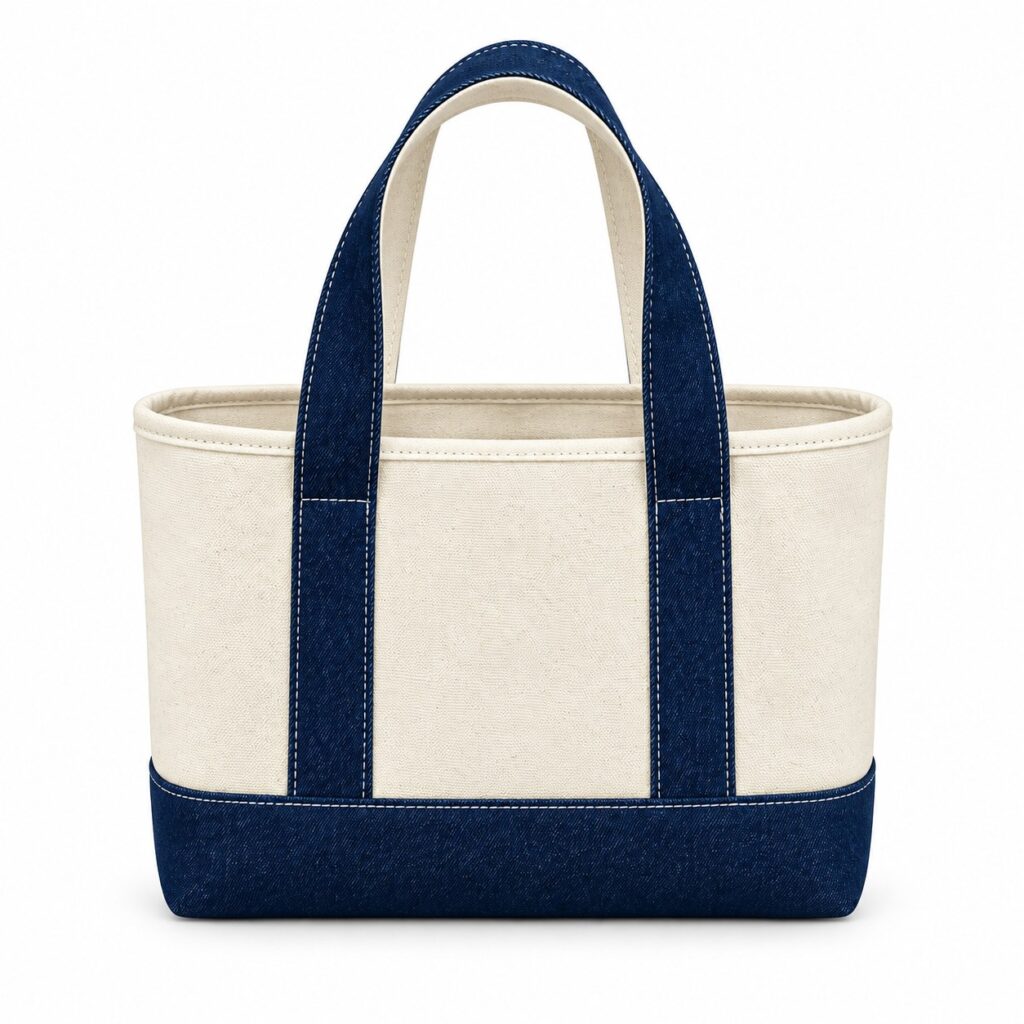
The Gahumi photograph illustrates a tote exterior. It is not a sample comparison or evidence of polypropylene supply.
Cotton canvas vs nonwoven polypropylene tote bags
The fibre and the fabric construction are separate pieces of information. For a cotton canvas proposal, ask for the fibre composition and the identified woven fabric. For the nonwoven option, request its actual material composition and construction rather than assuming nonwoven always means polypropylene.
EDANA’s explanation of nonwovens describes a fibrous assembly given structural integrity without weaving or knitting. It covers a broad category, not a single fibre or one universal level of performance.
A 4imprint UK shopper listing explicitly identifies nonwoven polypropylene as its material. That is a useful example of a complete material name, not a basis for copying its price, production schedule or features to a Gahumi quotation.
Use the same job to organise the comparison
A cotton and nonwoven tote quotation comparison should name the same intended contents, delivery destination, artwork and required quantity. Match the useful dimensions where possible, and record any deliberate differences in handles, closures or packing.
Prepare a short comparison sheet before reviewing the prices:
| Decision | Record for each proposed bag |
|---|---|
| Material and assembly | Named body fabric, composition, handles and joins, with the sample reference. |
| Useful carrying job | The same packed contents, opening task, carrying trial and observations. |
| Decoration and care | Proposed print route, accepted appearance and supported care instructions. |
| Complete order cost | Setup, sampling, bag quantity, packing, delivery basis and unresolved charges. |
Do not use fabric GSM as a bag strength score or assume the same number makes the materials equivalent. The dimensions and assembled construction still need review. Our contents-based tote size guide can help define the carrying task.
Let the samples answer the use questions
Can the same print approval cover cotton canvas and nonwoven polypropylene? No. Ask each provider to identify its decoration proposal and show the authorised artwork at the intended size on the actual material. Accept the colour, edges and surface feel for each sample separately.
Try a matched tote use trial with representative contents. Open, pack, carry, set down and unpack both bags under the agreed conditions. Record specific differences in access, handle fit, appearance and folding rather than declaring one category universally strong or weak.
Keep practical observations separate from performance claims. If a particular carrying requirement matters, ask the responsible provider how it should be assessed. Neither a successful brief trial nor a material name establishes a safe load or a guaranteed useful life.
Care must be confirmed for each finished construction and print. Do not copy washing instructions from a cotton tote to a nonwoven proposal, or assume that every nonwoven bag is disposable. The intended repeated-use routine belongs in the brief for both.
Choose on evidence, then close the specification
Is a cotton tote always environmentally better than a polypropylene tote? A material name alone cannot settle that comparison. The complete products, manufacture, transport, use and end-of-life assumptions would need an appropriate basis. Avoid fixed reuse counts or carbon-saving claims borrowed from unrelated bags.
The environmental-claims guide covers public wording. For this buying decision, record which proposal meets the mandatory requirements, what the sample demonstrates and what remains unresolved.
Compare the complete cost against the same delivery basis using the quotation comparison guide. A cheaper price for different dimensions, decoration or packing is not a saving on an identical specification.
For the cotton-canvas option, send Gahumi the required composition, bag drawing, artwork, quantity and destination. You may include an alternative-material quotation to explain the comparison. Ask what cotton construction and sampling can be proposed; this article does not state that Gahumi supplies nonwoven polypropylene bags.
Email the proposed requirements to gzgahumibag@gmail.com.