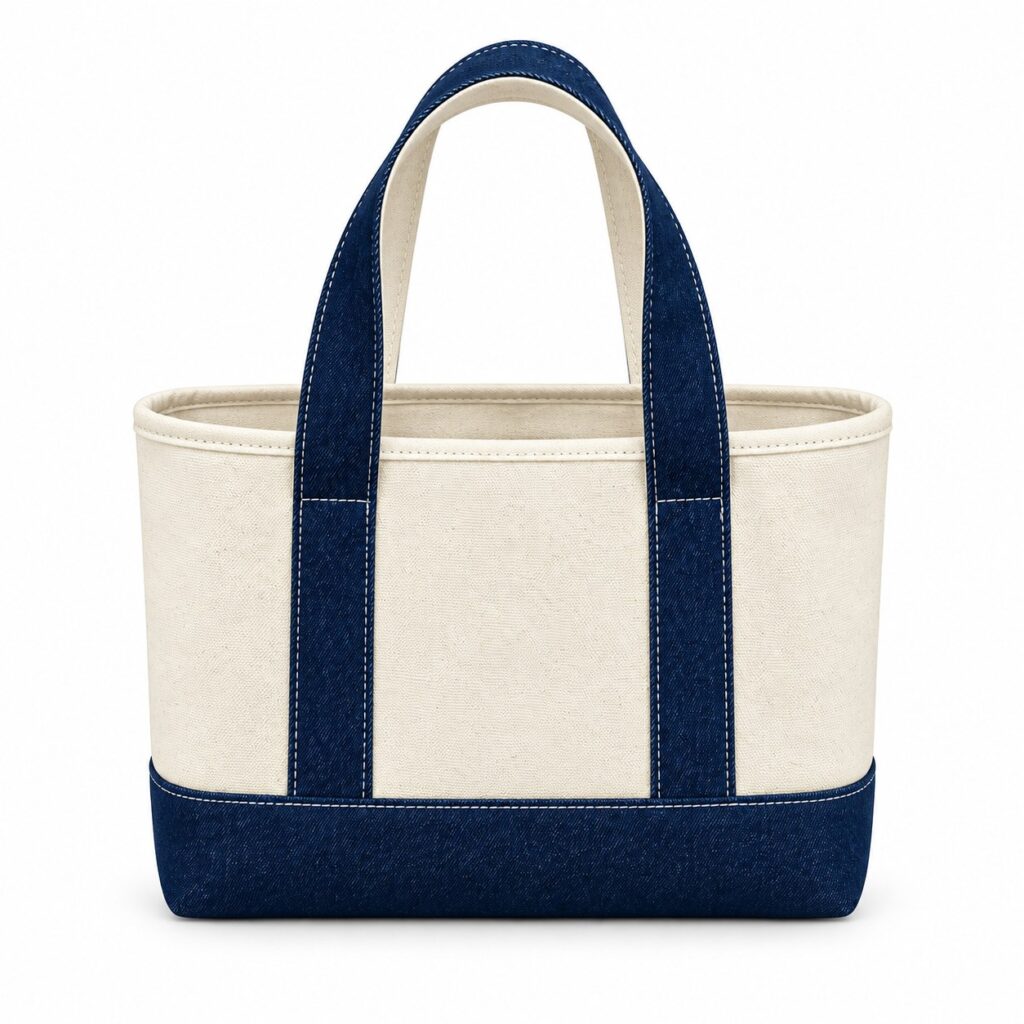
“Medium” sounds specific until two sample bags arrive. One is wide and shallow; the other is narrower with a deep base. Both suppliers have used the same size name, yet only one accepts the buyer’s packed kit without rearranging it.
For custom cotton tote bag sizes, treat mini, medium and large as range names, not dimensions. Choose the version that works with the intended contents, then give it a measured specification. A useful size range starts with different carrying jobs, not three enlargements of the same photograph.
Put a contents group beside each size name
Prepare the actual items in their normal packaging. A gift box, a protected book and a folded garment occupy different shapes even if their outside widths look similar. Include the things that arrive together, rather than checking the largest item alone and assuming the rest will fit around it.
A mini cotton tote size brief might concern a small retail purchase collected at a counter. A medium version might need room for the purchase and the customer’s existing items. A large version may serve a different collection or packed kit. These are possible project definitions, not standard size bands or claims about what every European shopper carries.
Give each group a clear boundary. If the same contents fit both proposed bags equally well, ask what the extra size contributes before adding another variation to the order.
Compare usable shapes rather than names
One current retail example, MUJI’s wide cotton canvas tote, describes a horizontal silhouette and supplies three dimensions. That is a more useful basis for comparison than its size name alone. Its specification belongs to that product and is not a Gahumi measurement or recommendation.
A medium versus large cotton tote comparison should use the same contents and the same access task. Place the items inside, remove the awkward one and put it back. Watch what happens at the top edge and around a pocket or closure. A larger body does not solve a restricted opening automatically.
For the drawing itself, follow the finished-bag measurement guide. Keep the method consistent between samples. The selection decision here is which shape earns a place in the range, not a new definition of width or height.
Use one short comparison record
Record the result while the contents are still beside the sample. A cotton tote contents fit trial can use these fields:
- Proposed size name and the exact sample reference.
- Contents group, including sleeves, boxes or other independent protection.
- Whether the largest item passes through the opening without forcing it.
- Whether the remaining items can be reached without emptying the bag.
- How the bag sits when carried and set down.
- The smallest approved version that completes the intended job.
These observations do not establish a load rating or protection for fragile contents. Review the carrying construction separately, including handle drop and fit. Use relevant outerwear in the trial where the bag is intended for shoulder carrying.
Keep the material and artwork decisions attached
Can the same artwork be used on every tote size? It may be possible, but compare the complete layout on each approved body. Keep a common graphic size only if the result remains intentional; otherwise approve the different scale and position explicitly. Do not let the smallest size inherit a print area that only fits the largest.
Does a smaller cotton tote automatically use less material overall? Not necessarily for a comparison between different constructions. Panels, handles, lining, cutting layout and packing all matter. Confirm the component composition for a 100% cotton brief and obtain evidence before making a broader environmental claim.
Once the shapes are selected, use a quantity matrix to keep each size, fabric colour and artwork combination visible in the quotation. Do not turn a provisional size name into permission to substitute a different bag.
Send Gahumi your proposed range, contents photographs, dimension drawings, artwork, quantities and delivery destination. Ask which constructions can be sampled and quoted for the project. The product photograph is an exterior reference, not a measured mini, medium or large range.
Email your range requirements to gzgahumibag@gmail.com.