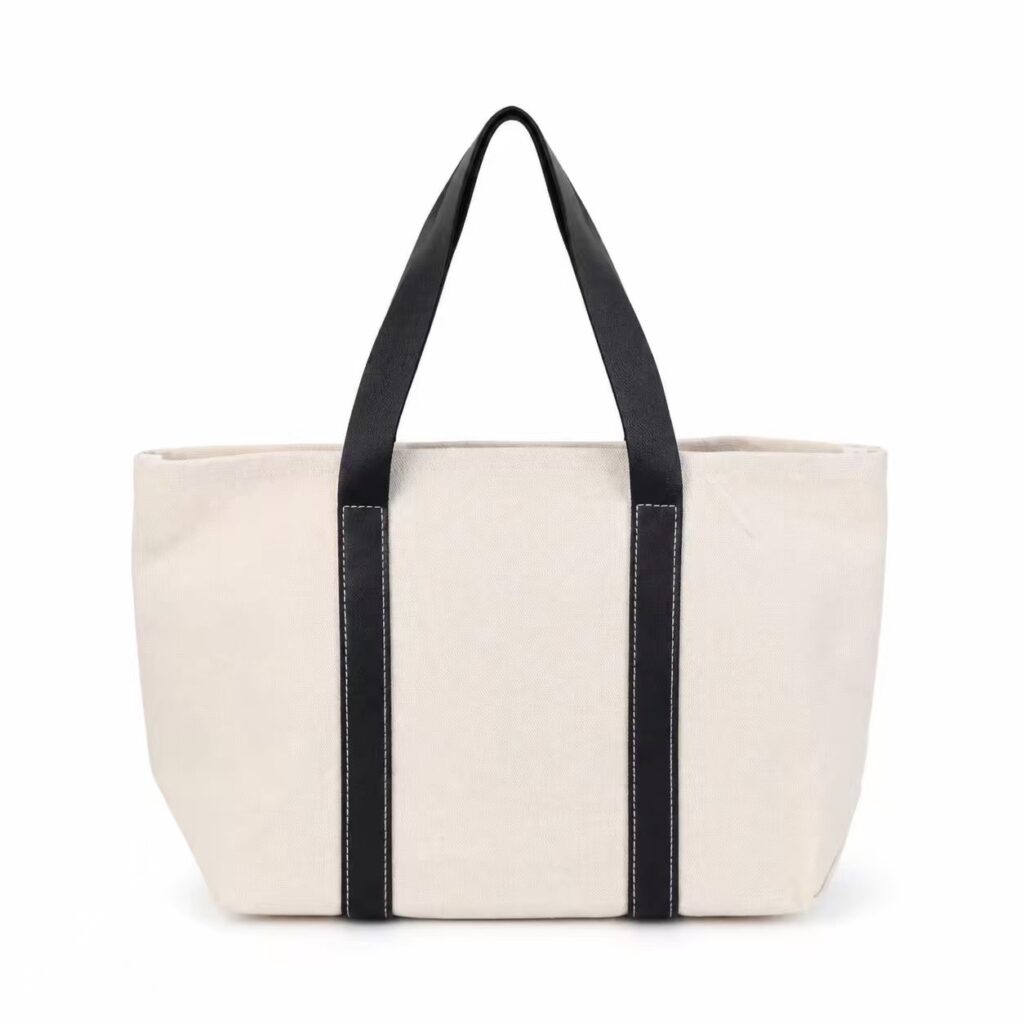
For cotton tote fabric appliqué, the motif is made from cut pieces of fabric laid over the bag panel. The base cloth continues underneath. That makes it a different construction from joining coloured pieces to form the bag itself, and a different purchasing decision from attaching a ready-made woven logo patch.
The idea can suit a brand developing a fabric illustration rather than a printed image. Its success depends on more than choosing a pleasant colour combination. The buyer needs to approve the individual fabrics, the treatment around each shape and the way the decoration sits on the assembled tote. Ask Gahumi to assess project feasibility before treating appliqué as an available option.
Turn the illustration into a fabric overlay
A fabric overlay tote design should identify the continuous bag panel and each applied shape separately. Number the pieces, show their finished outlines in millimetres and state which piece sits above another. Include the position of handles, pockets and seams so that an important part of the illustration does not disappear behind them.
For example, a landscape motif might use one cloth for the sky and another for a foreground shape, both applied over an intact tote front. That is a design example, not a tested construction. If you want the coloured pieces to form the bag panel instead, use a patchwork construction brief.
Use artwork you own or are authorised to manufacture. A reference photograph can help explain a general finish, but copying somebody else’s cut shapes is not a substitute for an approved design.
Choose real cloth before approving the colour balance
Prepare an appliqué material schedule with a reference for the base fabric and every overlay. Distinguish fibre composition, colour, weave and any visible pattern. If a striped or directional cloth is proposed, show which way it should run within the shape.
Wilcom’s appliqué documentation treats the fabric swatch as a separate design property and allows a scanned fabric sample. That is a useful distinction for a buying brief: the shape file alone does not identify the cloth that will fill it. A screen preview still needs checking against the actual materials.
Keep a physical set of the chosen fabrics with the sample record. If an offcut is proposed, confirm the available quantity and consistency for the order; do not assume a small development piece represents a repeatable supply.
Decide how the edge belongs in the design
The appliqué edge finish changes the appearance of the whole motif. Show whether a visible stitched border is part of the drawing, whether the cut edge may remain visible and what appearance you will accept after the agreed care evaluation. Ask the provider to propose a suitable construction rather than prescribing an arbitrary stitch setting.
Janome’s original tote project demonstrates cut fabric shapes attached to tote fabric before assembly and includes fusible web among its materials. It is a DIY example, not industrial process validation or evidence of Gahumi’s production capability. A commercial proposal must identify its own attachment materials and method; the project’s design and dimensions are not a production template for this order.
For layered cotton tote artwork, approve the overlap order and look closely where several edges meet. Decide whether the bulk and outline are acceptable on the actual bag. Review the reverse too, especially on an unlined style where the stitching will be visible inside.
Check access before choosing the bag blank
Can appliqué be added to a finished cotton tote? That depends on access to the chosen area and the proposed attachment route. A pocket, lining or seam can restrict the work. Have the provider assess the complete construction; do not approve from a front-view photograph alone. Our decoration access guide explains that earlier decision.
Approve a complete sample with the intended contents inside, then empty and fold it as planned. Check that the motif stays where you expect and does not obstruct the opening or a pocket. Keep any revision tied to the same fabric and shape references.
Should a cotton appliqué tote be described as all cotton? Not solely because its base and overlay are cotton. Identify the thread, any adhesive or backing and other components separately. Likewise, using small fabric pieces does not establish a recycled-content or waste-reduction claim without evidence. Describe the verified materials and intended repeated use, not an assumed environmental advantage.
Send the authorised illustration, material preferences and quantity to gzgahumibag@gmail.com for an initial feasibility discussion.