Cotton tote rope handles need a different drawing from a pair of flat straps. Follow each handle from the carried loop through its entry points to the way its ends are retained. That route affects the opening, the inside of the bag and the space available for a print.
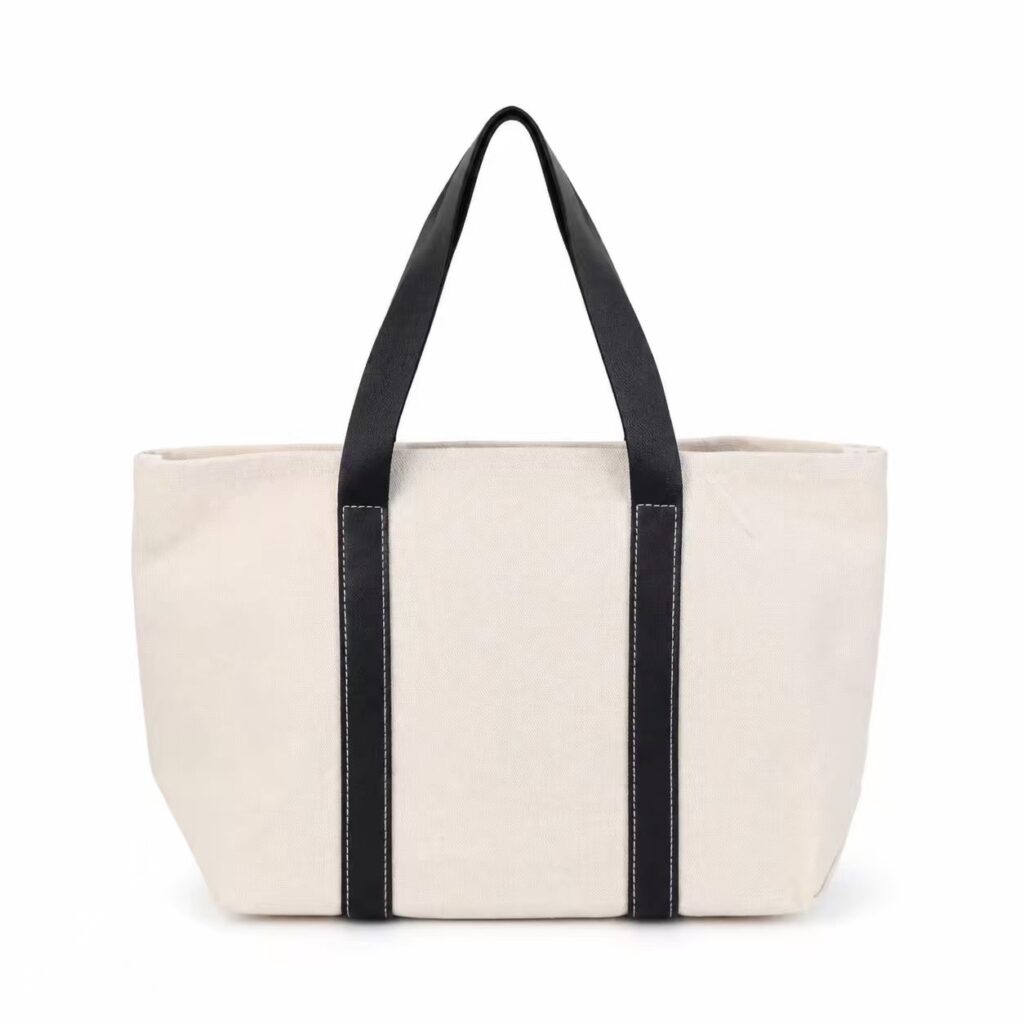
Start with the action the buyer wants: hand carrying, shoulder carrying or a specified combination. A round handle may create the appearance you want, but its suitability needs checking on the proposed complete tote. The general exterior photograph accompanying this guide does not show a rope assembly.
Separate the rope from the canvas
Tote Suite’s rope-handle listing identifies cotton rope separately from the cotton-canvas body. That component distinction is useful for an enquiry. Cotton in the body description does not identify the handle’s fibres, internal structure or finish.
A rope handle material reference should state the proposed composition, diameter description, colour and visible finish. Ask the maker how the diameter is defined for the actual cord rather than measuring a compressed section and assuming every supplier uses that reading. Keep an identified physical length beside the specification.
Compare how the proposed rope feels in the intended use, including its surface and the point where it bends around the hand or shoulder. Write down observations from the sample. A short trial can identify an uncomfortable edge or awkward movement; it cannot establish a universal comfort claim.
Find where the ends are retained
Some rope-handle totes use knots. The Hamptons’ own product description, for example, names hand-knotted rope handles on a canvas tote. That establishes a possible construction, not a knot instruction or evidence that every rope termination works in the same way.
Where do rope handle ends sit inside a tote? Have the maker show them on an inside view, including any knot, stop, cover or other retention detail it proposes. Locate them against the opening, lining, pocket and intended contents. A bulky end beside a phone pocket creates a different access question from one sitting clear of it.
The rope entry point needs the same clarity. Show whether it passes through a fabric channel, an eyelet assembly or another proposed construction. The eyelet guide covers a local opening and its paired parts. It does not approve the complete carrying system around that opening.
Ask the maker to select and explain the retention and installation method for the actual cloth stack. Avoid specifying a knot from an internet illustration or asking a recipient to retie an attachment that carries the bag.
Measure the assembled loop
A cut rope length is not an assembled handle drop. The entry route and retained ends can use part of that length. Agree the finished measurement points and use them on both handles. The handle-drop guide provides the wider fit check without replacing this assembly drawing.
For a rope handle opening trial, put the intended contents in place and open the mouth normally. Check whether the handle slides, twists, draws the sides together or rests against the print. Repeat the action with the bag set down and carried as intended, keeping the trial conditions identifiable.
Can rope handles use the same attachment as flat webbing? It should not be assumed. The component shape and retention route differ, even if the bag body and handle drop stay the same. Ask for the proposed connection and any assessment needed before accepting a substitution.
Approve the route as a complete proposal
Keep the rope reference, entry detail, retained-end drawing and assembled measurements together. Add photographs of the inside and outside of the accepted sample. Any required carrying performance needs an agreed assessment; the presence of a knot or metal ring is not a load rating.
Confirm care for the finished materials and describe the cotton components accurately. A rope detail does not make the bag plastic-free or environmentally preferable. Send Gahumi your original handle sketch, contents, body dimensions, artwork and quantity, and ask which assembly can be considered for the project before requesting a development sample.
For a written component brief, email gzgahumibag@gmail.com.